
DFI X6X-ORN Packs 157 TOPS Into an IP67 Edge AI Box
DFI's fanless X6X-ORN pairs an NVIDIA Jetson Orin NX with IP67 sealing, up to 157 TOPS, GMSL2 cameras, four M12 ports and a -20°C to 60°C range.

An Edge AI Computer Built to Live Outdoors
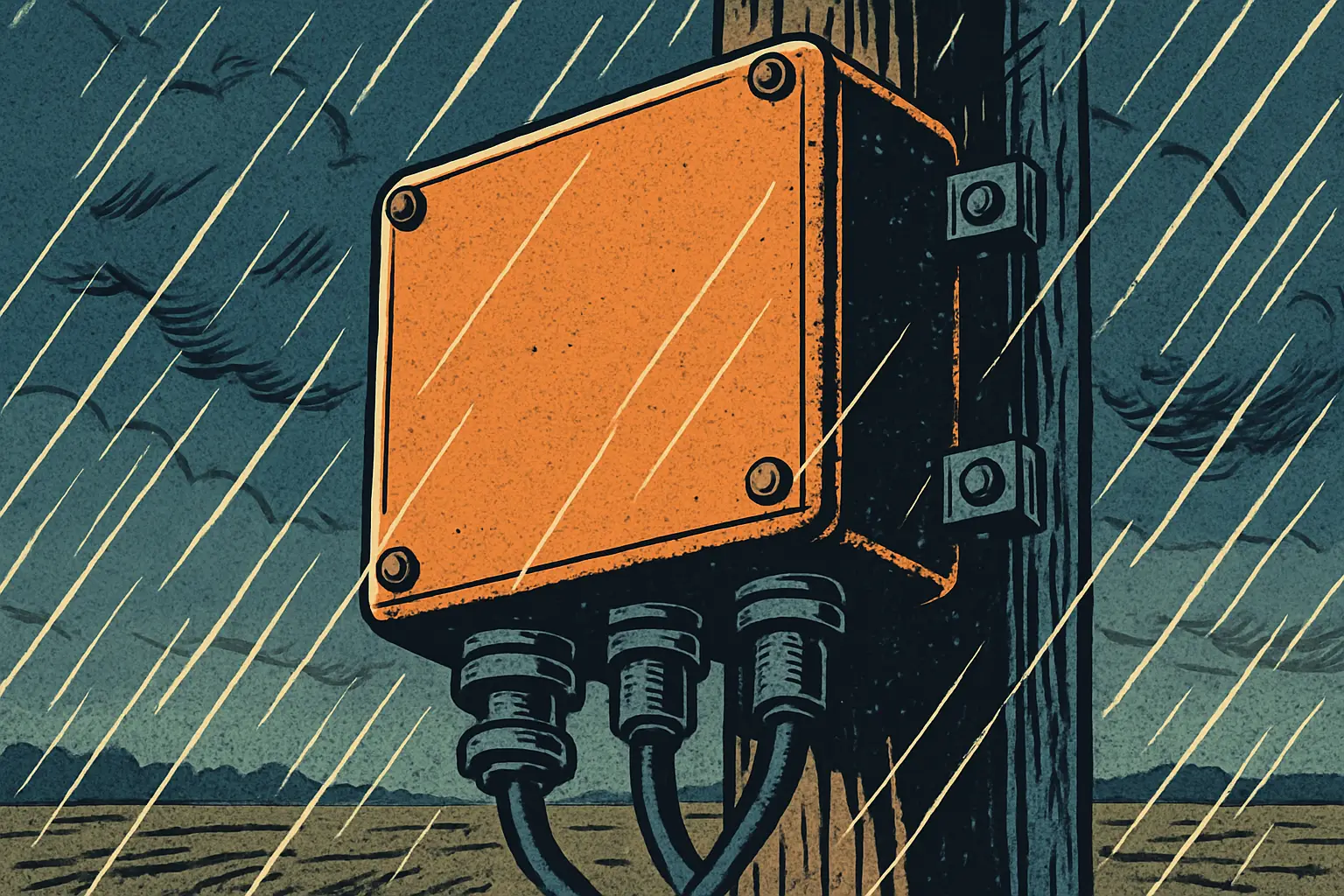
Most Jetson-based edge boxes assume a cabinet, a rack, or at minimum a roof. DFI's X6X-ORN, detailed on July 28, 2026, assumes none of that. It is a fanless NVIDIA Jetson Orin edge AI computer in an IP67-rated sealed enclosure, with every port routed through circular waterproof connectors — the kind of design you specify when the computer is going on a pole, a gate, or a moving vehicle.
- Up to 157 TOPS of AI performance with the Jetson Orin NX 16GB configuration
- IP67-rated fanless enclosure, MIL-STD-810H shock and vibration compliance, -20°C to 60°C operating range
- Four M12 Gigabit Ethernet ports, two with 802.3af PoE at 15W per port
- Two GMSL2 camera inputs over FAKRA SMB connectors, plus optional 5G/LTE and WiFi 6E via M.2
What Is Inside the X6X-ORN?
The compute options span the Jetson Orin range: Orin NX in 16GB and 8GB variants, and Orin Nano in 8GB and 4GB, all with LPDDR5 memory. The top configuration is the interesting one — 157 TOPS in a sealed, fanless box is a serious amount of inference capacity for something with no moving parts and no ventilation path.
Software is Linux with NVIDIA JetPack 6.2, which means the standard Jetson toolchain: TensorRT, DeepStream, the CUDA stack, and the container images most edge AI teams already build against. That matters more than it sounds. A rugged enclosure is only useful if the software story underneath it is boring, and JetPack is about as boring as edge AI gets — in the best sense.
Why Do the Connectors Matter So Much?
Because IP67 is decided at the ports. The X6X-ORN routes four Gigabit Ethernet links through M12 circular connectors, USB through M20, and the two GMSL2 camera inputs through FAKRA SMB. There is no standard RJ45 or USB-A anywhere on the chassis, which is exactly the point — those are the openings that let water in.
Two of the four Ethernet ports carry 802.3af Power over Ethernet at 15W each, so cameras and sensors can be powered from the same cable that carries their data. Anyone who has run outdoor camera installations knows that halving the cable count is not a minor convenience. It is the difference between a two-day install and a one-day install. Our recent look at PoE-based sensing with the Makerfabs MaUWB covers the same principle at a much smaller scale.
The rest of the I/O leans industrial: RS232, CAN Bus 2.0, four general-purpose inputs and four outputs, plus M.2 slots for optional 5G/LTE and WiFi 6E. CAN Bus in particular signals the target application — vehicles, agricultural equipment, and mobile robotics, where the computer needs to talk to the machine it is riding on.
The Physical Specs
At 237 × 194 × 105.3 mm and 5.2 kg, this is not a compact device by mini PC standards. The mass is the enclosure and the thermal path: passive cooling of a 157 TOPS module means the chassis itself is the heatsink. The environmental envelope backs that up — -20°C to 60°C operating temperature, 5–95% non-condensing humidity, and MIL-STD-810H shock and vibration compliance.
What Is the X6X-ORN For?
Roadside and rail-side monitoring, agricultural machinery, port and yard automation, outdoor security, and mobile robotics — anywhere the inference has to happen where the sensors are, and the sensors are somewhere unpleasant. The GMSL2 camera support is the tell: GMSL2 is the automotive-grade serial link designed to carry high-bandwidth video over long single-cable runs, which is precisely the wiring problem outdoor multi-camera installations have.
It joins a growing field of rugged Jetson systems we have tracked, including the Mekotronics AI Box and the newer Jetson T2000 and T3000 edge modules. DFI has not published pricing yet — expect industrial-tier numbers when it lands. More hardware in our mini computers coverage.
Sources: CNX Software — July 28, 2026; DFI — July 2026.
More Mini Computers Stories
ESP32-S3 Runs Linux 6.11 With 3.7MB of RAM to Spare
Release 0.8 of the native ESP32-S3 Linux port fixes the crash that hit one boot in ten and halves the memory cost of every fork. One file to flash.

Alif StartKits Put an Ethos-U55 NPU on a $50 Board
Alif's Balletto B1 and Ensemble E1C StartKits pair a 160MHz Cortex-M55 with an Ethos-U55 NPU, two mics and a camera header for $49.99.

JetKVM Mini Cuts IP KVM Cost to $39 With ESP32-P4X
JetKVM Mini drops Linux for FreeRTOS on an ESP32-P4X, landing a 42mm IP KVM with HDMI capture and WebRTC streaming at $39, or $33 in a 3-pack.