
Makerfabs MaUWB Brings PoE Indoor Location Tracking to Home Assistant
Makerfabs' new MaUWB board pairs an ESP32-S3 with a Qorvo UWB radio and PoE Ethernet to bring accurate, ESPHome-ready indoor location tracking to Home Assistant.

Room-Level Presence Just Got a Wired Upgrade
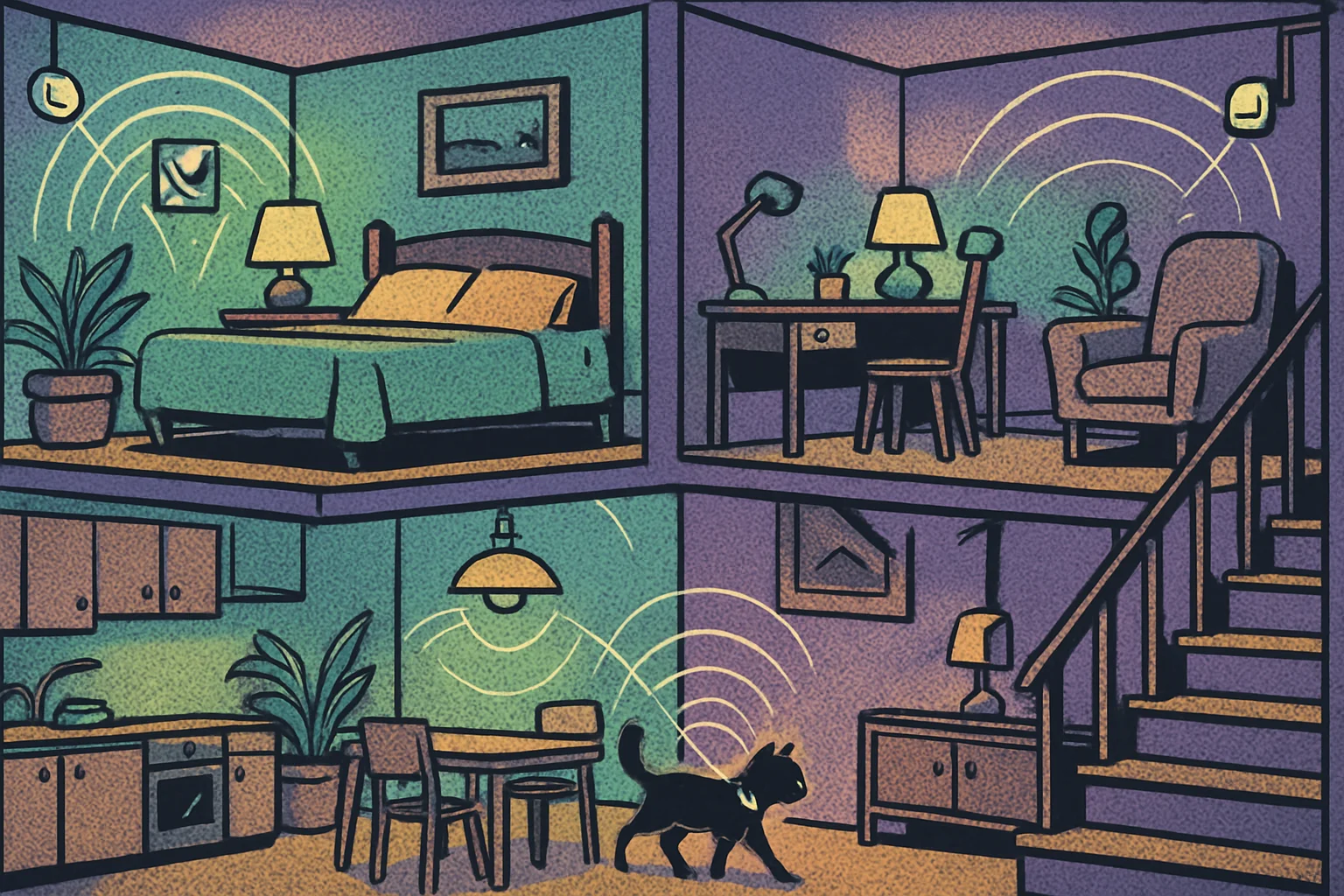
Room-level presence detection has quietly become one of the most requested features in the self-hosted smart-home world, and on July 9, 2026 Makerfabs handed the homelab crowd a board built exactly for it. The new MaUWB pairs an ESP32-S3 with a Qorvo DW3000 ultra-wideband radio to deliver genuinely accurate indoor positioning, and because it speaks ESPHome out of the box, it drops straight into a Home Assistant setup without a proprietary cloud in sight. If you have ever wanted your automations to know which room you are actually standing in, ultra-wideband is the ranging technology that finally makes it precise, and Home Assistant is the local brain that ties it all together.
Why Ultra-Wideband and Home Assistant Make a Great Pair
Bluetooth and Wi-Fi presence tricks estimate distance from signal strength, which drifts wildly as bodies, walls, and microwaves get in the way. Ultra-wideband instead measures time-of-flight between an anchor and a tag, so you get distance readings accurate to a handful of centimeters rather than a fuzzy "somewhere nearby." On the MaUWB, Qorvo's DW3000 module does that ranging, and Makerfabs added a PA/LNA front end to stretch the usable range for real houses rather than lab benches. Feed those measurements into Home Assistant and you can trigger lights, media, or climate scenes based on true room-level location, all computed on hardware you own.
The Hardware Details Alex Cares About
This is where the revision gets clever. The earlier MaUWB carried an OLED display, but this Home Assistant-focused version drops the screen and instead adds a WIZnet W5500 Ethernet controller with PoE support. That single change is the headline for anyone building a fixed installation: your corner-mounted anchors can be wired for both power and data over one Ethernet run, no wall-warts and no flaky Wi-Fi backhaul. Wi-Fi 4 and Bluetooth 5.0 are still on board for flexibility, and the whole thing ships inside an enclosure, so an anchor is ready to mount rather than ready to solder.
Under the hood, a single deployment scales to eight anchors and sixty-four tags, which is plenty to blanket a multi-room home or a small workshop and still track every family member, keyring, or wandering cat. Roles and network parameters are set through AT commands, so you can script the whole fleet instead of poking each unit by hand. It is the kind of deterministic, documented workflow that makes rolling out a dozen nodes feel routine.
A Deployable, Private Homelab Win
What pushes the MaUWB from neat demo to something you would actually install is the combination of PoE and ESPHome. PoE gives you clean, permanent power in the exact ceiling and hallway corners where anchors belong, and ESPHome means firmware, sensors, and updates all live inside your existing Home Assistant dashboards. Because the ranging math and the automations both run locally, none of your movement data has to leave the house, which is exactly the privacy posture the self-hosted mini-computer crowd keeps asking for. For anyone who weighs the local-first and privacy trade-offs before adding a sensor, a UWB fabric that never phones home is a genuinely appealing foundation.
There is real craft in shipping an enclosed, PoE-powered, ESPHome-native UWB anchor at maker-friendly scale, and the MaUWB nails the practical details that usually get skipped. If precise indoor location has been on your project list, this is the board that makes it a weekend build instead of a research paper.
Sources: CNX Software, July 9, 2026; Makerfabs product page, July 2026.
More Mini Computers Stories

Raspberry Pi 5 Cluster Runs Qwen3-30B at 15 Tokens a Second
Four 16GB Raspberry Pi 5 boards ran Qwen3-30B-A3B at 15.1 tokens per second on CPU alone, a 16% gain over the prior record with distributed-llama.
DSPi Firmware Turns a Raspberry Pi Pico Into a USB DSP Card
DSPi firmware turns a Raspberry Pi Pico or Pico 2 into a USB sound card with up to 110 EQ bands, active crossovers and room correction. Open source.

Raspberry Pi Desktop for PC and Mac: Revive an Old Laptop
Raspberry Pi Desktop returns for PCs and Intel Macs on 64-bit Debian Trixie, runs live from USB, and installs free on machines up to about 15 years old.