
USBridge-KVM 2.0 Brings BIOS Access Over SSH
The $219 USBridge-KVM 2.0 is an open-source IP-KVM built on a Radxa Zero 3W that turns graphical BIOS screens into text you can read over SSH.

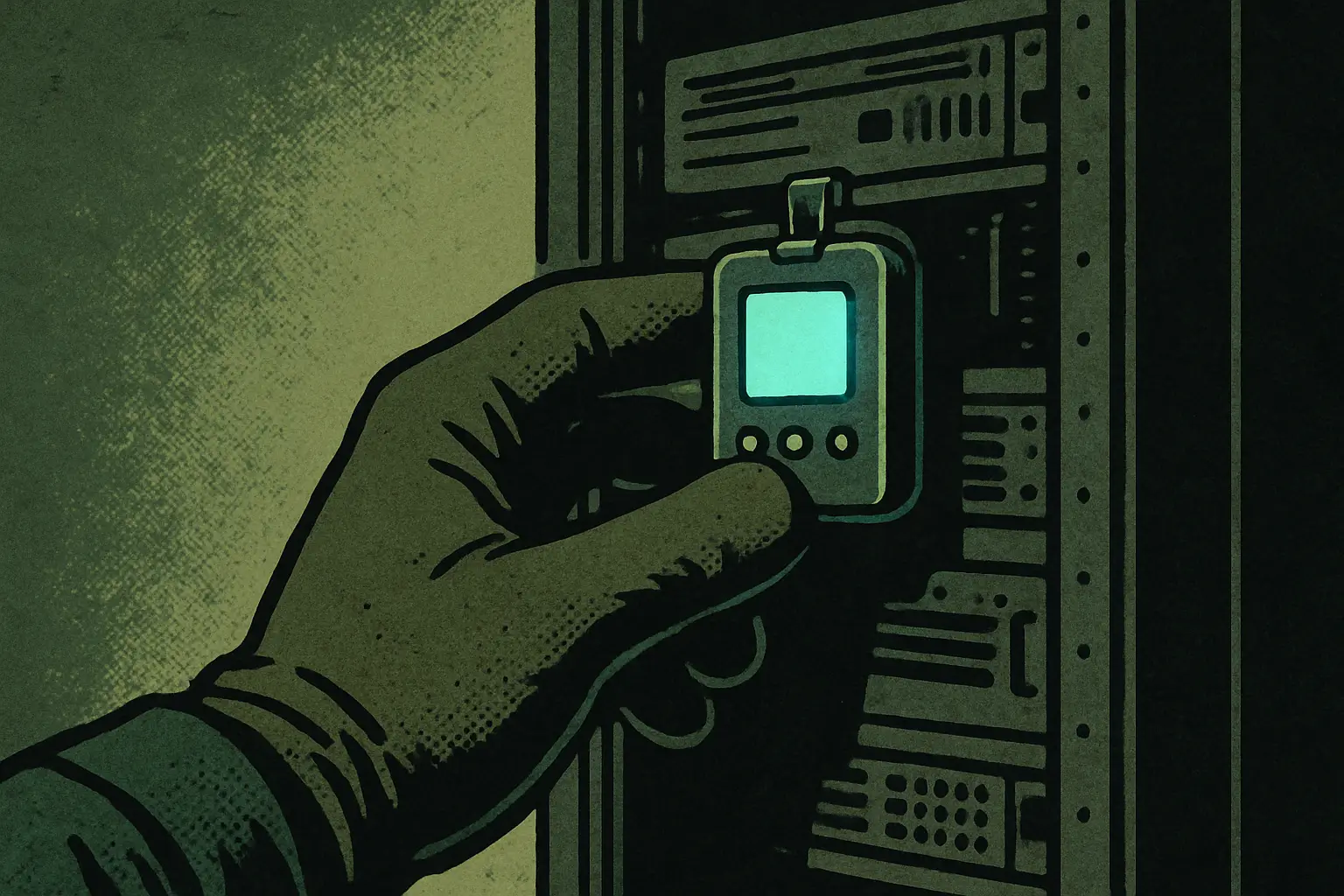
Anyone who has driven two hours to press F2 on a machine that would not boot understands the appeal of an IP-KVM. USBridge Technologies launched the USBridge-KVM 2.0 on Crowd Supply on August 18, 2026 — a 65-gram open-source remote management device built around a Radxa Zero 3W, priced at $219 for the full kit. Its headline trick is genuinely new: it runs offline OCR against the video capture stream so a graphical BIOS screen becomes readable text inside an SSH session.
- Built on a Radxa Zero 3W with a Rockchip RK3566 and 1-2GB of LPDDR4X
- Hardware UVC capture at up to 1080p and 45 FPS, with Moonlight streaming at 25-50 ms latency
- $219 kit on Crowd Supply against a $33,000 funding goal, with delivery estimated March 21, 2027
- Measures 70 x 36 x 26 mm and weighs 65 grams, with a 240x240 IPS status display
What Makes BIOS-in-Terminal Different
Standard IP-KVMs give you a video stream, which means you need a graphical client and enough bandwidth to run it. That is fine at a desk and awkward from a phone on a train. USBridge-KVM 2.0 adds an offline OCR path that converts the captured BIOS or boot screen into text and exposes it over SSH.
The practical consequence is that recovering a machine stops requiring a browser. You can fix a boot order, toggle virtualization, or read a POST error from any terminal, over any connection that carries SSH. For homelab operators running headless boxes in a closet, that is a meaningful reduction in the equipment needed to handle the worst-case failure.
What Are the Hardware Specs?
The Radxa Zero 3W base gives it a Rockchip RK3566 single board computer with 1 to 2GB of LPDDR4X. Around that, the device adds hardware UVC video capture rated to 1080p at 45 FPS, a micro HDMI output for local passthrough, two USB Type-C ports — one OTG for power and HID emulation, one host — and an 8-pin GPIO header for wiring power and reset directly to a motherboard's front-panel connector.
Networking is Wi-Fi 6 with native Tailscale integration, which sidesteps the usual port-forwarding question for a device that by definition has deep access to your hardware. A 240x240 IPS display on the front reports status without needing to connect to it, and the whole unit is small enough to hang off the back of a machine without a mounting bracket.
Virtual Media, Snapshots, and MCP
Three software features round it out. Virtual media mounting handles ISO, VDI, and VMDK images, which turns a remote reinstall into a normal task rather than a site visit. Btrfs snapshots let you test changes to a mounted image without altering the original.
The third is the one that will interest readers following AI tooling: the device exposes an MCP interface, so a model like Claude can interact with the managed system through the same channel. That is a natural fit — a stuck boot is exactly the kind of long, tedious diagnostic loop worth delegating — and it is also a reminder that an out-of-band management device is one of the most privileged things on a network. Anyone wiring an agent to one should scope its access deliberately.
Should You Back It?
Two caveats belong on the record. This is a crowdfunding campaign, with an estimated delivery date of March 21, 2027 — a long wait, and crowdfunding timelines are estimates rather than commitments. And at $219 it sits above the cheapest Pi-based DIY KVM builds, though the kit includes the capture dongle, power module, cables, and a preloaded MicroSD card, which is most of what makes a DIY build tedious.
If you already run gear you cannot easily reach, it is a strong-looking package with its firmware and documentation published on GitHub. For related builds, see our Raspberry Pi power guide and our look at a CM5 mini PC running local agents, plus more in our mini computer coverage.
Sources: CNX Software — August 18, 2026; Crowd Supply — August 2026.
More Mini Computers Stories

MaTouch ESP32-S3 E Ink Board: A $60 Voice-Ready Dashboard
Makerfabs' MaTouch ESP32-S3 pairs a 7.5-inch four-color E Ink screen with a four-mic array for $59.80. Here are the specs and what you can build.

ASRock NUC 300 Mini PCs: Wildcat Lake With Dual 2.5GbE
ASRock Industrial's NUC 300 series brings Intel Core 5 320 and Core 3 304 to mini PCs and boards with up to 64GB of DDR5-6400 memory and dual 2.5GbE.

DGX Spark 64GB: Who NVIDIA's $4,999 Local AI Box Is For
NVIDIA's DGX Spark 64GB starts at $4,999 on Oct 23 and runs models up to 100B parameters. Here is who the local AI box suits and how clustering works.