
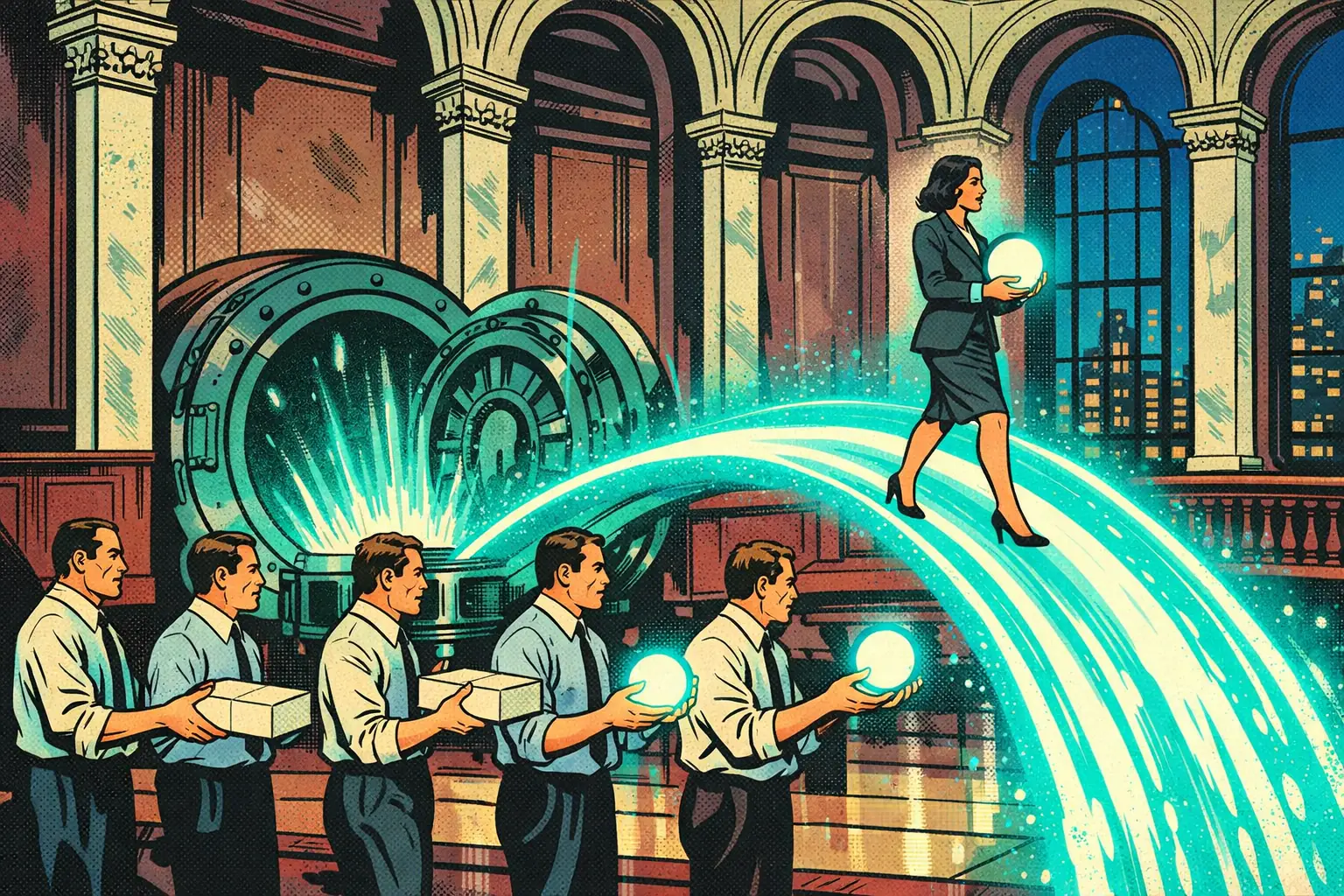
Morgan Stanley Tokenizes Stocks and Treasuries via DTCC
Morgan Stanley tokenized US stocks and Treasuries through DTCC's new service, one of 20 firms signed on. Here's how digital twins work and what comes next.

A week after the DTCC Tokenization Service went live, one of the first concrete usage data points from a major bank has arrived. Morgan Stanley says it is among the first banks to tokenize U.S. equities and Treasuries through the service, according to reports from Decrypt, CoinDesk and The Block on November 4, 2026. For a market that has long debated whether tokenization would move past pilots, live use of core post-trade infrastructure is worth examining.
- Morgan Stanley said it has tokenized U.S. equities and Treasuries through the DTCC Tokenization Service
- 20 firms have signed up so far, including Bank of America, Citi, J.P. Morgan, Fidelity, Citadel Securities and UBS
- DTC, the DTCC subsidiary running the service, holds about $114 trillion in assets under custody
- The Block reports the bank expects to support tokenized equities on its alternative trading system in Q1 2027
How Does DTCC's Tokenization Service Work?
The structure is what separates this from a crypto-native tokenized stock. Eligible firms convert securities already held at DTC into tokenized "digital twins," then convert them back when needed, and can deliver them to wallets of their choice. According to DTCC, the tokens carry the same ownership rights, investor protections and economic entitlements as the originals.
The rails are currently the Canton Network and DTCC's private Besu network, with more blockchains planned for 2027. The legal foundation is a December 2025 SEC no-action letter covering Russell 1000 stocks, major index ETFs and U.S. Treasuries. We walked through the mechanics in detail in our DTCC Tokenization Service launch explainer.
Why Does Morgan Stanley's Tokenization Matter?
Three points stand out in the data.
- Scale of the venue: the $114 trillion custody base means even small adoption percentages would represent large asset values, though none of the reports we reviewed include volume figures from Morgan Stanley
- Breadth of participants: DTCC developed the service with input from more than 150 firms, with onboarding planned on a rolling basis
- Use case: DTCC pitches faster collateral movement, with firms able to reposition collateral and reach new liquidity pools within minutes
That last point is the one to watch. Moving collateral quickly has measurable value for balance sheets, and it does not depend on retail demand for tokenized shares. Morgan Stanley's head of digital assets strategy, Amy Oldenburg, framed the work as hands-on experience that will inform the firm's capabilities, which suggests learning rather than a large-scale rollout at this stage. The bank's disclosure describes its own activity and the coverage gives no transaction amounts, so caution on size is warranted.
What Comes Next for Tokenized Securities?
The Block reports that Morgan Stanley expects to support tokenized equities on its alternative trading system in Q1 2027, updated from an earlier second-half 2026 target. That would extend the bank's work from custody-level conversion into actual secondary trading.
Other market infrastructure is moving in parallel. The NYSE and parent Intercontinental Exchange are advancing their own tokenized trading platform, as covered in our report on NYSE tokenized stock voting through Broadridge.
What Should Investors Take From This?
For most retail holders, nothing changes today. The service operates between DTC participants, not consumer brokerage apps. The metrics worth tracking over the next two quarters are concrete: the number of signed-up firms beyond the initial 20, any disclosed tokenized volume, the blockchains added in 2027, and whether that Q1 2027 trading target holds. More analysis is available in our crypto market coverage.
Sources: DTCC press release — October 28, 2026; Decrypt — November 4, 2026; CoinDesk — November 4, 2026; The Block — November 4, 2026.
More Crypto Stories
PNC USDC Payments: What Bank Stablecoin Receipts Mean
PNC Bank now lets eligible corporate clients receive USDC on Ethereum via Coinbase, auto-converted 1-to-1 into US dollars in a pilot launched November 9.

Canton Coin SEC Letter: What Digital Commodity Status Means
Canton Coin won a November 3 SEC staff letter calling it a digital commodity and pledging no enforcement over minting. Here's what it does and doesn't do.

Bitcoin Quantum Landmines: How the Thief-Trap Idea Works
Bitcoin developer Cory Fields proposed quantum landmines and coin auctions that would force a future quantum thief to post BTC collateral they could lose.