
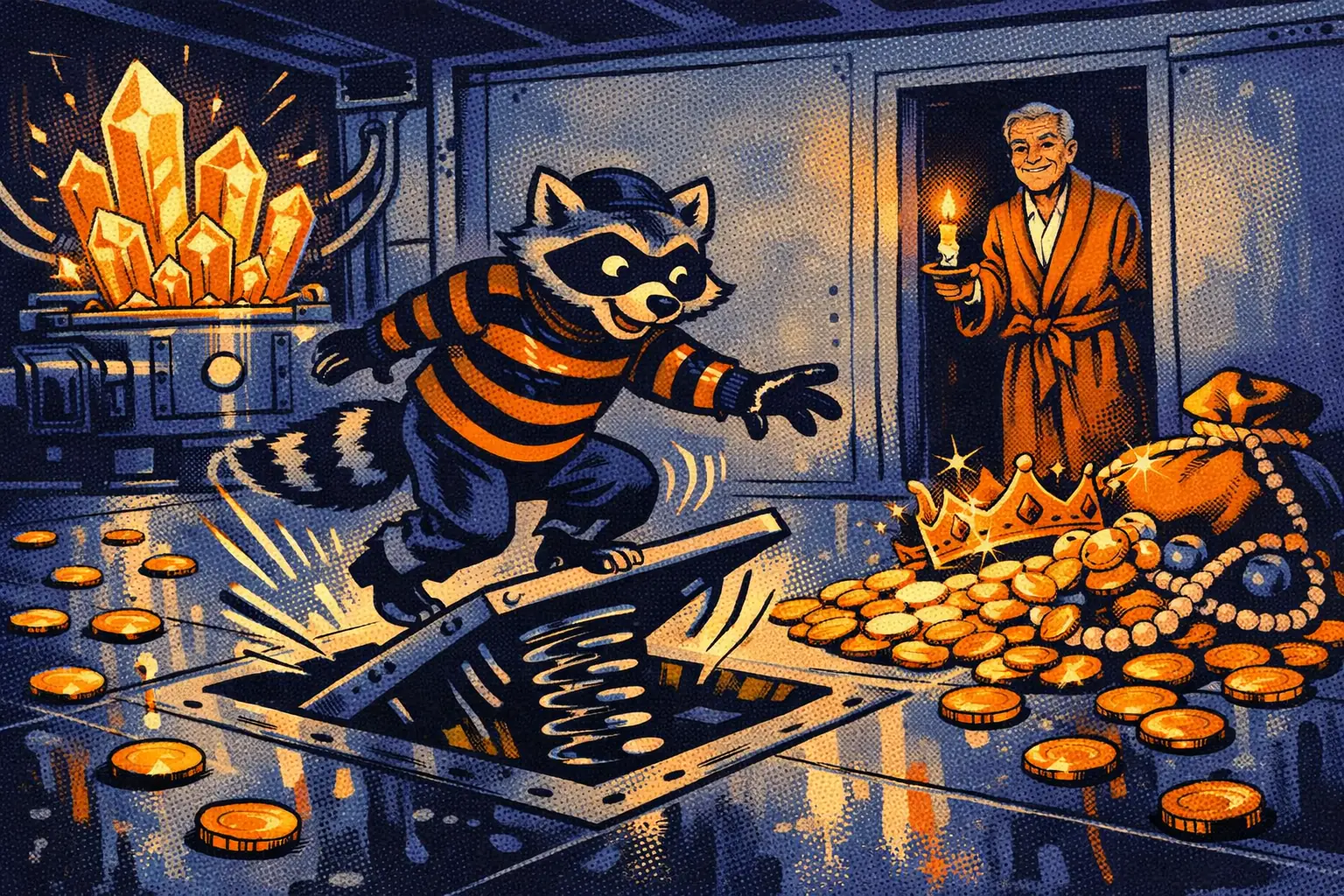
Bitcoin Quantum Landmines: How the Thief-Trap Idea Works
Bitcoin developer Cory Fields proposed quantum landmines and coin auctions that would force a future quantum thief to post BTC collateral they could lose.

What if stealing Bitcoin with a quantum computer were a losing bet? According to Decrypt, that is the thought experiment Bitcoin developer Cory Fields put to the community in a November 4 post to the Bitcoin development mailing list. His "quantum landmines" and two auction designs aim to make future quantum attacks on vulnerable wallets expensive gambles rather than easy paydays.
- Fields shared the ideas on the Bitcoin development mailing list on November 4, 2026
- A quantum landmine is a hidden, quantum-safe proof of ownership created before Q-Day
- A thief would have to post matching BTC collateral, and could lose it to the real owner
- Fields calls the ideas thought experiments; none of these rules exist in Bitcoin today
What Is a Bitcoin Quantum Landmine?
Bitcoin's security relies on the fact that today's computers cannot work backward from a public key to a private key. A sufficiently powerful quantum computer running Shor's algorithm could, in theory, do exactly that. Researchers call that hypothetical moment Q-Day. Decrypt notes that no publicly demonstrated machine can steal Bitcoin this way today, and nobody knows when one might exist.
Fields's landmine works like a sealed ownership receipt. Before Q-Day, the owner of an older wallet creates a tiny, separate quantum-safe output containing hidden proof that they controlled the original key while theft was still impossible. Outsiders cannot tell which wallets have one.
Under the proposed rules, a thief who cracks the old key could not simply take the coins. They would have to add an equal amount of their own BTC as collateral, and both amounts would sit in a restricted output through a challenge period, 30 days in Fields's example. If the real owner reveals their pre-Q-Day proof, they recover their original coin plus the thief's collateral.
How Would Coin Auctions Protect Lost Bitcoin?
Landmines only help owners who prepare in advance, so Fields also sketched two auctions for coins that look abandoned. In a staked auction, someone locks quantum-safe BTC before Q-Day and secretly registers a bid against a wallet they expect thieves to target. If an attacker later tries to move those coins, the bidder can challenge and claim part of the attacker's collateral, while the vulnerable coins are destroyed rather than awarded. The goal is to deny thieves a reliable payday.
A third design, a sats auction, needs no advance stake. A vulnerable-coin spend would trigger a contest where the highest bidder gets the coins minus their bid, and the runner-up pays their bid and gets nothing. That structure could make an attack cost more than it is worth.
What Would It Take to Implement?
Plenty, and Fields is upfront about it. Bitcoin would first need a quantum-safe way to hold and spend coins. Wallets would need to support hidden commitments, and consensus rules would have to enforce collateral, waiting periods and auctions. Decrypt also flags real trade-offs: honest owners might need spare collateral to move legacy coins, and offline holders could miss their window to object. Fields believes some mechanics could arrive via a soft fork but has not published a detailed design or timeline.
That openness is the healthy part. It adds a creative option to the debate alongside migration plans such as BIP-360, which we covered in our Bitcoin quantum-resistance explainer. New to keys and signatures? Start with our Bitcoin white paper guide, then explore more in our crypto section.
Sources: Decrypt — November 8, 2026; Bitcoin development mailing list archive — Cory Fields, "Quantum Landmines and Vulnerable Coin Auctions," November 4, 2026.
More Crypto Stories
PNC USDC Payments: What Bank Stablecoin Receipts Mean
PNC Bank now lets eligible corporate clients receive USDC on Ethereum via Coinbase, auto-converted 1-to-1 into US dollars in a pilot launched November 9.
Morgan Stanley Tokenizes Stocks and Treasuries via DTCC
Morgan Stanley tokenized US stocks and Treasuries through DTCC's new service, one of 20 firms signed on. Here's how digital twins work and what comes next.

Canton Coin SEC Letter: What Digital Commodity Status Means
Canton Coin won a November 3 SEC staff letter calling it a digital commodity and pledging no enforcement over minting. Here's what it does and doesn't do.