
Mistral OCR 4 Brings Private, On-Premise Document AI to Enterprises
Mistral released OCR 4 on June 23, 2026 — a top-scoring document-extraction model that deploys in a single container, keeping sensitive documents inside an organization's own infrastructure.

Smart Document Reading That Never Leaves Home
For all the excitement around generative models, a huge amount of practical value lives in something far less flashy: reliably turning messy documents into clean, structured data. On June 23, 2026, Mistral AI released OCR 4, a state-of-the-art document intelligence model — and the headline feature is as much about *where* it runs as how well it reads.
OCR 4 is designed to deploy entirely inside a customer's own infrastructure. For banks, hospitals, law firms, and anyone handling regulated information, that's a genuinely important distinction, and it's the part of this release I want to focus on.
On-Premise by Design
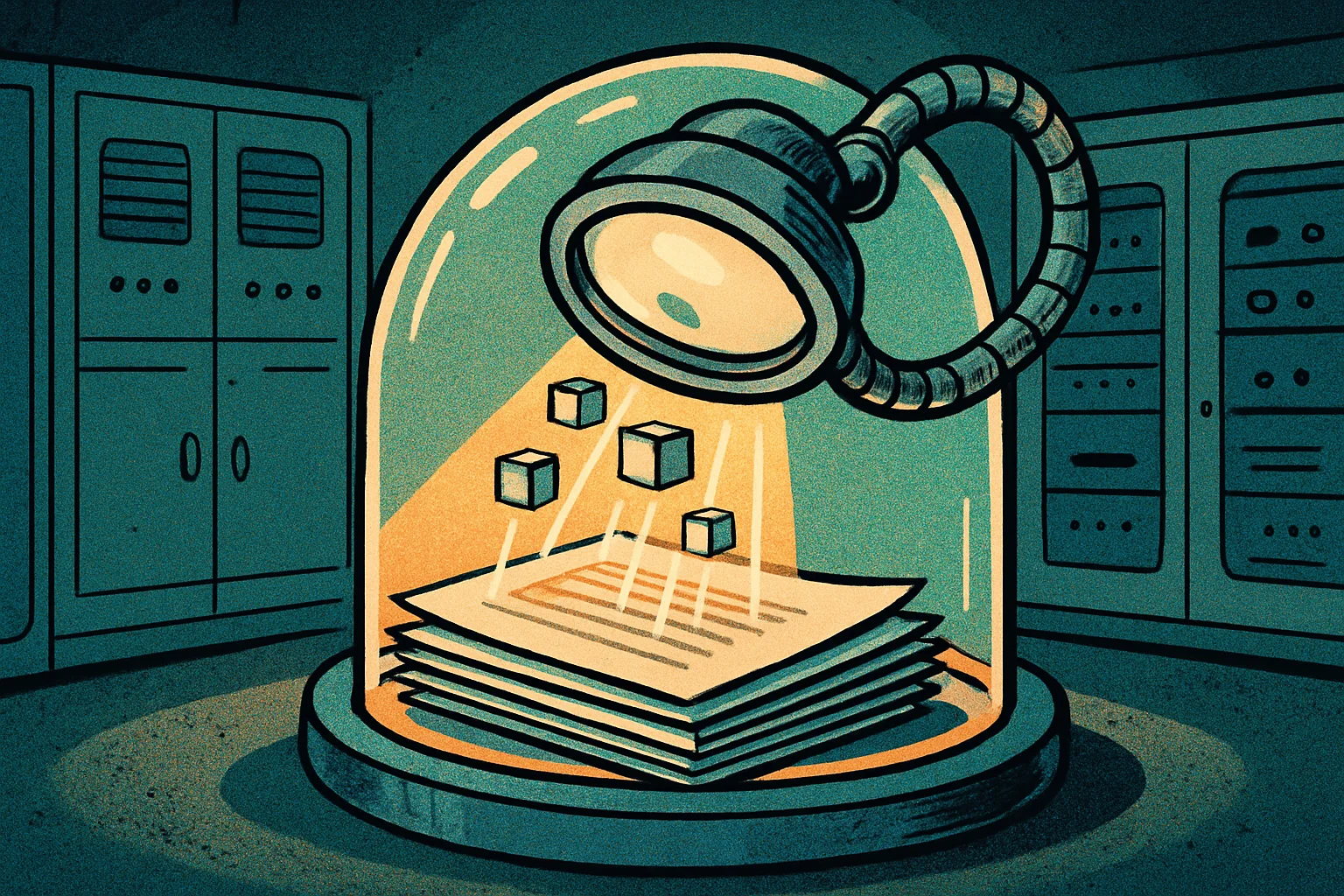
Here's the central idea. OCR 4 ships as a single container that an organization can run on its own servers, which means sensitive documents never have to leave the building or get routed through a third-party cloud. In a world where data residency and confidentiality are non-negotiable for many industries, on-premise AI like this removes one of the biggest blockers to adoption.
I think this is the right instinct. The most capable model in the world isn't useful to a regulated enterprise if the compliance team can't sign off on it. By meeting organizations where their data already lives, Mistral has made advanced document AI accessible to exactly the users who've historically had to sit out the cloud-first wave.
What the Model Can Do
The capabilities are substantial. OCR 4 supports 170 languages, and crucially it returns paragraph-level bounding boxes alongside the extracted text — so you don't just get the words, you get *where* they sit on the page, which is essential for reconstructing tables, forms, and complex layouts faithfully.
The Numbers Back It Up
I always like to see capability claims grounded in measurement. On the OlmOCRBench benchmark, OCR 4 posted a top overall score of 85.20, and in head-to-head evaluations human annotators preferred its output over every leading competitor tested, with win rates averaging around 72%. Those are strong, well-rounded results — not just raw accuracy, but output that people actually find more useful.
Why This Matters for the AI Ecosystem
Document extraction is one of those quietly foundational tasks that powers everything from automated invoicing to research and records management. Making a top-tier OCR model that's both highly accurate *and* deployable in a private, self-contained way pushes capable AI into corners of the economy that need it most. As we often note in our AI coverage, the breakthroughs that endure tend to be the ones that respect real-world constraints — and privacy is one of the biggest.
The Takeaway
Mistral OCR 4 is a thoughtful, practical advance in document intelligence: benchmark-leading accuracy, broad language support, structured layout-aware output, and a privacy-preserving single-container deployment. For regulated enterprises that have wanted modern document AI without giving up control of their data, it's an encouraging and genuinely useful step forward.
Sources: Mistral AI — OCR 4 announcement — June 23, 2026; VentureBeat — June 24, 2026.
More AI Stories

Strands Decider 2B: What Amazon's Free Decision Model Does
Strands Decider 2B is a free 2B-parameter decision model that picks options in about 115ms on a single GPU. Here is how it works and where it fits.

Meta Muse Gadgets SDK: Build Your Own AI Agent Hardware
Meta's open-source Muse Gadgets SDKs bring its Muse agent to Raspberry Pi and ESP32 builds, and 5,000 free Home Link dongles are going to subscribers.

AstaBrief 8B: Ai2's Open Model for Cited Science Reports
AstaBrief 8B is Ai2's Apache 2.0 open model that writes cited research reports in 51 seconds, 3.5x faster than its Claude pipeline. Here is how it works.