
Flipper BUSY Bar: An Open-Source Productivity Display for Makers
The Flipper BUSY Bar is an open-source productivity display with a 72x16 RGB LED matrix, dual processors, Wi-Fi 6, and Matter support.

The Flipper BUSY Bar Brings Open-Source Productivity to Your Desk
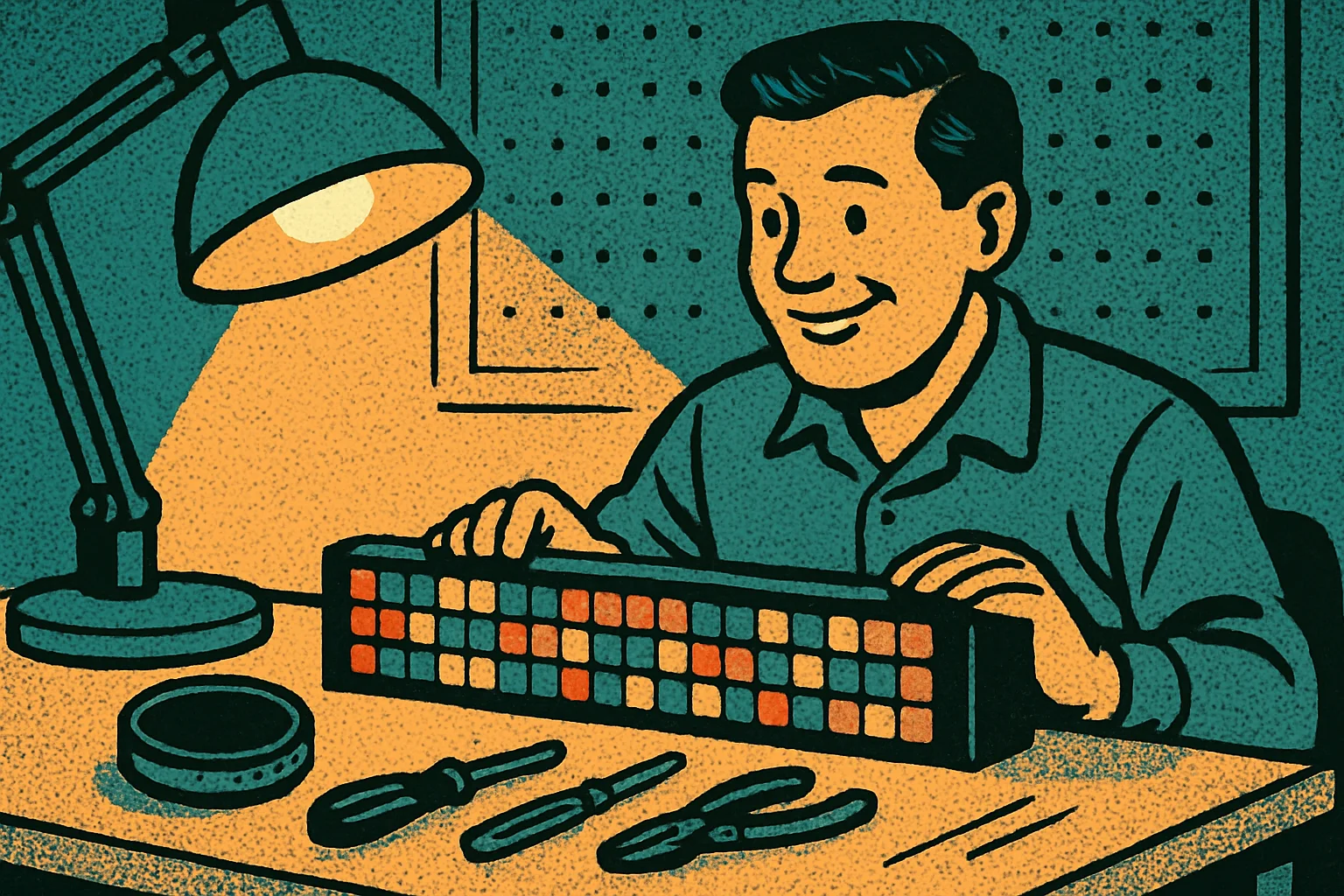
Flipper Devices just dropped something that any maker with a cluttered mental to-do list is going to want. Announced on July 1, 2026, the Flipper BUSY Bar is a customizable open-source productivity display built for developers, makers, and anyone who lives at a workbench. If you've ever wished for a physical, hackable status sign that you actually control top to bottom, this is the open-source productivity display you've been waiting for.
Let's start with what you'll stare at all day: the main panel. It's a 6.35-inch RGB LED matrix running a crisp 72x16 pixels at 60Hz, and it pushes a genuinely bright 800 nits. That's enough punch to read across a sunny room, whether you're flashing a focus animation or a scrolling dashboard. Backing it up is a secondary 1.54-inch monochrome OLED, a perfect little screen for menus, glanceable stats, or quiet notifications when the big bar is busy doing its thing.
Dual Processors and Modern Wireless
Here's where the spec sheet gets fun. The BUSY Bar runs a dual-processor design: an STM32U5 with a Cortex-M33 core clocked at 160 MHz handles the application side, while a Silicon Labs SiWG917 packing a Cortex-M4 at 180 MHz takes care of connectivity. Splitting duties like this keeps the interface snappy while the radio does its own heavy lifting in the background.
And that radio is thoroughly modern. You get Wi-Fi 6 with WPA3 security, Bluetooth 5.4, and Matter protocol support baked in. Matter is the headline for smart-home tinkerers: it means the BUSY Bar can slot into your existing ecosystem as a first-class citizen, reacting to automations or surfacing statuses from across your setup. Wi-Fi 6 keeps throughput and efficiency high, so this little device won't choke your network while it pulls dashboards.
Power-wise, the 3,250 mAh battery is rated for roughly two weeks of standby or about 8 hours of active use. That's a comfortable all-day-and-then-some runtime for a device this expressive, and it means you can move it around the desk or take it to a co-working spot without hunting for an outlet.
Fully Open-Source and Ready to Hack
The part I love most: the hardware and firmware are fully open-source. Flipper has a strong track record here, and it pays off for the community. Open firmware means you can write your own animations, wire up custom notification logic, or build entirely new use cases the original team never imagined. Want a giant do-not-disturb focus sign? Done. A live build-status board? A meeting-in-progress indicator? A pixel-art notification ticker? All of it is on the table, and all of it is yours to modify.
Use ideas practically write themselves: a focus or "do not disturb" status sign, at-a-glance notifications, and compact dashboards for whatever metrics matter to you. For self-hosters and home-lab folks, an open, Matter-capable status display is a genuinely handy building block.
The Flipper BUSY Bar ships July 14, 2026, with early-bird pricing around $179 and a $249 standard price. For an open-source productivity display with dual processors, Wi-Fi 6, and a bright pixel-LED matrix, that's a compelling entry point for makers who want hardware they can truly own and extend.
Sources: CNX Software, July 1, 2026; TechCrunch, June 2026; XDA Developers, July 2026.
More Mini Computers Stories

MaTouch ESP32-S3 E Ink Board: A $60 Voice-Ready Dashboard
Makerfabs' MaTouch ESP32-S3 pairs a 7.5-inch four-color E Ink screen with a four-mic array for $59.80. Here are the specs and what you can build.

ASRock NUC 300 Mini PCs: Wildcat Lake With Dual 2.5GbE
ASRock Industrial's NUC 300 series brings Intel Core 5 320 and Core 3 304 to mini PCs and boards with up to 64GB of DDR5-6400 memory and dual 2.5GbE.

DGX Spark 64GB: Who NVIDIA's $4,999 Local AI Box Is For
NVIDIA's DGX Spark 64GB starts at $4,999 on Oct 23 and runs models up to 100B parameters. Here is who the local AI box suits and how clustering works.