
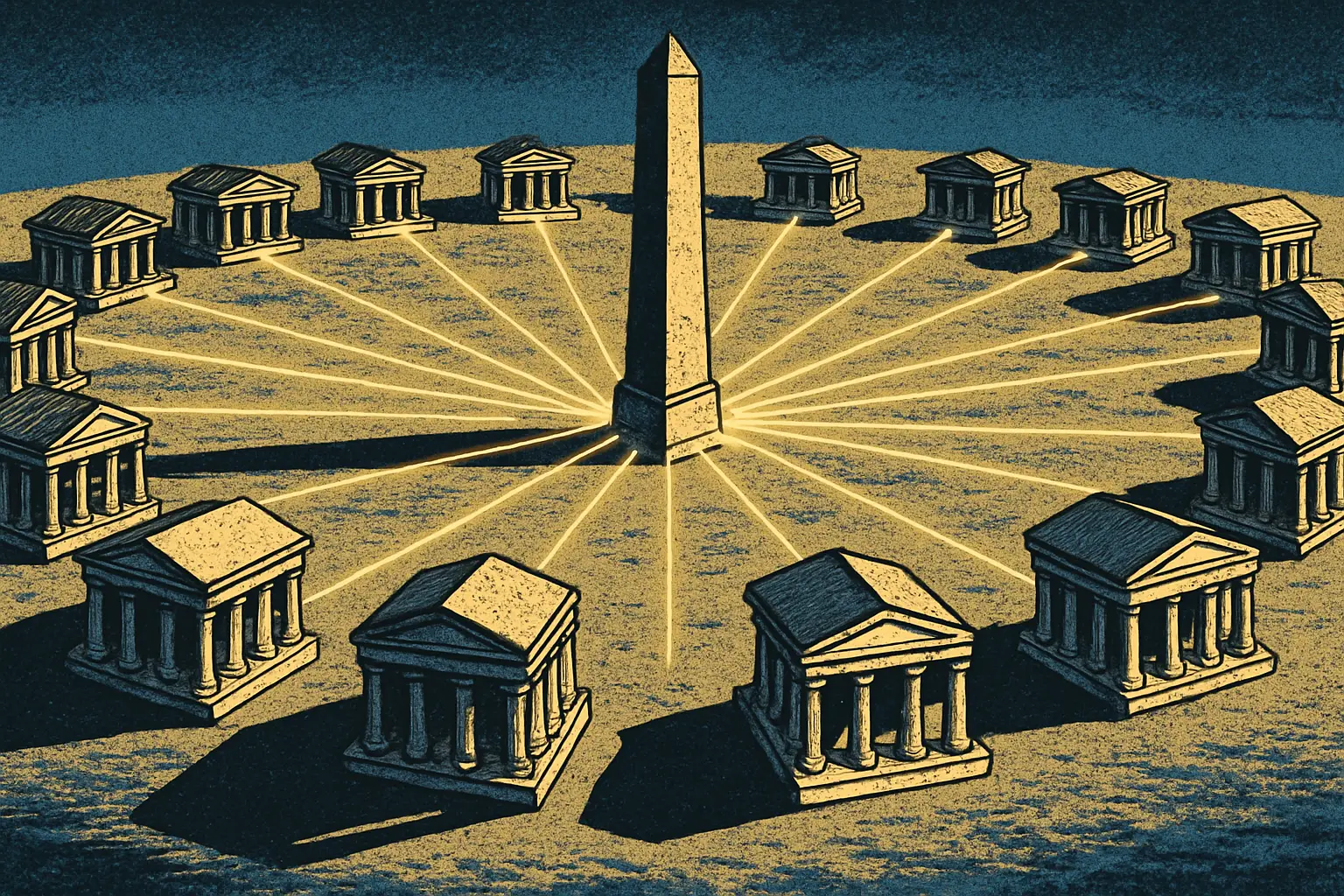
21 Global Banks Form a Joint Dollar Stablecoin Venture
Citi, Goldman Sachs, BofA and 18 other institutions will form a company in H2 2026 to issue a regulated dollar stablecoin, launching in H1 2027.

Twenty-One Institutions, One Shared Issuer
On September 1, 2026, a group of 21 international financial institutions announced plans to form a single company to issue a dollar-denominated stablecoin. The named participants include Bank of America, Citi, Goldman Sachs, Wells Fargo, Deutsche Bank, UBS, Banco Santander, MUFG Bank and Standard Bank, spanning North America, Europe, East Asia, the Middle East and Africa.
The company is due to be established in the second half of 2026, subject to closing conditions, with the token itself targeted for the first half of 2027.
- 21 institutions, expanded from an initial group of ten that began exploring reserve-backed digital money on public blockchains in October 2025
- Dollar first, euro next — the venture starts with a USD token and lists EUR as its priority expansion, with other G7 currencies to follow
- Wholesale, institutional and retail use cases, aimed at cross-border payments and digital asset settlement
- Company formation in H2 2026, market launch targeted for H1 2027, with compliance intended against the GENIUS Act and MiCA where applicable
Why a Shared Issuer Instead of 21 Separate Coins
The obvious question is why these institutions would pool the effort rather than each issue their own token. The answer is that a payment instrument with one holder is not a payment instrument. Value in this design comes from acceptance, and acceptance comes from every participant honouring the same claim.
This is also the difference between a stablecoin and a tokenized deposit, a distinction worth keeping straight — we set out the mechanics in tokenized deposits versus stablecoins. A tokenized deposit is a claim on one specific bank's balance sheet. A shared stablecoin is a bearer instrument that moves between counterparties without either side needing a relationship with the issuer. For cross-border settlement, the second property is the one that does the work.
The consolidation trend is not new either. Twelve European banks formed the Qivalis consortium for a MiCA-regulated euro stablecoin in March, and the BankChain Alliance announced a bank-owned network in August. What is different here is scale and geography: this is the first grouping to span five regions with this concentration of tier-one balance sheets.
What Does the 2027 Timeline Actually Mean?
A launch window of H1 2027 is roughly nine to fifteen months out, which is a realistic schedule for a jointly owned regulated issuer rather than an optimistic one. Standing up a new company with 21 shareholders, agreeing a reserve policy, obtaining authorisations in multiple jurisdictions and integrating with each participant's treasury systems is a genuinely long sequence of work.
The regulatory framing is deliberate. Building against the GENIUS Act in the United States and MiCA in the European Union from the start is a different posture from launching first and seeking authorisation afterwards, and it is the main reason the timeline looks the way it does.
One point of caution on the reporting: the announcement came via a joint press release, and it contains no direct executive quotes and no named company. Reserve composition, redemption mechanics and the governance structure are all still unpublished. Those details will determine whether the resulting token behaves like a settlement asset or like a niche interbank instrument, and there is no basis to guess yet.
What to Watch Next
Three things will tell you how serious this becomes. First, whether the entity is named and capitalised on schedule this half. Second, whether reserve rules land at full backing in cash and short-dated government paper — the direction regulators have been converging on, with Singapore proposing 100% reserves in its own consultation the same day. Third, whether any participant also joins a competing venture, which would signal hedging rather than commitment.
For the rest of the institutional picture, our crypto coverage tracks how traditional finance keeps moving settlement onto shared ledgers.
Sources: PR Newswire joint announcement — September 1, 2026; CoinDesk — September 1, 2026.
More Crypto Stories
Qivalis Euro Stablecoin Wins Dutch E-Money Licence From DNB
Qivalis, the euro stablecoin venture backed by 37 European banks in 15 countries, has won an e-money licence from De Nederlandsche Bank ahead of launch.

Mastercard Global Money Platform: Stablecoins Meet Fiat
Mastercard's Global Money Platform with BVNK holds fiat and stablecoins in one account via one API, stablecoin-linked cards in 130+ countries and payouts.

Tokenized Treasury Repo: What BNY and Citadel Just Proved
BNY and Citadel Securities settled a tokenized US Treasury in minutes, not T+1, then used it as repo collateral. Here's what it means for 24/7 markets.