Watch Duty Gemini Tool Flags New Wildfires in 30 Seconds
Watch Duty and a Google.org Fellowship built a Gemini radio tool that spots new wildfire dispatches in under 30 seconds and cuts word errors to 22%.

When a wildfire starts at night, the first clue often arrives as a few crackly words on an old analog fire radio channel. Watch Duty, the nonprofit wildfire alert app staffed by current and former firefighters and dispatchers, now has a Gemini-powered tool listening for those words. Google detailed the project on November 20, and the numbers show how much faster alerts can move when AI handles the transcription grind.
- Speed: the tool flags new fire dispatches for Watch Duty reporters in under 30 seconds, according to Google.
- Accuracy: word error rate on degraded VHF radio audio fell from 38% to 22.34%.
- Scale: it transcribes more than 200 hours of radio speech a day from about 400 feeds, and it was designed to handle more than 10,000.
- People: volunteer satisfaction with radio transcription rose from 35.3% to 92.3%.
How Does the Watch Duty Gemini Tool Work?
The work came out of a Google.org Fellowship that Watch Duty announced in April 2026. Google engineers and researchers spent six months embedded full time with the nonprofit. Using more than 20,000 hours of past radio recordings, they built a Gemini-based system that strips out heavy static and turns specialized firefighting jargon into clean, searchable text.
That matters because much of the United States still relies on decades-old VHF radio for the first word of a new fire. Engine noise, wind and rapid tactical shorthand make it hard to follow, and Watch Duty reporters were monitoring up to 20 feeds by ear. Google says the tool now gives them a signal even in areas with no other automated dispatch detection, so a fire is not missed just because nobody was listening at that moment.
Watch Duty was clear from the start that the system supports human judgment rather than replacing it. Its April announcement said the goal was AI that surfaces critical signals faster while staff still assess and verify every incident.
A Real Test During the Railroad Fire
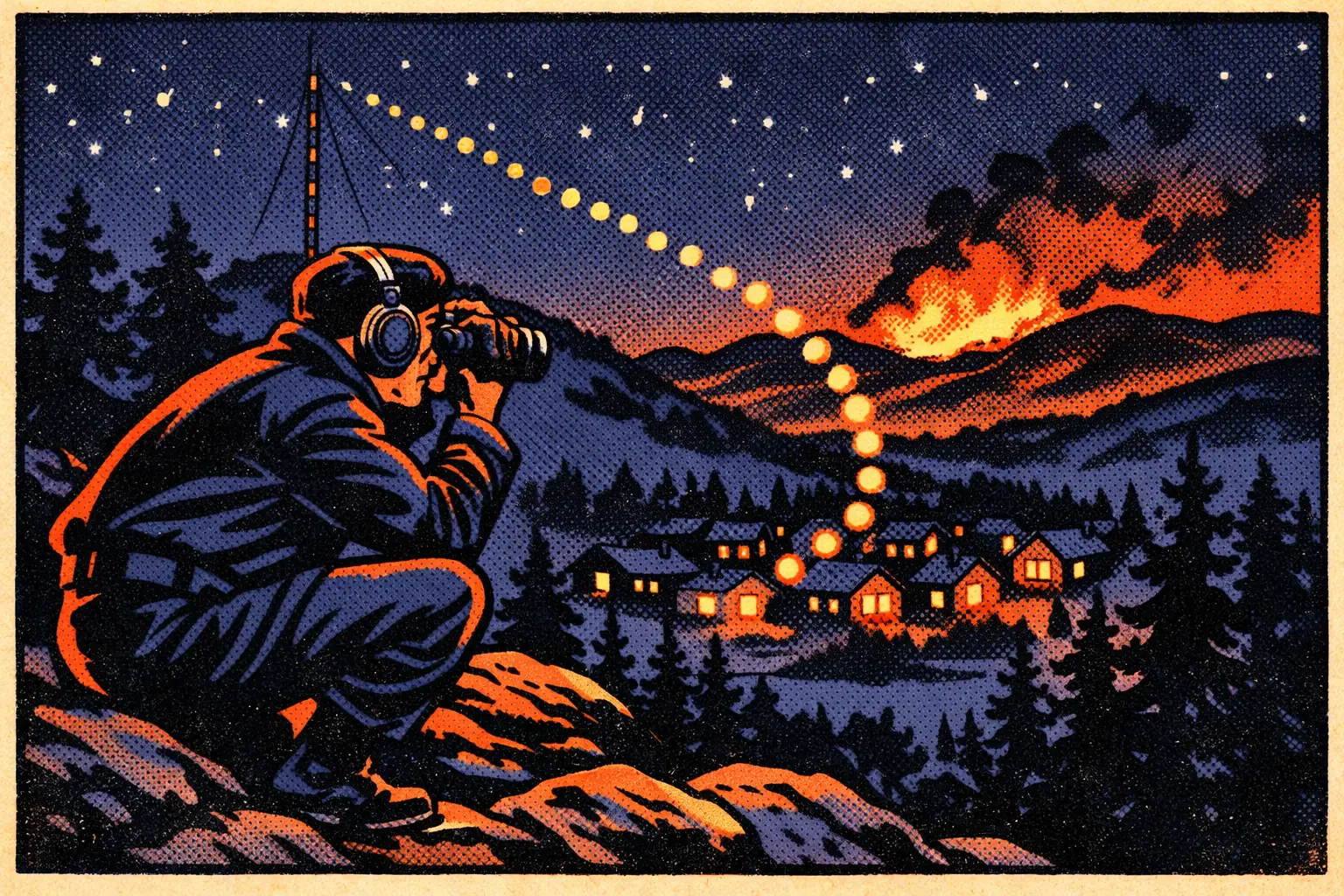
The tool proved itself in July 2026, when the Railroad Fire ignited overnight in Washington. Google says the first 911 dispatch went out over local fire radio and the system transcribed and flagged it in under 30 seconds. That head start let Watch Duty verify the fire and send a Critical Alert, which breaks through do-not-disturb settings, so residents could evacuate before the flames reached homes. It was the first time the app had ever sent a Critical Alert overnight.
Why AI Speech Recognition Fits Emergency Work
This is a strong example of AI doing an unglamorous job very well. Speech recognition on clean audio is a solved problem for most consumer uses, but noisy radio with domain-specific vocabulary is much harder. Training on thousands of hours of real fire traffic is what pushed the error rate down, and the payoff is measured in minutes saved for people in harm's way.
It also shows the value of long partnerships. Google.org gave Watch Duty $2 million and $300,000 in cloud credits in 2024, and Google Cloud raised the app's push-messaging limit as its audience passed 16 million people. The radio tool is the latest step in that relationship.
We have covered other ways AI is helping with fire and climate risk, including OlmoEarth's faster wildfire risk mapping. For more stories like this, browse our artificial intelligence coverage.
Sources: Google Blog — How Watch Duty is using Gemini to get wildfire alerts out faster — November 20, 2026; Watch Duty — Google.org Fellowship Helps Watch Duty Deliver Critical Fire Info Faster — April 22, 2026.
More AI Stories

GLM-5.4 Loop Transformer: How Z.ai Reuses Layers to Reason
Z.ai says GLM-5.4, a 750B-parameter model that runs 28 layers twice, reasons like a 2T-3T model. It is live on the GLM Coding Plan from $18 a month.

Claude Ship Explained: AI Review, Fixes and PR Approvals
Anthropic launched Claude Ship in beta: Code Review plus two new agents that fix failing pull requests and approve changes a team policy allows on GitHub.
OpenAI MedChemBench: How Well Can AI Reason Like a Chemist?
OpenAI MedChemBench tests AI on 99 medicinal chemistry problems. GPT-6.2 Astra scored 84.5%, but picking compounds is still the hard part for models.