
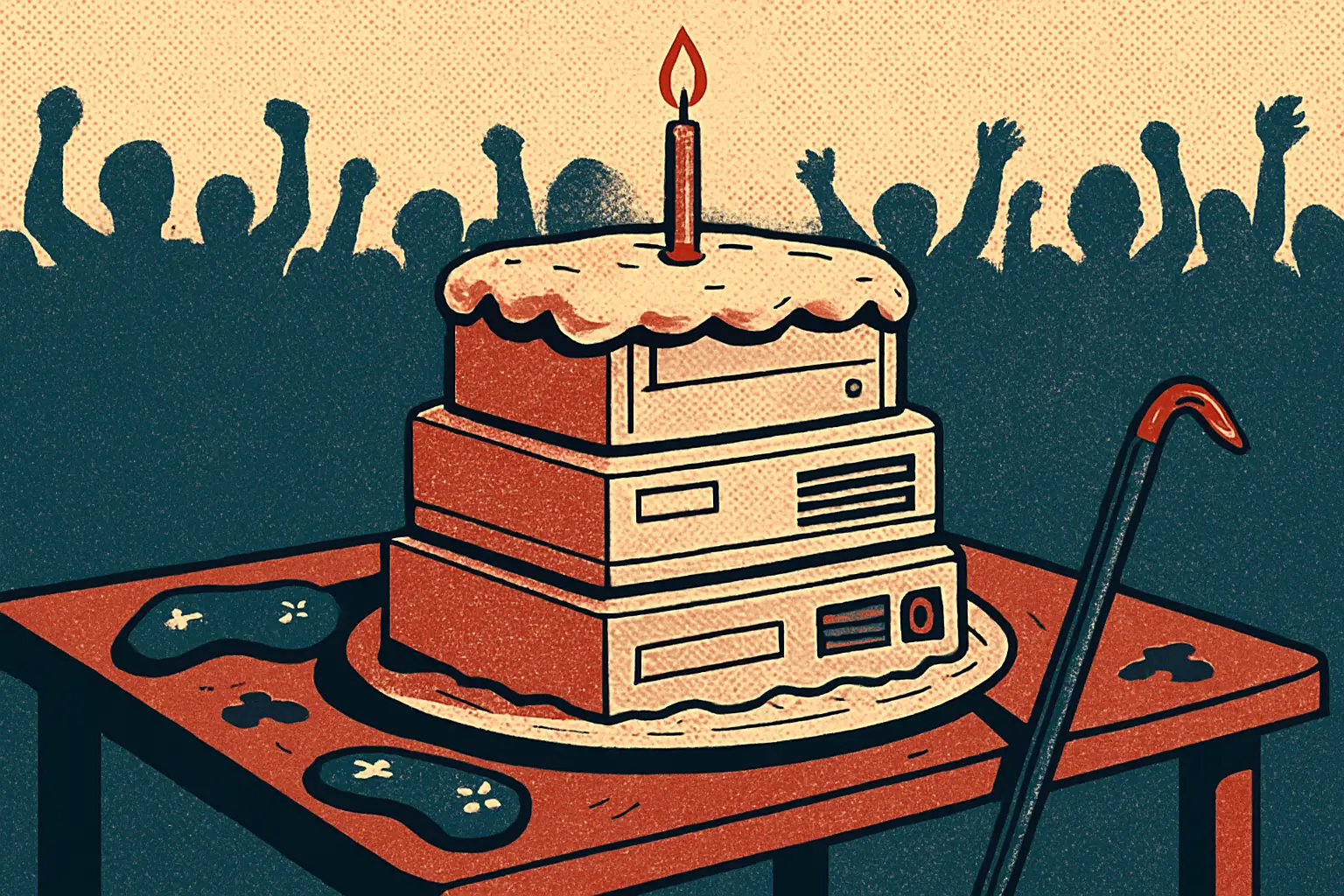
Valve Turns 30: Half-Life, Steam, and a Handheld Era
Valve was founded on August 24, 1996. Thirty years on, Half-Life, Steam, the Steam Deck, and a $1,049 Steam Machine map three decades of PC gaming.

Thirty years ago today, two Microsoft employees walked out of Redmond and set up shop five miles away in Kirkland, Washington. Gabe Newell and Mike Harrington founded Valve on August 24, 1996, with roughly a million dollars of Newell's own money, about a million more from Sierra On-Line, and a plan that everyone in the industry thought was a bad one: make a first-person shooter with a story.
- Half-Life launched in November 1998 and sold 2.5 million copies within twelve months
- Steam arrived in 2003 as a patching tool and became the dominant PC storefront
- The Steam Deck shipped in 2022; the Steam Machine followed in June 2026 at $1,049 for the 512GB model
- Steam generated roughly $11.1 billion in the first half of 2026
From a Crowbar to a Storefront
The Half-Life story is well worn by now, but the numbers still land. Two and a half million copies in a year, from a first-time studio, in a genre everyone had already declared solved. Harrington left in 2000, having sold his Microsoft shares to fund his half of the company. Newell, who had borrowed against his shares instead, stayed.
What happened next is the part that actually reshaped the industry. Steam launched in 2003 doing something nobody wanted: forcing players to install a background client to patch Counter-Strike. It was, charitably, not beloved. Two decades later it is the default way PC games are bought, updated, refunded, modded, and reviewed, and Valve takes a standard 30% cut of most of it.
What Has Valve Actually Shipped Lately?
More hardware than most people expected, is the honest answer. The Steam Deck in 2022 did something no prior PC handheld managed — it made Linux gaming genuinely mainstream by hiding Linux entirely behind Proton. The SteamOS 3.8 release earlier in 2026 extended that groundwork to living-room hardware, and the Steam Machine arrived in June at $1,049 for the 512GB configuration.
That hardware push has knock-on effects well outside Valve. The Steam Machine chassis has already become a target for the maker scene, including a DIY e-ink faceplate built around an ESP32. And SteamVR's Quick Access menu overhaul landed ahead of the Steam Frame headset, which suggests the VR line is not finished either.
The Thing Valve Got Right
Strip away the memes about counting to three and there is a consistent thread across thirty years: Valve keeps betting that the platform layer matters more than any individual release. Half-Life sold the engine. Steam sold the catalog. Proton sold the operating system. The Deck sold the form factor.
It is a slow, unfashionable kind of strategy, and it has produced a company that shapes what PC gaming is without shipping a numbered sequel for years at a stretch. Thirty years in, the crowbar is still on the shelf and the storefront is still open. More coverage of the PC and handheld scene lives on our gaming page.
Sources: Tom's Hardware — August 24, 2026; TechSpot — August 24, 2026; PC Guide — August 24, 2026.
More Gaming Stories

GTA 6 Radio Stations: All Six Revealed, Plus Podcasts
Rockstar revealed six GTA 6 radio stations, including Flash FM, and confirmed on-demand podcasts you can play on foot with in-game earbuds before Nov 19.

Arc Raiders Frozen Trail: Everything in the October 8 Update
Arc Raiders Frozen Trail arrives October 8 as a free update with the Pendola Pass map, 3 new ARC enemies, 2 new guns, a grappling hook and a PvE test.
Gears of War: E-Day Launch: Reviews, Modes and Game Pass
Gears of War: E-Day launches October 6 on Xbox Series X/S and PC with Game Pass, an 87 OpenCritic average, a 16-hour campaign and Horde Siege co-op.