
Inkterface Adds a Wireless E-Ink Faceplate to Valve's Steam Machine
A maker built Inkterface, a magnetic battery-powered e-ink faceplate for Valve's Steam Machine, driven by an ESP32 and fully open-sourced with STEP and STL files.

When New Gaming Hardware Meets Classic Maker Ingenuity
There is a special kind of joy in watching the maker community get its hands on a fresh piece of hardware and immediately start improving it. Case in point: on July 4, 2026, maker NaKyle Wright shared Inkterface, a slick do-it-yourself e-ink faceplate that snaps onto Valve's new Steam Machine — and it is a lovely little study in tidy, self-contained design.
A Self-Contained Display That Just Snaps On
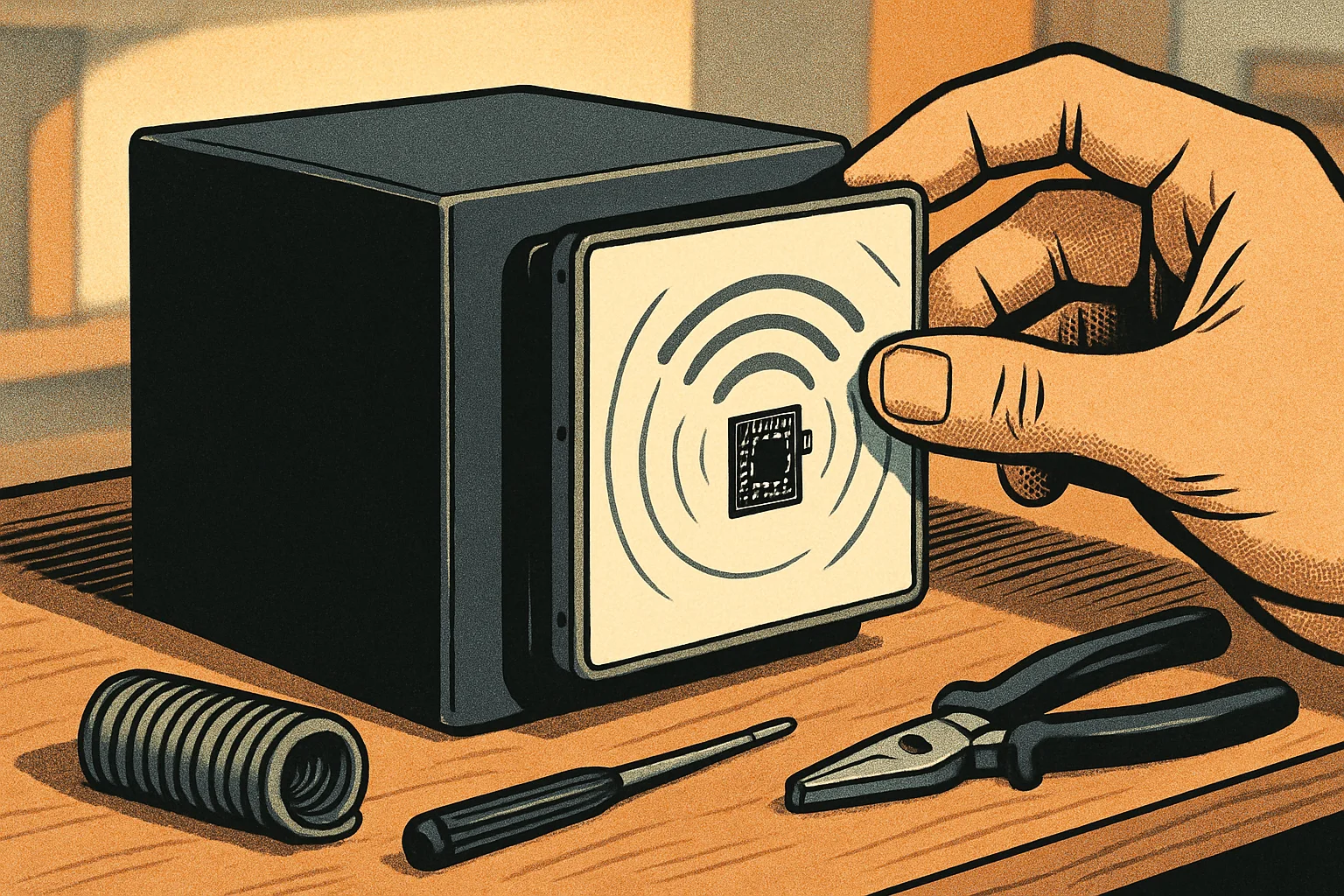
What makes Inkterface clever is that it does not tap into the console at all. It is a fully independent module: a 5.83-inch e-ink panel driven by an ESP32-based Adafruit Feather V2, powered by its own small LiPo battery, and wrapped in a 3D-printed frame and bezel. The whole assembly attaches to the front of the Steam Machine magnetically, so there is no cutting, no soldering into the host device, and no risk to the hardware you just bought. Pop it on, pop it off — it is completely non-invasive.
The e-ink choice is the right one for this job. Electronic-paper displays sip power and hold a static image with zero energy draw, so the faceplate can show artwork or status for ages on a tiny battery. That is exactly why e-ink has become a maker favorite for always-visible, low-power displays.
Content Pushed Over Bluetooth
Because the panel is decoupled from the console, Inkterface receives whatever it should display over Bluetooth, pushed from a companion software service. That means you can send it custom art, a now-playing panel, system status, or whatever you dream up, and update it wirelessly without ever touching the module. It is a neat architecture: the display is dumb-simple and battery-friendly, while the smarts live in the software feeding it.
Open-Source and Built to Be Remixed
Here is the part I love most, because it is what makes a project like this matter beyond a single build: Wright published the full design. Both the STEP and STL files are available, so anyone can print the frame, source the parts, and build their own — or, better yet, remix it. Want a bigger panel? A different mount? A version for another console entirely? The files are right there.
That open, modular spirit is the beating heart of the maker movement. One person builds a tidy, well-documented ESP32 project, shares it freely, and suddenly it becomes a launchpad for a hundred variations. Inkterface is not going to change the industry, and it does not need to. It is a friendly, approachable, genuinely useful hack that adds a customizable low-power display to a shiny new machine — and hands the blueprint to everyone else.
If you have been looking for an accessible weekend e-ink project to sink your teeth into, this is a great one to study. It is a reminder that half the fun of new hardware is figuring out how to make it a little more *yours*.
Sources: Hackaday — "Make a DIY E-Ink Faceplate for Valve's Steam Machine" — July 4, 2026; NaKyle Wright project files (STEP/STL) — July 2026.
More Mini Computers Stories

Raspberry Pi Desktop for PC and Mac: Revive an Old Laptop
Raspberry Pi Desktop returns for PCs and Intel Macs on 64-bit Debian Trixie, runs live from USB, and installs free on machines up to about 15 years old.

ESP32 SDR Firmware: Turn a Dev Board Into a Radio Scanner
A hidden ESP32 mode lets free ESP-SDR firmware capture raw radio from 2.2 to 2.7 GHz, and 4.8 to 6 GHz on the ESP32-C5, at up to 80 MSa/s. Here is how.

Framework Desktop 192GB: Price, Specs and Ship Date
The Framework Desktop now offers 192GB of memory with the Ryzen AI Max+ PRO 495, from $6,799 DIY, shipping in November. Here are the specs to know.