
Uniswap Permissioned Pools Move Compliance On-Chain
Uniswap v4's Permissioned Pools check issuer allowlists inside the pool, letting tokenized funds and equities trade on an AMM within the rules.

The Compliance Check Moves Into the Pool Itself
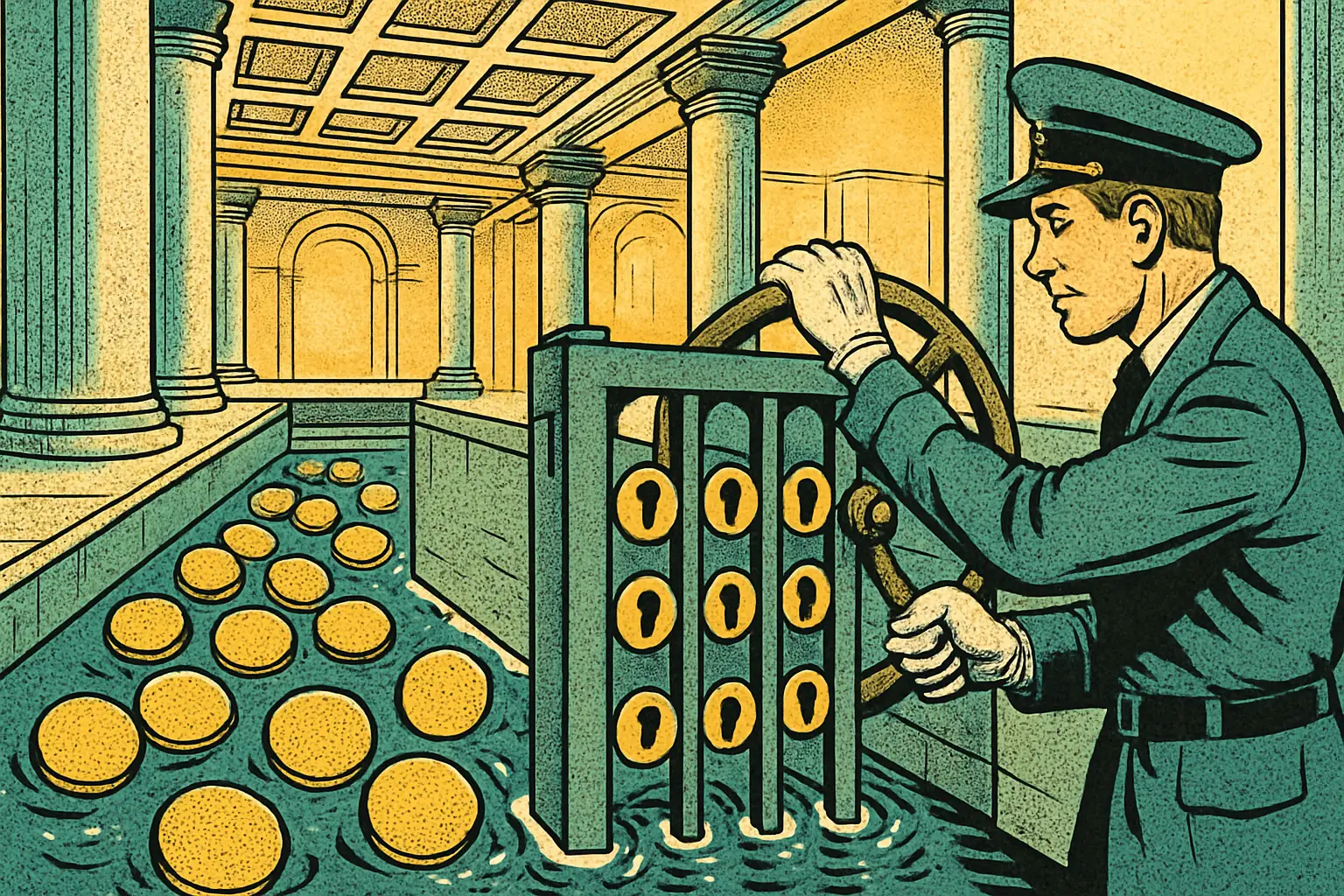
On July 23, 2026, Uniswap Labs introduced Permissioned Pools, a hook standard for Uniswap v4 that lets regulated assets trade on an automated market maker while enforcing investor eligibility at the protocol level. The mechanism is straightforward and that is precisely what makes it interesting: before a swap or a liquidity action executes, the pool checks whether the wallet appears on the issuer's allowlist. If not, the transaction does not happen.
- Permissioned Pools launched July 23, 2026 as an open-source hook standard on Uniswap v4
- Compliance checks run inside the pool contract, not on a front-end interface
- Launch partners: Superstate, Securitize and Dowgo
- Positioned as the first generalized, open-source, institutional-grade standard for trading regulated assets on an AMM
Why Does Checking at the Pool Level Change Anything?
Because front-end compliance is not compliance. If eligibility is enforced by the website, anyone who interacts with the contract directly bypasses it entirely — which is exactly why issuers of regulated assets have mostly stayed off public AMMs, no matter how attractive the liquidity looked.
Moving the check into the pool contract inverts that. The restriction becomes a property of the asset's market rather than a property of one interface. An issuer can point at the contract and demonstrate that ineligible wallets cannot trade, regardless of which client someone uses.
Robert Leshner, CEO of Superstate, put the trade-off directly: "Permissioned Pools move those rules into the pool itself, so a regulated asset can tap real AMM liquidity without the issuer giving up the controls securities law requires."
That sentence is the entire product thesis. Issuers were never refusing AMM liquidity because they disliked the mechanism — they were refusing it because they could not keep the controls their regulator expects.
How the Hook Works
Uniswap v4's hook architecture allows arbitrary logic to run at specific points in a pool's lifecycle. Permissioned Pools use that to consult an issuer-managed allowlist before swaps and before liquidity is added or removed. The issuer retains full control over who is on the list and can update it without redeploying anything or standing up separate trading infrastructure.
The design also uses virtual accounting so calculations can happen remotely while the assets themselves remain inside permissioned contracts — keeping custody and control where regulators expect them.
What Assets Are Actually Coming?
The launch partners point at the intended market. Securitize and Superstate both issue tokenized funds and securities; Dowgo operates in European digital securities. The supported asset categories are tokenized funds, securities, equities and other regulated instruments.
The market projections attached to this space are large and worth treating as directional rather than precise — the Uniswap announcement cites forecasts of an $11 trillion tokenized asset market by 2030, while Citi's estimate for tokenized securities specifically sits at $5.5 trillion. Different definitions, different numbers, same direction of travel.
What Does This Mean for DeFi's Structure?
It suggests the permissioned and permissionless sides of on-chain markets are converging on shared infrastructure rather than staying separate. The same AMM, the same liquidity mechanics, the same developer tooling — with an eligibility gate for the assets that legally need one. That is a more efficient outcome than building parallel institutional venues from scratch.
It also fits a busy month for regulated on-chain assets. Ondo's tokenized securities work has been building toward US retail access, and traditional brokerages have been opening spot crypto access from the other direction. Our crypto coverage has tracked both trends converging all year.
That the standard is open source and generalized matters too. Any issuer can adopt it; any developer can inspect it. That is a meaningfully different posture from a proprietary institutional venue.
What to Watch Next
The honest measure of success here is volume, not architecture. Watch for how much liquidity the launch partners actually route through Permissioned Pools in the first quarter, whether additional issuers adopt the standard, how regulators in the US and EU respond to protocol-level eligibility enforcement, and whether the hook design holds up under audit scrutiny. Elegant compliance infrastructure that nobody trades on is still just infrastructure.
Sources: Uniswap Labs — Introducing Permissioned Pools on Uniswap v4 — July 23, 2026; CoinDesk — July 22, 2026.
More Crypto Stories
Circle Arc Mainnet Launches With USDC Paying Gas Fees
Circle opened Arc's public mainnet with 11 founding validators, 100+ apps live, and gas priced in USDC rather than a volatile native gas token.

Zama Opens 16 Confidential Morpho Vaults on Ethereum
Zama expanded encrypted DeFi to 16 Morpho vaults and launched a confidential swap protocol after its first vault reached $40M TVL in seven weeks.

Crypto Data Firm Kaiko Lands $110M From S&P Global
Kaiko extended its Series B to $110 million, with S&P Global leading and Nasdaq, BNP Paribas and Coinbase Ventures joining the crypto data firm.