
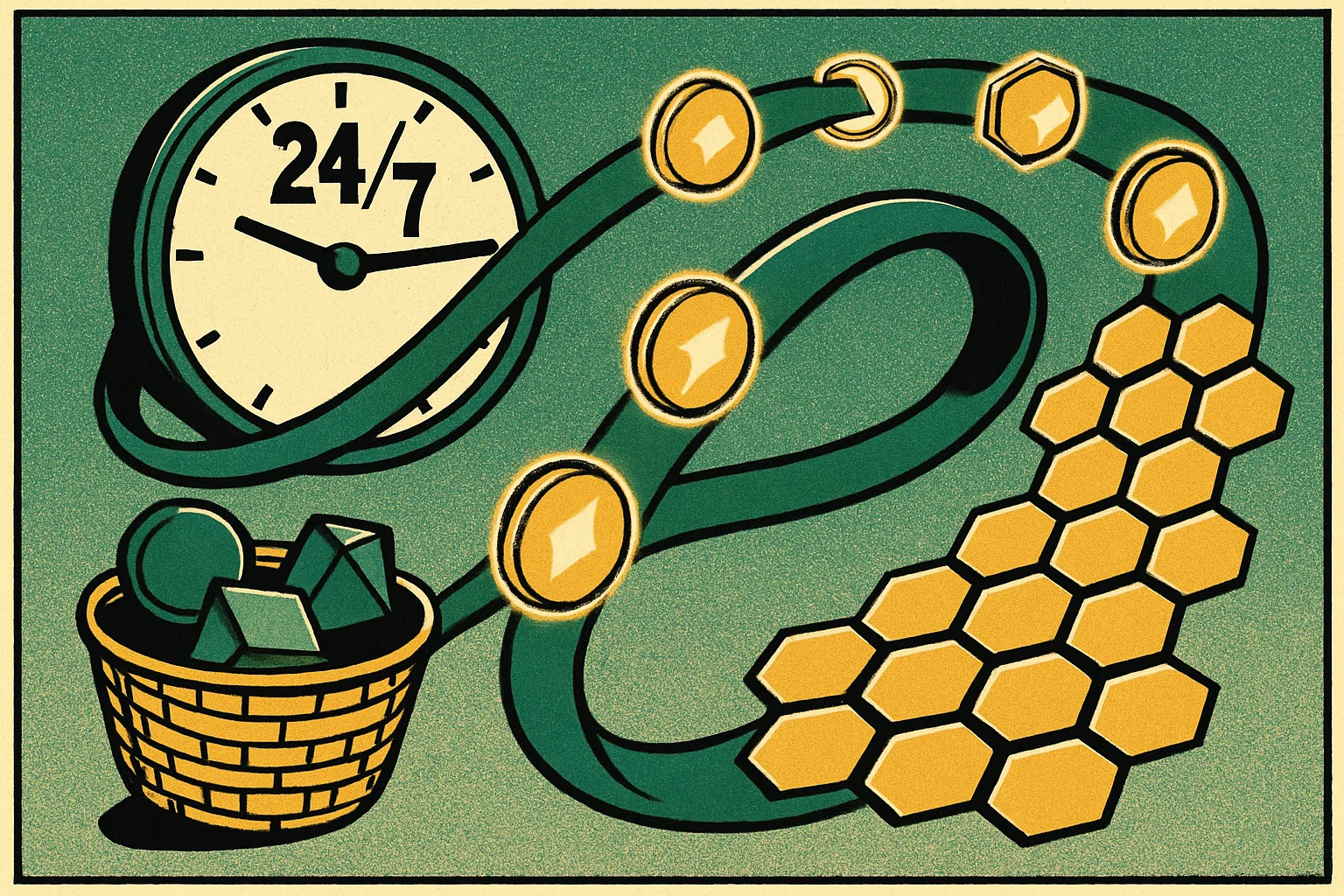
Ondo Finance Brings Tokenized Securities On-Chain With Shareholder Rights Intact
Ondo Finance launches tokenized securities on Ethereum, enabling fractional on-chain ownership of ETFs and stocks with real shareholder rights.

Tokenized Securities Reach a New Milestone On-Chain
The conversation around tokenized securities has spent years living mostly in whitepapers and pilot programs. This week it moved closer to production. In news reported July 1 to 2, 2026, Ondo Finance introduced a working model for bringing tokenized stocks on-chain, deploying it on Ethereum and connecting real-world assets to the rails developers have been building toward for a long time.
The headline detail is the caliber of assets involved. The design supports fractional, on-chain ownership of holdings that include BlackRock's iShares Core S&P 500 ETF, trading under the ticker IVV, alongside shares of Micron Technology. In plain terms, exposure that traditionally lives inside a brokerage account can now be represented as a token that settles on a public blockchain.
The Plumbing Behind Real Shareholder Rights
What separates this from earlier tokenization attempts is the attention paid to the plumbing underneath the token. Fractional ownership is straightforward to mint; preserving the rights that come with a share is the harder engineering problem, and this is where the architecture earns its keep.
The model routes ownership through a regulated transfer agent, Oasis Pro, and integrates Broadridge to handle proxy voting and shareholder communications. Practically, that means a tokenholder is not holding a synthetic price feed or a loose IOU. They retain genuine shareholder rights, with the record-keeping and voting infrastructure mapped onto the on-chain representation. It is a technical framework built to keep the token and the underlying entitlement aligned.
Why On-Chain Structure Changes the Mechanics
Moving these assets on-chain unlocks properties that traditional market structure simply does not offer. Settlement, historically a multi-day affair, can compress dramatically. Trading windows open around the clock rather than closing at the market bell. And because the asset now exists as a composable token, it can serve as collateral inside decentralized finance applications.
That last point is worth sitting with. A tokenized share of a broad-market ETF, held within a compliant, custodial framework, becomes a building block. It can be posted, referenced, and integrated the way any on-chain asset can, while still tracing back to a real, registered security. The combination of 24/7 trading, faster settlement, and DeFi collateral utility is the practical case for tokenization stated in concrete terms rather than abstractions.
Infrastructure Maturing Step by Step
Viewed from a distance, this is a story about tokenization infrastructure growing up. The early phase of the sector proved that assets could be represented on-chain. The current phase is about doing it with the correct shareholder plumbing attached, so the digital representation carries the same substance as the paper version it mirrors.
There is still a long road for the broader tokenized securities landscape, and this is one implementation among many that will be tested over time. But as a data point, it is a meaningful one: recognizable, blue-chip assets, wrapped in a compliant custodial structure, with voting and communication rights preserved. That is the shape of what mature on-chain finance was always supposed to look like.
Sources: CoinDesk, July 1, 2026; crypto.news, July 2026; Unchained, July 2026.
More Crypto Stories
SEC Crypto Custody Proposal: What It Means for Advisers
The SEC proposed crypto custody rules on Oct 1 letting advisers and funds use state trust companies and self-custody. Public comments run for 60 days.

Evernorth XRPN Nasdaq Debut: Inside the 473M XRP Treasury
Evernorth won its SPAC vote and plans to list on Nasdaq as XRPN on October 8, holding about 473 million XRP backed by over $1 billion in funding.

Roughrider Coin: How 90+ North Dakota Banks Settle on Solana
Fiserv's digital asset platform is live with Roughrider Coin: a dollar-backed stablecoin linking 90+ North Dakota banks on Solana. Here is how it works.