
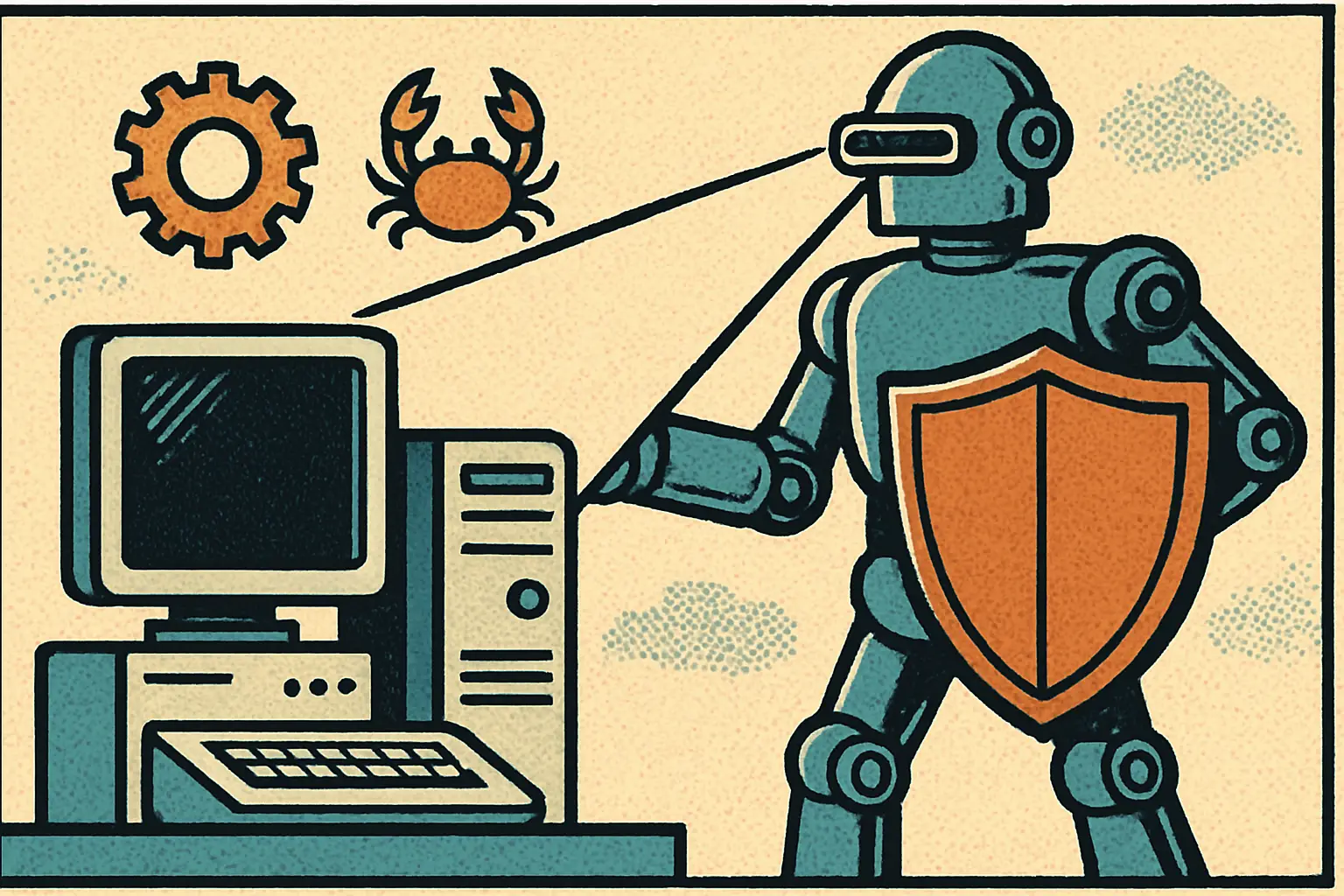
Rustinel Is a Fast Open-Source EDR Built in Rust
Rustinel, launched July 8, is an open-source endpoint detection tool in Rust that unifies Windows and Linux monitoring into one clean codebase.

Rustinel Brings Unified Endpoint Detection to the Open-Source World
Good defensive tooling should be accessible to everyone, not just organizations with big security budgets. That is exactly the spirit behind Rustinel, an open-source endpoint detection tool written in Rust that launched on July 8, 2026. It sets out to solve a familiar headache for defenders: monitoring Windows and Linux machines usually means juggling two completely different detection pipelines.
- What it is: an open-source endpoint detection tool for Windows and Linux
- Built in: Rust, prized for memory safety and performance
- The big idea: it consolidates fragmented detection into a single, shared codebase
- The audience: blue teams, homelabbers, and smaller organizations wanting capable EDR without licensing costs
Why Does Unifying Windows and Linux Detection Matter?
Historically, endpoint monitoring has been split across platform-specific tooling — one stack for Windows telemetry and another built on Linux facilities. Maintaining two separate pipelines means duplicated effort, inconsistent coverage, and more places for gaps to hide. By bringing both operating systems under one Rust codebase, Rustinel lets defenders reason about their fleet in a single, consistent way. That is a meaningful quality-of-life win for the AI security and blue-team community.
Choosing Rust is a smart, modern touch. The language's memory-safety guarantees and strong performance make it well suited to security-sensitive software that runs continuously on every endpoint. A detection agent, after all, needs to be both trustworthy and light on its feet.
A Welcome Addition to the Defender's Toolkit
Rustinel joins a wave of open-source defensive tools making enterprise-grade capabilities available to everyone — the same democratizing trend we highlighted in our roundup of open-source tools that help blue teams defend AI agents. For a solo administrator running a homelab or a lean security team protecting a growing fleet, a free, unified, cross-platform EDR lowers the barrier to solid endpoint visibility.
The broader story here is a healthy one: the open-source security ecosystem keeps producing practical, well-engineered tools that strengthen defenders. Rustinel is a promising new entry, and its cross-platform, Rust-powered approach makes it well worth a look for anyone building out their detection stack.
Sources: Help Net Security — July 8, 2026; Rustinel project — 2026.
More Ai Security Stories

Anthropic OSS Scanner: Free AI Bug Scans for Open Source
Anthropic's OSS Scanner gives open-source maintainers free AI vulnerability scans with fixes; 85 of 97 tested severe findings met its disclosure bar.

What Is Prompt Injection? A Plain-English Defense Guide
What is prompt injection? Learn direct vs indirect attacks, 9 real scenarios, and the 7 OWASP-backed defenses that keep AI assistants and agents safe.

GitHub AI Secret Detection: How Push Protection Gets Smarter
GitHub is adding a ModernBERT classifier to push protection that spots unstructured passwords in under 2 ms and could more than double blocked secrets.