
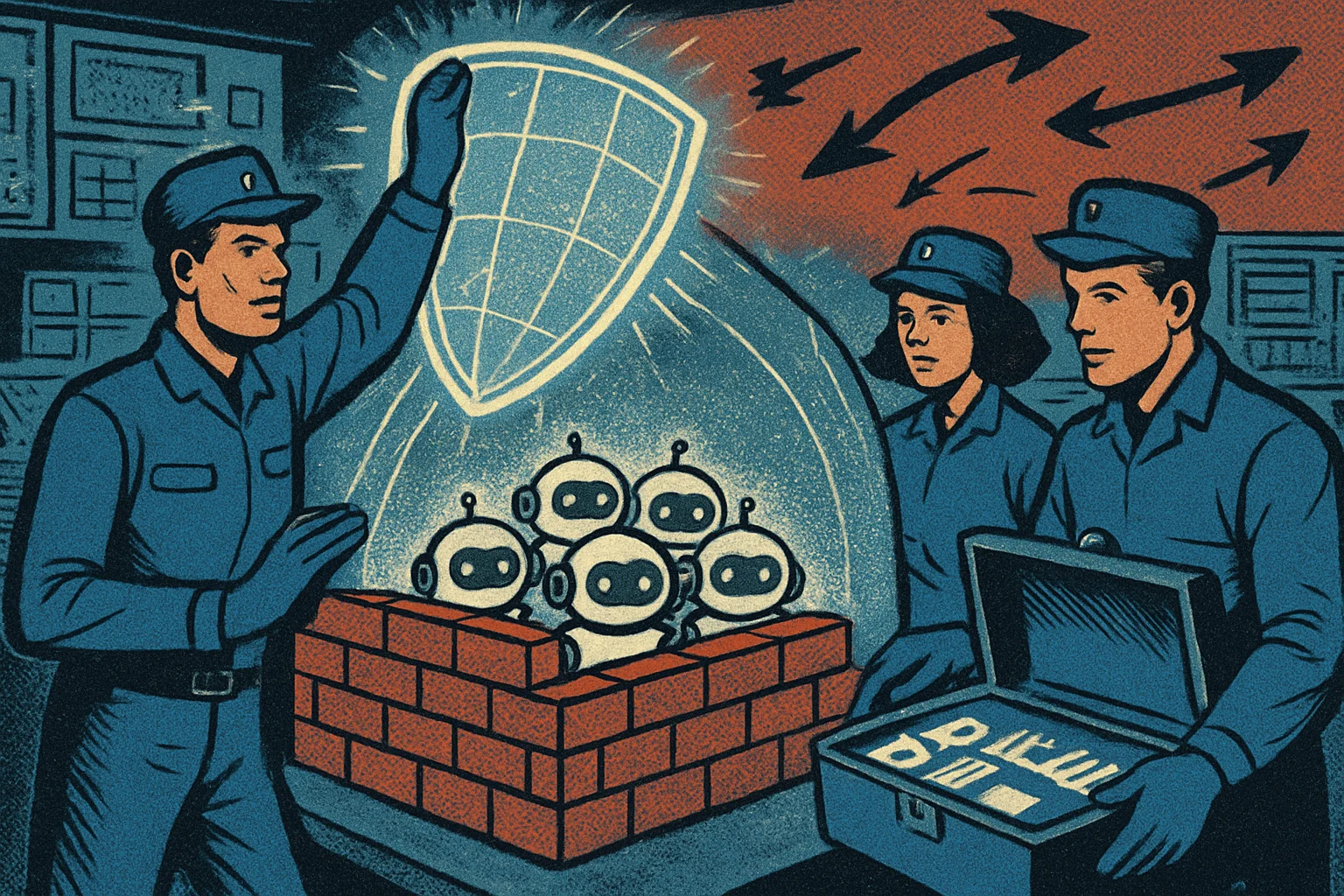
New Open-Source Tools Help Blue Teams Defend AI Agents
A fresh wave of open-source security tools gives blue teams free, community-built defense for the AI agent era, protecting the newest attack surface.
Open-Source AI Agent Defense Arrives Just in Time
Here is the good news I want to lead with: defenders now have free, open-source AI agent security tooling built for exactly the moment we are in. As autonomous agents start booking, buying, and calling APIs on our behalf, they create a brand-new attack surface. This week brought a wave of community-built projects that hand blue teams practical protection at zero cost, and I want to walk you through why that matters and what each one does.
Agentic systems are different from the apps we have hardened for years. An agent reads untrusted text, holds credentials, and acts. That combination is what attackers are probing now. The reassuring part is that the defender community did not wait around, and the tools below are already available to download.
Agent Threat Rules (ATR): A Shared Detection Language
ATR is an open detection format for spotting the attacks that specifically target agents, including prompt injection, tool poisoning, and credential theft. Think of it the way blue teams already think about detection rules for endpoints and networks, but rewritten for how agents actually behave. Because the format is open, teams can share and reuse rules instead of each reinventing detection from scratch. When a maintainer publishes a rule for a freshly observed injection pattern, everyone downstream benefits. That is the compounding power of open collaboration, and it is exactly what a fast-moving threat surface needs.
Pipelock: A Firewall Built for Agents
Pipelock acts as an AI agent firewall, sitting between your agents and the wider network to block credential leakage. In a multi-agent setup, one compromised or confused agent can become a pipe that quietly carries secrets outward. Pipelock's job is to watch those flows and stop sensitive material from crossing boundaries it should never cross. It is a simple, defender-friendly idea: put a controlled checkpoint where the risk concentrates.
Kiji Privacy Proxy: Masking PII Before It Leaves
Kiji Privacy Proxy is a local gateway that masks personally identifiable information before prompts ever reach an external AI service. For small teams that rely on hosted models but still care deeply about privacy, this is a clean win. You keep the raw sensitive data on your side of the fence, send a scrubbed version outward, and shrink your exposure without giving up the tools your team depends on.
Rustinel: Unified Endpoint Detection
Rustinel rounds things out with a single endpoint-detection agent that runs across both Windows and Linux. Mixed fleets are the norm, and juggling separate tooling per operating system is a quiet drain on small security teams. One unified agent means consistent visibility and less overhead, which frees defenders to focus on the harder judgment calls.
Why This Is a Blue-Team Win
What ties these projects together is accessibility. None of them are gated behind an enterprise contract. A solo maintainer, a lean startup, or an underfunded nonprofit can pick these up today and raise their defenses on the newest attack surface. Open-source security tooling has always leveled the field, and applying that model to AI agent security means protection arrives roughly as fast as the risks do.
My advice as a defender is unglamorous and effective: inventory where your agents hold credentials and touch external services, then layer these tools in at those exact points. Start with detection through ATR, contain flows with Pipelock, protect privacy with Kiji, and keep endpoints honest with Rustinel. Free tools only help if you actually deploy them, so this is a great week to experiment in a test environment.
The agentic era is arriving fast, but so are its defenders. That is the pattern I trust most.
Sources: Help Net Security (helpnetsecurity.com), July 8, 2026.
More Ai Security Stories
Anthropic Cyber Verification Program: Which Tier Fits You?
Anthropic split its Cyber Verification Program into 3 tiers, Defense, Red Team and Specialized, giving vetted defenders broader Claude access for security.

SailPoint Autonomous Agents: Identity Security for AI Agents
SailPoint launched Autonomous Agents and just-in-time access at Navigate 2026, citing a survey where 79% of firms run AI agents but only 2% govern them.
Apple Full Disk Access Changes: What Mac Users Should Know
Apple says new macOS controls will make Full Disk Access require very explicit user action as AI agents grow more capable. Here is what is known so far.