
PwrBlock 323 Is a $230 Programmable USB-C PD Supply
The open-hardware PwrBlock 323 turns a 100W USB-C PD charger into a scriptable 1-32V bench supply for test fixtures, at $230 on Crowd Supply.

Finnish hardware shop Everypin launched the PwrBlock 323 on Crowd Supply on August 19, 2026, and the pitch is refreshingly narrow: it turns an ordinary 100W USB-C PD charger into a scriptable, precise power supply that lives inside a test fixture. Output runs from 1 to 32V at up to 3A, control is over SCPI commands, and the whole design is open hardware. At $230 fully assembled, it sits in the gap between a bench supply that costs several times more and a fixed-voltage brick that cannot be scripted.
- The PwrBlock 323 outputs 1-32V at up to 3A, about 92W maximum, drawing from a 100W USB-C PD source
- Setpoint resolution is 10mV from 1-24V, 20mV above that, and 1mA on current, with accuracy of plus or minus 0.1% plus 30mV
- SCPI commands and Python-friendly tooling script power sequencing, current limiting, and safety checks
- Fully assembled units are $230 on Crowd Supply, campaign ending October 1, 2026, with shipping expected around March 30, 2027
What Problem Does a Programmable USB-C Supply Solve?
Anyone who has built an automated test fixture knows the awkward moment when the test script needs to cut power to the device under test, wait, and bring it back up. Doing that by hand defeats the point of automation. Doing it with a full laboratory supply means buying an instrument, finding bench space for it, and talking to it over a separate interface.
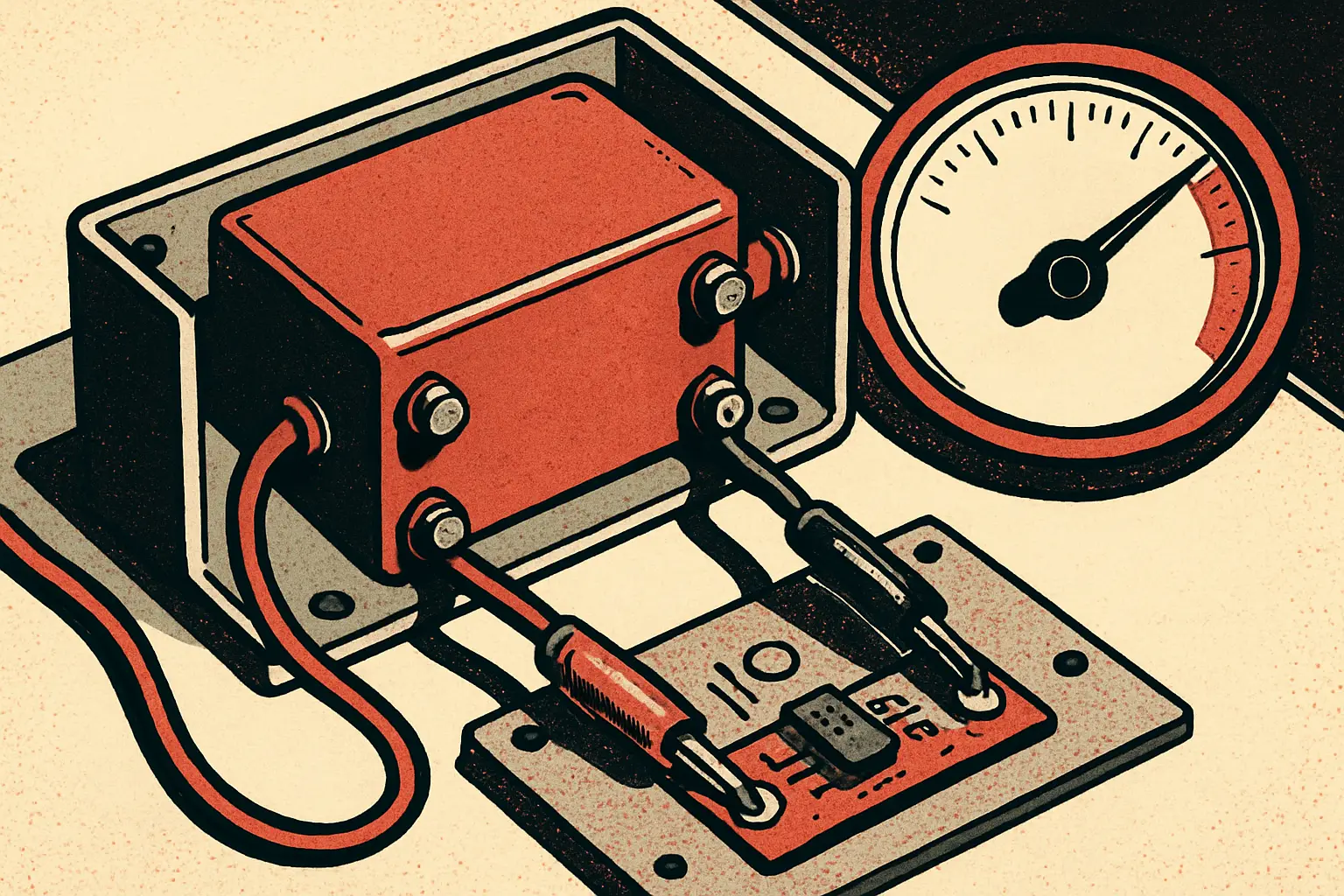
The PwrBlock 323 collapses that into a board you mount inside the fixture. It has mounting points and pin headers so it can power the device under test directly as part of the test sequence, and it measures voltage and current while it does so. Power cycling, brown-out simulation, current-limit verification, and startup-current capture all become lines in the same script that runs the rest of the test.
How Precise Is It, Really?
Precise enough for fixture work, and it is worth being clear about the distinction. Setpoint resolution is 10mV across the 1-24V range, widening to 20mV above 24V, with 1mA resolution on current. Accuracy is specified at plus or minus 0.1% plus 30mV. That is solidly in the range where you can trust it to hold a rail at 3.3V or sweep a device across its input range looking for brown-out behavior.
It is a single non-isolated channel, which is the main constraint to design around. If your fixture needs galvanic isolation between the supply and the measurement path, this is not that instrument. For the far more common case of powering one board and logging what it draws, non-isolated is fine and keeps the cost down.
Connectivity is two USB Type-C ports, a 40-pin power I/O connector, and a 10-pin IDC control header. Firmware runs on an STM32.
Why the Open-Source Licensing Matters Here
Everypin plans to publish the hardware design files, STM32 firmware, Python tooling, and documentation publicly, with hardware under CERN-OHL-W-2.0, firmware and software under Apache 2.0, and documentation under CC BY 4.0. For test equipment that is genuinely useful rather than merely nice. Fixtures live a long time, often longer than the company that supplied a part of them, and a documented, modifiable design is insurance against being stranded by a discontinued product.
It also means the SCPI command set is inspectable, which matters when you are debugging why a test rig disagrees with the bench. Readers building power-conscious projects may also want our Raspberry Pi power guide covering PSUs, PoE, and UPS options, and the Pi-Ener-lite 18650 UPS for the Pi Zero for the battery-backup side of the same problem.
Crowdfunding caveats apply as always: the $3,000 funding goal is modest and the shipping estimate is more than six months out, so treat the March 2027 date as a plan rather than a promise. More open hardware coverage in our mini computers section.
Sources: CNX Software — August 19, 2026; Crowd Supply — August 2026.
More Mini Computers Stories

MaTouch ESP32-S3 E Ink Board: A $60 Voice-Ready Dashboard
Makerfabs' MaTouch ESP32-S3 pairs a 7.5-inch four-color E Ink screen with a four-mic array for $59.80. Here are the specs and what you can build.

ASRock NUC 300 Mini PCs: Wildcat Lake With Dual 2.5GbE
ASRock Industrial's NUC 300 series brings Intel Core 5 320 and Core 3 304 to mini PCs and boards with up to 64GB of DDR5-6400 memory and dual 2.5GbE.

DGX Spark 64GB: Who NVIDIA's $4,999 Local AI Box Is For
NVIDIA's DGX Spark 64GB starts at $4,999 on Oct 23 and runs models up to 100B parameters. Here is who the local AI box suits and how clustering works.