
AI Finds 1,000+ Antibiotic Candidates Hidden Inside Prion Proteins
Penn's APEX AI scanned prion proteins and surfaced over 1,000 antibiotic candidates on June 22, 2026 — two cleared infections in mice. A genuine AI-for-science win.

When AI Looks Where No One Thought to Look
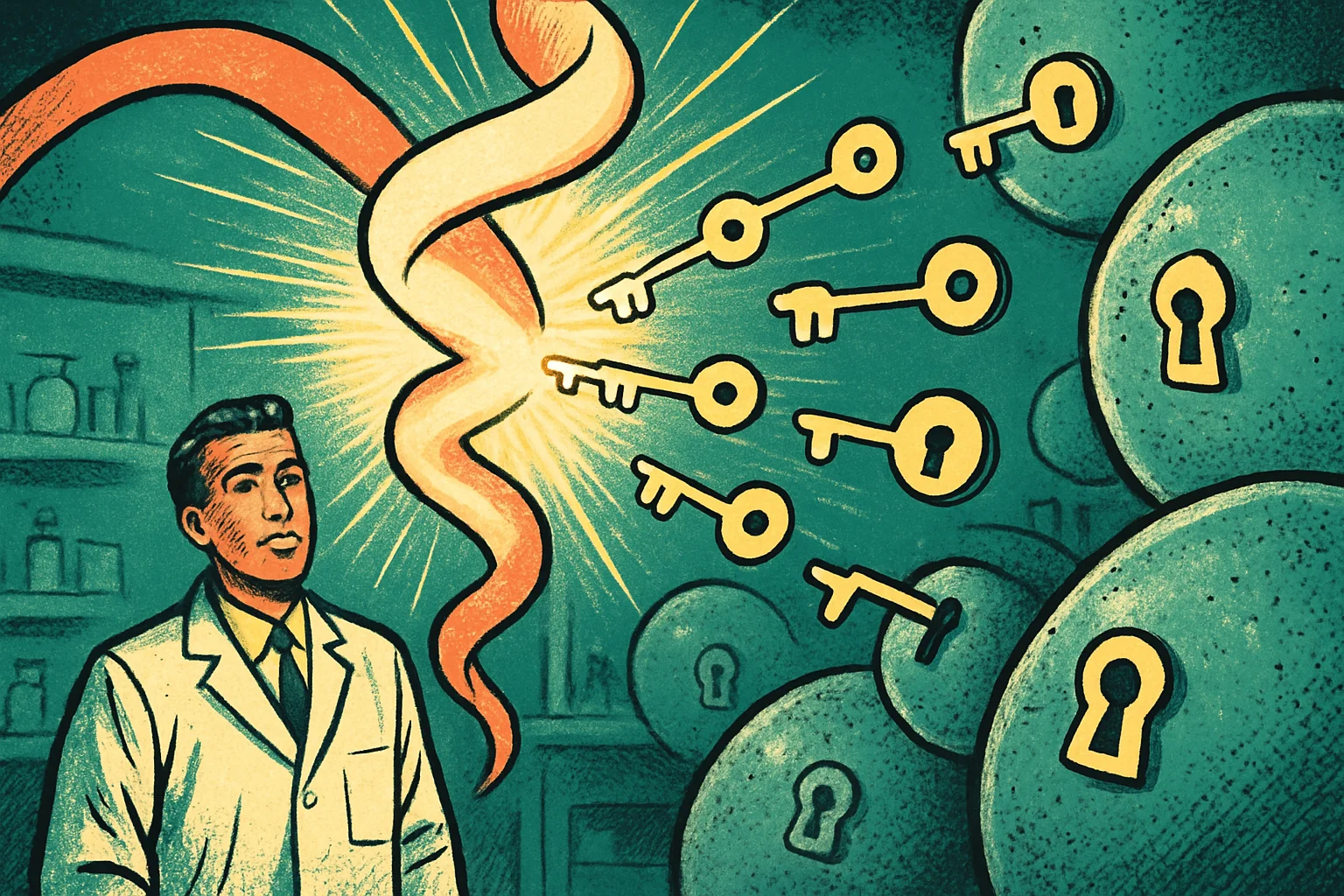
Every so often a result arrives that reframes a problem entirely, and I think this is one of them. On June 22, 2026, researchers at the University of Pennsylvania reported that an AI platform for drug discovery uncovered more than a thousand new antibiotic candidates — and it found them in one of the most unlikely places imaginable: prion proteins, the very molecules long associated with neurodegenerative disease. The work, published in *Nature Microbiology*, is a wonderful example of AI in science pointed at a problem that matters enormously for human health.
The tool is APEX 1.1, a deep-learning platform built by César de la Fuente's Machine Biology Group. The team set it loose on a question almost no one had asked: could proteins we associate only with harm also contain something useful?
What the Deep-Learning Model Actually Did
Let me separate the confirmed reporting from interpretation, as I always try to do. APEX scanned roughly 19.3 million peptide fragments drawn from 2,897 prion and prion-like proteins, hunting for short sequences that might act as antimicrobial peptides — natural molecules that can kill bacteria. From that vast search space, the model flagged 1,179 promising candidates, which the team nicknamed "prionins."
That is the part where machine learning genuinely shines: compressing a search that would take a human lab years into something tractable, then handing scientists a ranked shortlist worth testing at the bench.
From Prediction to Petri Dish
A prediction is only as good as what happens when you test it, so here is where the story earns its headline. The researchers synthesized 75 of the candidate peptides and tested them in the lab. Fifty-nine inhibited at least one pathogen, 42 showed strong activity at low concentrations, and 16 showed no measurable toxicity to human cells. Then came the real validation: in a **mouse model of an *Acinetobacter baumannii* skin infection — a drug-resistant pathogen the World Health Organization treats as a priority threat — two of the peptides reduced bacterial burden comparably to the established antibiotic polymyxin B**, with no treatment-related weight loss in the animals.
Why This Matters for Antibiotic Resistance
Antimicrobial resistance is one of the quieter but most serious challenges in medicine, and the pipeline of genuinely new antibiotics has been thin for decades. What makes this approach so encouraging is that it expands *where* we hunt. As senior author de la Fuente put it, the work "changes where we think antibiotics might be hiding." A deep-learning model didn't just speed up an existing search — it reframed proteins we feared as a potential medicine cabinet.
The Takeaway
This is AI-accelerated drug discovery working exactly the way I'd hope: a model surfacing testable hypotheses at scale, expert scientists validating them rigorously in the lab and in animals, and the result pointing toward new tools against one of medicine's hardest problems. There's a long road from a promising peptide to an approved therapy, and I'll keep watching with appropriate care. But as a demonstration of AI helping skilled researchers find cures hiding in plain sight, it's a genuinely hopeful day for science.
Sources: Penn Medicine — "AI Reveals Unexpected Source of Antibiotic Candidates in Prion Proteins" — June 22, 2026; Phys.org — "AI reveals unexpected source of antibiotic candidates" — June 22, 2026; GEN (Genetic Engineering & Biotechnology News) — "AI Discovers Potential Antimicrobial 'Prionin' Peptides" — June 2026.
More AI Stories

Strands Decider 2B: What Amazon's Free Decision Model Does
Strands Decider 2B is a free 2B-parameter decision model that picks options in about 115ms on a single GPU. Here is how it works and where it fits.

Meta Muse Gadgets SDK: Build Your Own AI Agent Hardware
Meta's open-source Muse Gadgets SDKs bring its Muse agent to Raspberry Pi and ESP32 builds, and 5,000 free Home Link dongles are going to subscribers.

AstaBrief 8B: Ai2's Open Model for Cited Science Reports
AstaBrief 8B is Ai2's Apache 2.0 open model that writes cited research reports in 51 seconds, 3.5x faster than its Claude pipeline. Here is how it works.