
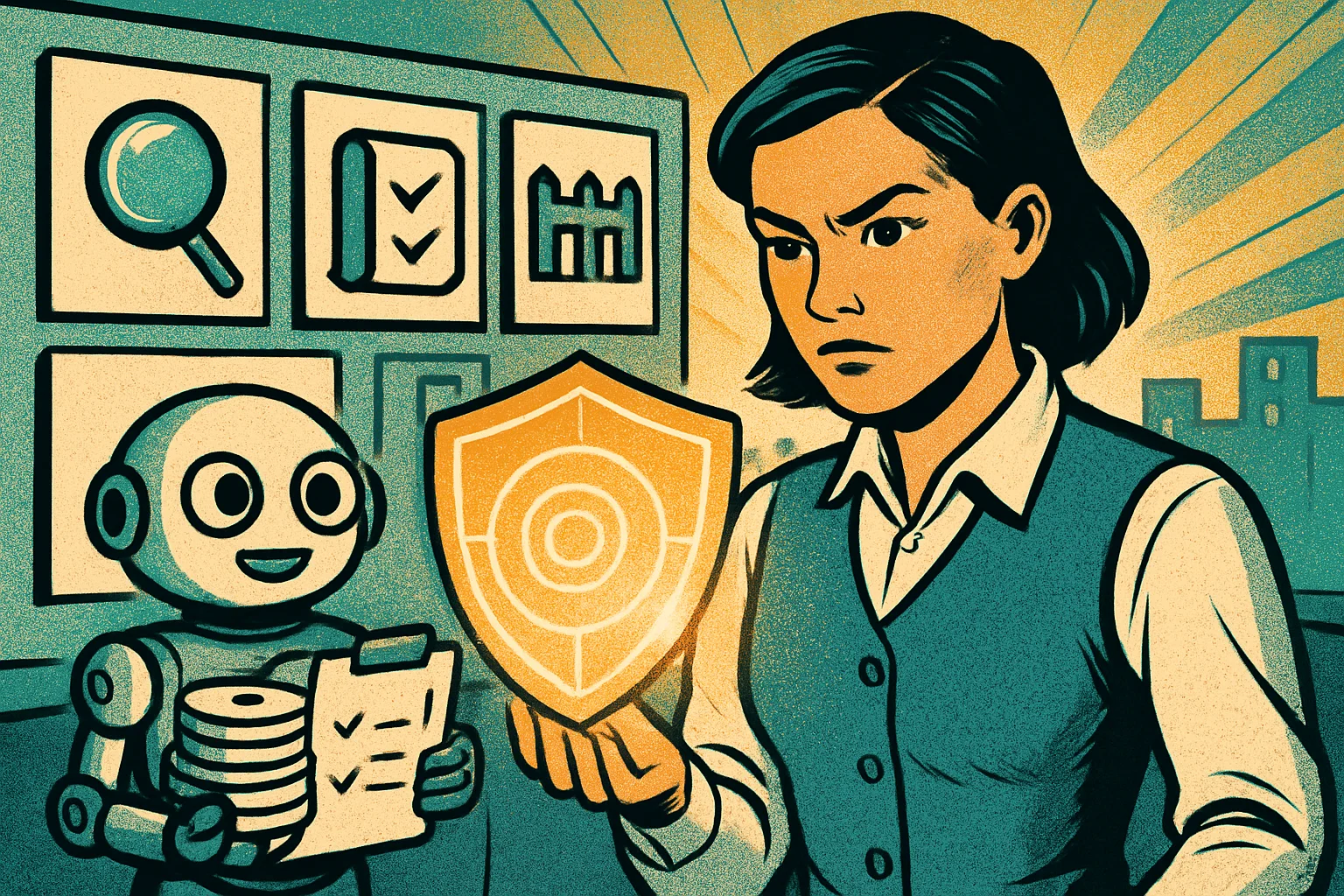
Microsoft Open-Sources RAMPART and Clarity — A Safety-First Toolkit for AI Agent Development
Microsoft released RAMPART and Clarity as open-source tools on May 20, 2026 — operationalizing AI agent safety by turning red-team findings into repeatable tests and documenting design assumptions in agent workflows.

Microsoft Just Made AI Agent Safety a First-Class Engineering Discipline
Microsoft released RAMPART and Clarity as open-source tools on May 20, 2026 — a pair of frameworks designed to bring structured safety practices directly into the AI agent development workflow. The release is one of the most consequential AI security developments of the spring because it converts agent safety from a research conversation into a repeatable engineering discipline that any team building autonomous AI agents can adopt. RAMPART operationalizes red-team findings as reusable tests. Clarity documents agent design assumptions so security reviewers can evaluate them systematically. Together, the two tools give the broader AI security community a structured way to ship agents with the kind of safety rigor that traditional software has been able to take for granted.
For defenders, AI security engineers, and the broader cybersecurity community tracking how agent safety practices are maturing, the Microsoft release is the clearest signal yet that the agent safety conversation is moving from theoretical guidance into production tooling. Agents that take real actions on real systems deserve the same kind of safety scaffolding that any other safety-critical software gets, and RAMPART and Clarity are the open-source primitives the industry has been waiting for.
What RAMPART Actually Does
RAMPART is the testing framework half of the release. The core idea is that red-team findings — the specific prompts, scenarios, and failure modes that adversarial researchers uncover during evaluation — should not stay locked inside a single audit cycle. Instead, RAMPART converts each finding into a repeatable test that runs as part of the agent's continuous integration pipeline. Every change to the agent's model, prompt, tool surface, or policy gets evaluated against the full library of past red-team findings before it ships, which structurally prevents regressions on issues the team has already fixed once.
Why Repeatable Safety Tests Are the Right Pattern
The structural problem RAMPART solves is the classic one in software security: safety findings that are fixed once but not enforced regress easily. Every prompt change, every model upgrade, every tool integration introduces the possibility that a previously-resolved safety issue comes back in a new form. By turning red-team findings into deterministic tests, RAMPART gives agent teams the same kind of regression protection that unit tests give traditional software engineers — which is the cleanest demonstration of how to bring mainstream software discipline into AI agent development.
What Clarity Brings to the Workflow
Clarity is the documentation framework half of the release. Where RAMPART catches regressions, Clarity captures the design assumptions an agent team is making when they wire up a new capability. Each integration documents the threat model the team considered, the trust boundaries the agent is expected to respect, the data classifications it can touch, and the fallback behavior it should exhibit when it encounters unexpected inputs. The result is that any security reviewer joining the project later can see exactly what the team intended — and can evaluate whether the deployed agent matches those intentions.
The Security Reviewer's Dream Tool
The most important downstream benefit of Clarity is that it makes security review of AI agents tractable. Without structured design documentation, every agent security review becomes an exploration exercise — reviewers have to reverse-engineer the team's intent from the code, the prompts, and the tool configurations. Clarity flips that pattern by giving the agent team a first-class way to document intent, and giving the reviewer a first-class way to verify that the deployed agent matches it. That structural shift is what makes agent security scalable across the kind of large agent fleets enterprises are building in 2026.
How RAMPART and Clarity Fit the Broader Agent Safety Conversation
The RAMPART and Clarity release sits inside a broader 2026 trend where AI security tooling is finally catching up to the pace of agent deployment. Microsoft's MDASH multi-model agentic scanning harness — covered in our AI security section recently — represents the offensive-side application of the same trend. RAMPART and Clarity represent the defensive-side application: the tooling that lets agent teams ship safely once the offensive-side tooling has surfaced the issues. Together, the two threads describe a maturing AI agent security stack that gives defenders a structured path forward.
The Open-Source Choice Is the Right Call
Microsoft's decision to ship both tools as open source is the structural detail that determines how broadly the AI agent safety discipline spreads. Open-sourcing RAMPART and Clarity means every agent team — at every scale of organization, from solo developers to global enterprises — can adopt the same safety patterns without paying for vendor-specific tooling. That distribution model is what makes the safety discipline a community standard rather than a proprietary advantage, and it is the right call for tools whose value is the network effect of widespread adoption.
What This Means for AI Agent Security Programs
For AI security teams running agent safety reviews, the May 20 release is the strongest signal yet that the discipline is becoming standardized. The watch items going forward are how quickly RAMPART and Clarity see adoption across the open-source agent ecosystem, how Anthropic, Google, and the other frontier labs integrate similar safety primitives into their own platform tooling, and how enterprise security teams stand up internal agent safety programs around these frameworks. Each of those threads connects back to the structural change Microsoft is enabling — agent safety as a first-class engineering discipline rather than an after-the-fact audit conversation.
Why Defenders Should Adopt RAMPART and Clarity Now
For AI security engineers and defenders building enterprise agent programs, the right time to adopt these tools is now. Building the test library and design documentation early — before the agent fleet scales — gives the security program a structural advantage that becomes increasingly hard to retrofit as the agent surface expands. The teams that adopt RAMPART and Clarity now are the teams that will spend the next two years extending their safety coverage instead of trying to backfill it.
The Setup Going Forward
For AI security engineers, defensive AI tooling developers, and the broader cybersecurity community tracking how agent safety practices are evolving, the RAMPART and Clarity release is one of the most consequential AI security developments of 2026. RAMPART operationalizes red-team findings into repeatable tests. Clarity documents agent design assumptions for systematic review. The open-source distribution model makes both tools available to every agent team that wants to ship safely. The next watch items are the adoption rate across the open-source agent ecosystem, the integration of similar primitives into frontier-lab platform tooling, and how the broader AI agent security stack continues to mature. For defenders who have been waiting for production-grade agent safety tooling, the May 20 release is the foundation worth building on.
Sources: Microsoft Security Blog, "Introducing RAMPART and Clarity: Open source tools to bring safety into Agent development workflow," May 20, 2026; The Hacker News, "Microsoft Open-Sources RAMPART and Clarity to Secure AI Agents During Development," May 20, 2026; CSO Online, "Microsoft releases open-source tools to operationalize AI agent safety," May 20, 2026.
More Ai Security Stories
Anthropic OSS Scanner: Free AI Bug Scans for Open Source
Anthropic's OSS Scanner gives open-source maintainers free AI vulnerability scans with fixes; 85 of 97 tested severe findings met its disclosure bar.
What Is Prompt Injection? A Plain-English Defense Guide
What is prompt injection? Learn direct vs indirect attacks, 9 real scenarios, and the 7 OWASP-backed defenses that keep AI assistants and agents safe.

GitHub AI Secret Detection: How Push Protection Gets Smarter
GitHub is adding a ModernBERT classifier to push protection that spots unstructured passwords in under 2 ms and could more than double blocked secrets.