
Meta Muse Code Pairs a Terminal Agent With Muse Spark 1.2
Meta shipped Muse Code, a terminal coding agent co-trained with Muse Spark 1.2, a model scoring 54 on the Artificial Analysis Intelligence Index.

Meta Superintelligence Labs released Muse Code on August 5, and the detail worth studying is not that Meta now has a terminal coding agent — almost everyone does — but that the agent and the model underneath it were trained together. Muse Spark 1.2 is a coding-focused successor to July's Muse Spark 1.1, and Meta describes it as co-trained with the agent that ships alongside it. That coupling is a real architectural choice, not a marketing line, and it changes what the benchmark numbers mean.
- Muse Code is a beta terminal coding agent for macOS and Linux, available the same day as the model
- Muse Spark 1.2 scores 54 on the Artificial Analysis Intelligence Index, up from 51 for Muse Spark 1.1 and 43 for the April 1.0 release
- Meta Model API pricing runs $1.25 per million input tokens and $4.25 per million output tokens
- A muse-spark-1.2-contributor tier drops that to $0.10 input and $0.20 output in exchange for permission to train on your prompts and completions
What Does Co-Training an Agent and a Model Actually Mean?
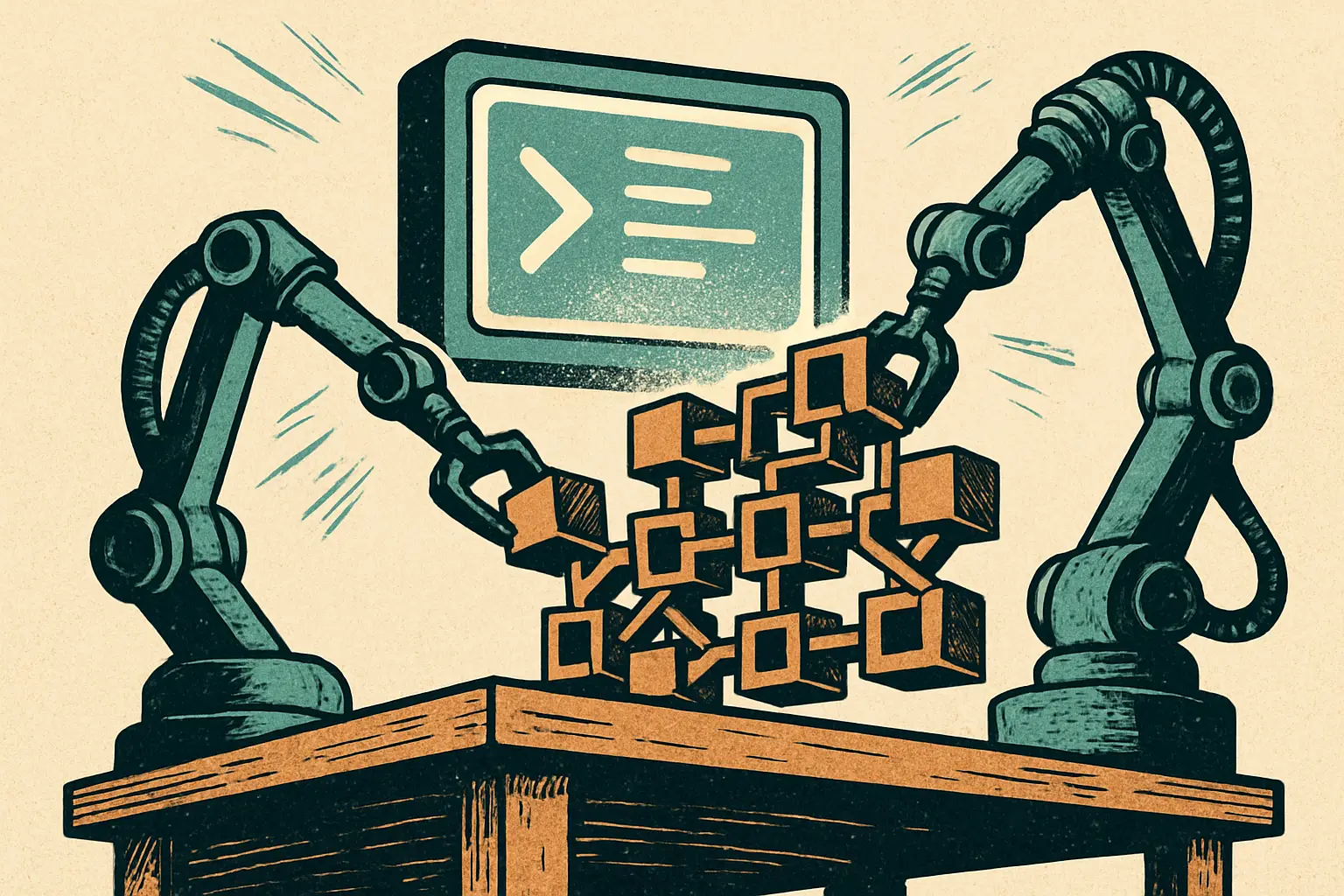
Most coding agents are scaffolding wrapped around a general-purpose model. The scaffold decides when to read a file, when to run a test, and when to stop; the model just answers. Co-training collapses that separation. Meta trained Muse Spark 1.2 on the same environments Muse Code operates in, with what the company describes as scaled coding training and expanded environmental diversity, so the model has seen the shape of the agent's tool loop during training rather than encountering it for the first time at inference.
The practical payoff shows up in long-horizon work. Muse Code targets complex software engineering across large repositories: it plans a change, writes the code, and validates the result. Meta also gives it asynchronous background agents that extend the main agent's reach, plus a local event log that appends every model call, tool run, approval, and edit. That log is a crash-recovery mechanism, and it is the kind of unglamorous engineering that separates a demo from something you leave running against a real codebase.
How Does Muse Spark 1.2 Compare to Other Frontier Models?
Three points on the Artificial Analysis Intelligence Index in one month is a meaningful step, and eleven points since April is a steep curve for any model family. Meta cites Terminal-Bench 2.1, DeepSWE 1.1, and an internal coding benchmark as its evaluation set — a reasonable trio, because Terminal-Bench in particular measures the thing agents actually do rather than the thing chat models are good at.
It is worth being precise about what a 54 means. It places Muse Spark 1.2 closer to the frontier on agentic knowledge work without claiming the top of the table, and the model is proprietary rather than open-weight. Readers tracking the open-weight side of this race should compare it against the 2.8-trillion-parameter Kimi K3 release and DeepSeek V4-Flash's agentic benchmark run, both of which compete on cost per solved task rather than raw index position.
Is the Contributor Tier Worth the Discount?
The muse-spark-1.2-contributor tier is the most interesting pricing experiment here. At $0.10 input and $0.20 output per million tokens, it is roughly a twelvefold discount on input and a twentyfold discount on output — in exchange for Meta training future models on your prompts and completions.
For open-source work, throwaway prototypes, or public documentation generation, that trade is close to free money. For anything touching proprietary source, customer data, or unreleased product code, it is not a pricing decision at all — it is a data governance decision, and it belongs with whoever owns your vendor review process. Meta has made the terms legible, which is more than most tiered pricing does. The right move is to read them, not to default into them.
What This Signals for Agentic Coding
The broader pattern across our AI coverage this summer is convergence: every major lab now ships a terminal agent, and differentiation is moving from model quality alone to how well the model and the harness were built for each other. Muse Code is Meta's entry into that argument, and the co-training claim gives it a testable thesis. The version to watch is not 1.2 — it is whether 1.3 widens the gap on Terminal-Bench specifically.
Sources: Meta AI Research — August 5, 2026; Artificial Analysis — August 2026; Unite.AI — August 5, 2026.
More AI Stories

Strands Decider 2B: What Amazon's Free Decision Model Does
Strands Decider 2B is a free 2B-parameter decision model that picks options in about 115ms on a single GPU. Here is how it works and where it fits.

Meta Muse Gadgets SDK: Build Your Own AI Agent Hardware
Meta's open-source Muse Gadgets SDKs bring its Muse agent to Raspberry Pi and ESP32 builds, and 5,000 free Home Link dongles are going to subscribers.

AstaBrief 8B: Ai2's Open Model for Cited Science Reports
AstaBrief 8B is Ai2's Apache 2.0 open model that writes cited research reports in 51 seconds, 3.5x faster than its Claude pipeline. Here is how it works.