
Google Opens Gemini 3 Deep Think to API Developers and Ultra Subscribers
Google's frontier reasoning model Gemini 3 Deep Think is now live for Ultra subscribers and API developers, built for scientific research, math, and complex engineering.

Gemini 3 Deep Think Comes to Ultra Subscribers and Developers on March 26
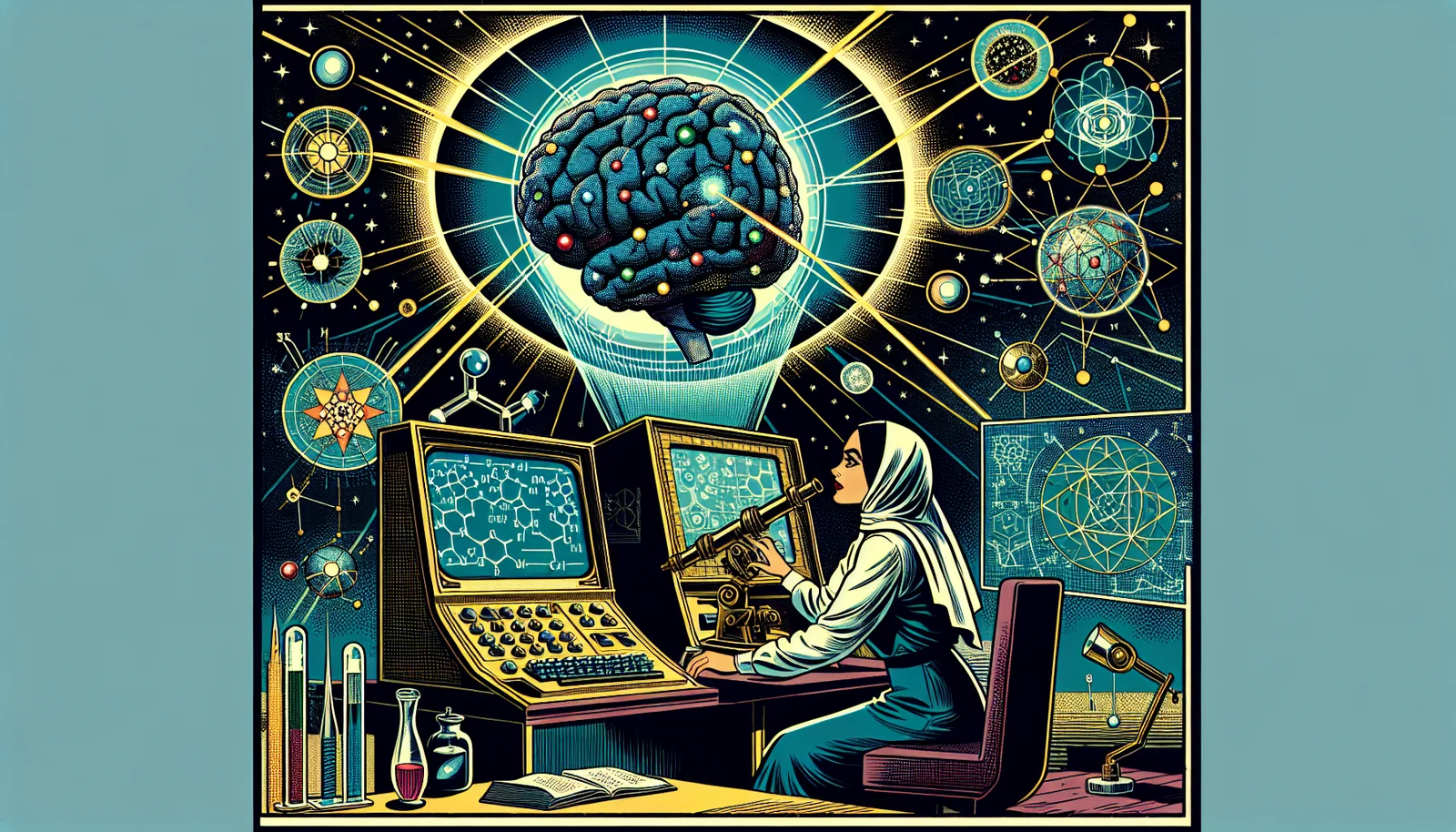
Google's Gemini 3 Deep Think model moved from preview to general availability on March 26, 2026, opening access to Gemini Ultra subscribers and developers via the API. The release completes a transition that began with the model's architecture earlier in the year and marks the arrival of Google's most capable reasoning-focused model as an operational tool for researchers, engineers, and enterprises.
What Deep Think Is and Why the Architecture Matters
Gemini 3 Deep Think is Google's extended-thinking reasoning model — a distinct architecture from the standard Gemini 3 and the efficiency-focused Flash variants. Where Flash models are optimized for speed and cost at high throughput, Deep Think is optimized for accuracy and depth on problems that require extended reasoning chains.
Internally, Deep Think models allocate additional compute to multi-step reasoning before producing an answer. They can trace logical dependencies, identify inconsistencies in premises, and work through mathematical or scientific problems in a structured manner that resembles formal proof-writing more than pattern completion.
Google's own examples for Deep Think's use cases position it around scientific and engineering work: identifying logical flaws in mathematical papers, optimizing fabrication parameters for physical processes like crystal growth, and working through complex multi-variable engineering design decisions where the solution space is large and constraints are interdependent.
API Access and Integration Path
The March 26 launch opens Gemini 3 Deep Think to API integration for the first time. For developers and research teams, this means extended-thinking reasoning is now callable from standard application code — the same integration path used for other Gemini models.
At the same time, Gemini Ultra subscribers can access Deep Think natively within the Gemini app, giving researchers and domain experts an interface designed for interactive long-form reasoning tasks rather than rapid conversational exchange.
Lyria 3: Music Generation Ships Alongside Deep Think
Notably, Google also shipped Lyria 3 and Lyria 3 Pro on March 26 — specialized music generation models built for composers, producers, and creative professionals. Lyria 3 generates audio from natural language descriptions of musical style, instrumentation, tempo, and mood, while the Pro variant adds granular control over composition structure.
Shipping music generation alongside a frontier reasoning model on the same day reflects the scope of Google's AI product expansion in the first quarter of 2026. The Gemini platform is expanding across capability dimensions simultaneously — deep reasoning, real-time voice, music generation, and multimodal applications — rather than advancing a single frontier.
Research and Enterprise Implications
For research institutions, the availability of a frontier reasoning model through standard API access removes a significant barrier to embedding AI reasoning into scientific workflows. Hypothesis screening, literature inconsistency detection, experimental parameter optimization, and formal argument analysis are all tasks where Deep Think's architecture can contribute meaningfully when integrated into existing research software.
For enterprises with complex analytical workflows — financial modeling, engineering design review, compliance document analysis — Deep Think represents a qualitative step up from language models optimized primarily for text generation speed.
Google's decision to open API access at the same time as Ultra subscriber availability signals confidence in the model's stability and a commitment to making frontier reasoning broadly accessible rather than restricting it to specialized research programs.
Sources: Google DeepMind Blog (March 26, 2026), Google AI Blog (March 26, 2026), 9to5Google (March 26, 2026), TechBuzz.ai (March 26, 2026)
More AI Stories

Google AMIE Lancet Study: What 98 Clinic Patients Showed
Google's AMIE diagnostic AI talked with 98 real clinic patients before their visits, and its diagnosis lists matched doctors' final calls 90% of the time.

Microsoft-Decision-1: A $0.042 Decision Model on Foundry
Microsoft-Decision-1 scores yes/no and multiple-choice decisions in a single pass on Foundry for $0.042 per million input tokens, with free output tokens.

Gemini Agent for Work: What Google's Universal Agent Does
Google's new Gemini agent runs multi-day jobs in the cloud, routes work across Gemini and Claude models, and adds hard spend caps for business teams.