
Google Gemini 2.5 Pro Deep Think Brings Parallel Reasoning to Everyone
Google launched Gemini 2.5 Pro with Deep Think on June 22, 2026 — a parallel-reasoning mode for hard math and coding, with a 2M-token context, now live on the API, AI Studio, and Vertex AI.

A New Way for AI to Think Things Through
Every now and then a model update arrives that is interesting less for a single benchmark and more for *how* the system reaches its answers. On June 22, 2026, Google released Gemini 2.5 Pro with Deep Think, and the headline isn't just raw capability — it's a genuinely different reasoning method that the company has now made broadly available. As someone who spends a lot of time reading about how large language models actually work, I found this one well worth digging into.
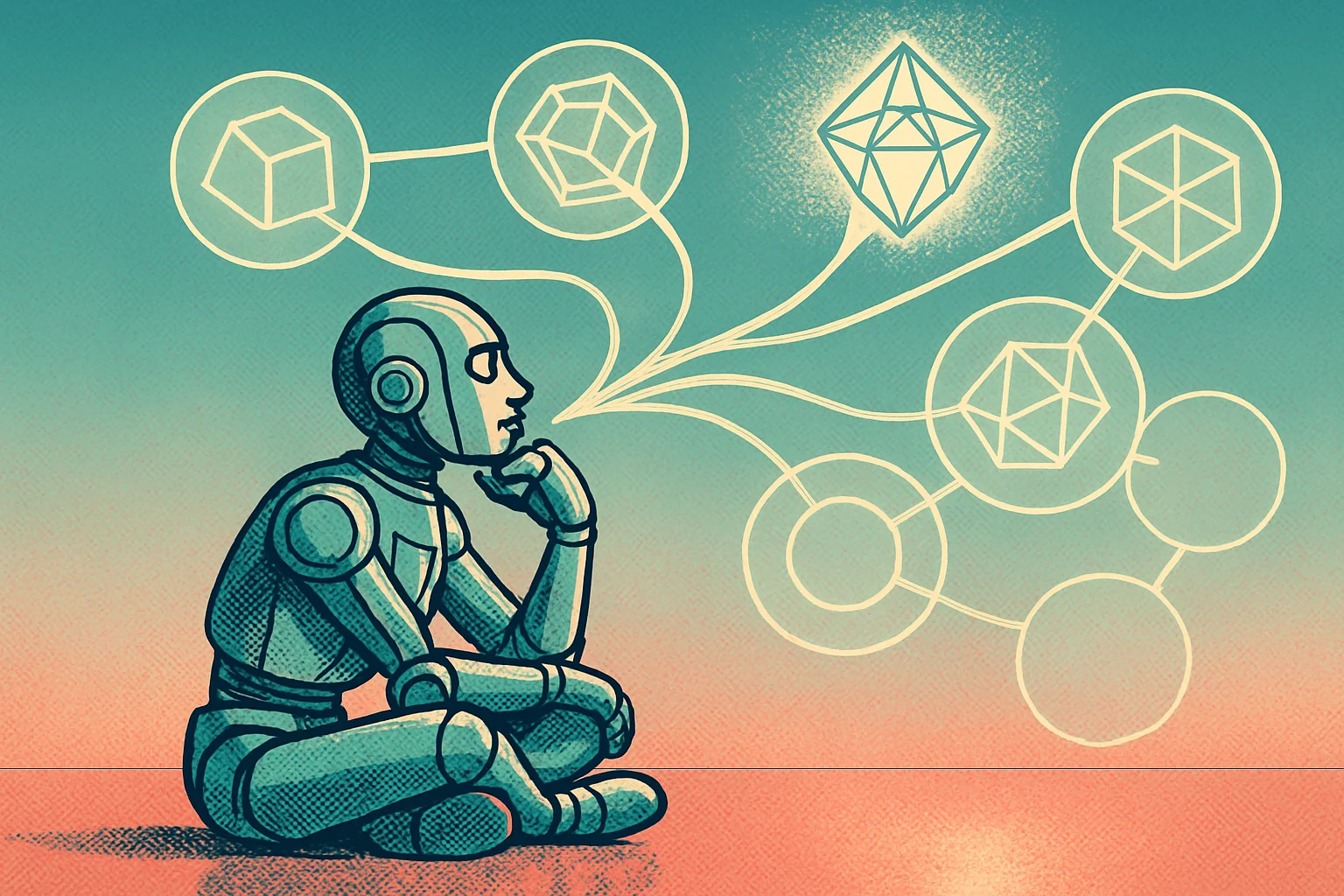
The standout feature is Deep Think, an enhanced reasoning mode built for the kinds of problems that reward patience: hard mathematics, competitive coding, and multi-step design work. What makes it distinctive is the technique underneath. Rather than committing to a single chain of thought, Deep Think uses parallel thinking — it generates many candidate ideas at once, weighs them simultaneously, and can revise or combine those branches over time before settling on the strongest answer.
How Parallel Reasoning Differs From a Single Chain of Thought
The conventional approach to reasoning in an LLM is largely sequential: the model works through one line of thought step by step. That works well, but it can get committed early to a path that turns out to be a dead end. Parallel reasoning instead explores several lines concurrently and lets the most promising ones survive — closer to how a careful human problem-solver sketches multiple approaches before choosing one. For genuinely difficult problems, that breadth-then-refine strategy tends to pay off.
Where It Shines
Google reports that Gemini 2.5 Pro Deep Think reaches state-of-the-art results on demanding evaluations, including LiveCodeBench V6, which measures competitive programming performance, and Humanity's Last Exam, a broad test spanning advanced science and mathematics. Beyond the scorecards, Google highlights practical strengths in iterative work: refining web-development tasks for both aesthetics and function, and tackling problems that call for strategic planning and step-by-step improvement.
A 2-Million-Token Context, Available Today
Just as notable is the rollout itself. Gemini 2.5 Pro arrives with a 2 million token context window and is immediately accessible through the Gemini API, Google AI Studio, and Vertex AI. That combination matters: a very large context lets the model hold entire codebases, long research documents, or sprawling project histories in working memory, and broad day-one availability means developers can start building with it right away rather than waiting on a limited preview.
For the AI tools ecosystem, that accessibility is the quietly important part. The most capable reasoning mode is only as useful as the number of people who can actually reach it, and shipping Deep Think across Google's developer surfaces puts advanced reasoning into a lot of hands at once.
What It Means Going Forward
I always like to separate confirmed news from analysis, so here's the line. What's confirmed: the launch date, the parallel-thinking method, the 2M-token context, the benchmark claims, and the platforms it's available on. The analysis: parallel reasoning feels like a meaningful step in how models approach hard problems, and making it widely available signals that this style of "think more, in more directions" computation is becoming a standard tool rather than a research curiosity.
The Takeaway
Gemini 2.5 Pro Deep Think is an encouraging example of progress that's about *method*, not just muscle. Parallel reasoning, a generous context window, and broad availability add up to a model that's genuinely more useful for the hardest tasks — and one that more builders can pick up today. It's a strong, optimistic data point for where capable, reasoning-first AI is heading.
Sources: Google (The Keyword blog) — "Gemini 2.5: Deep Think is now rolling out" — June 22, 2026; Google AI for Developers — Gemini API release notes — June 2026.
More AI Stories

Strands Decider 2B: What Amazon's Free Decision Model Does
Strands Decider 2B is a free 2B-parameter decision model that picks options in about 115ms on a single GPU. Here is how it works and where it fits.

Meta Muse Gadgets SDK: Build Your Own AI Agent Hardware
Meta's open-source Muse Gadgets SDKs bring its Muse agent to Raspberry Pi and ESP32 builds, and 5,000 free Home Link dongles are going to subscribers.

AstaBrief 8B: Ai2's Open Model for Cited Science Reports
AstaBrief 8B is Ai2's Apache 2.0 open model that writes cited research reports in 51 seconds, 3.5x faster than its Claude pipeline. Here is how it works.