
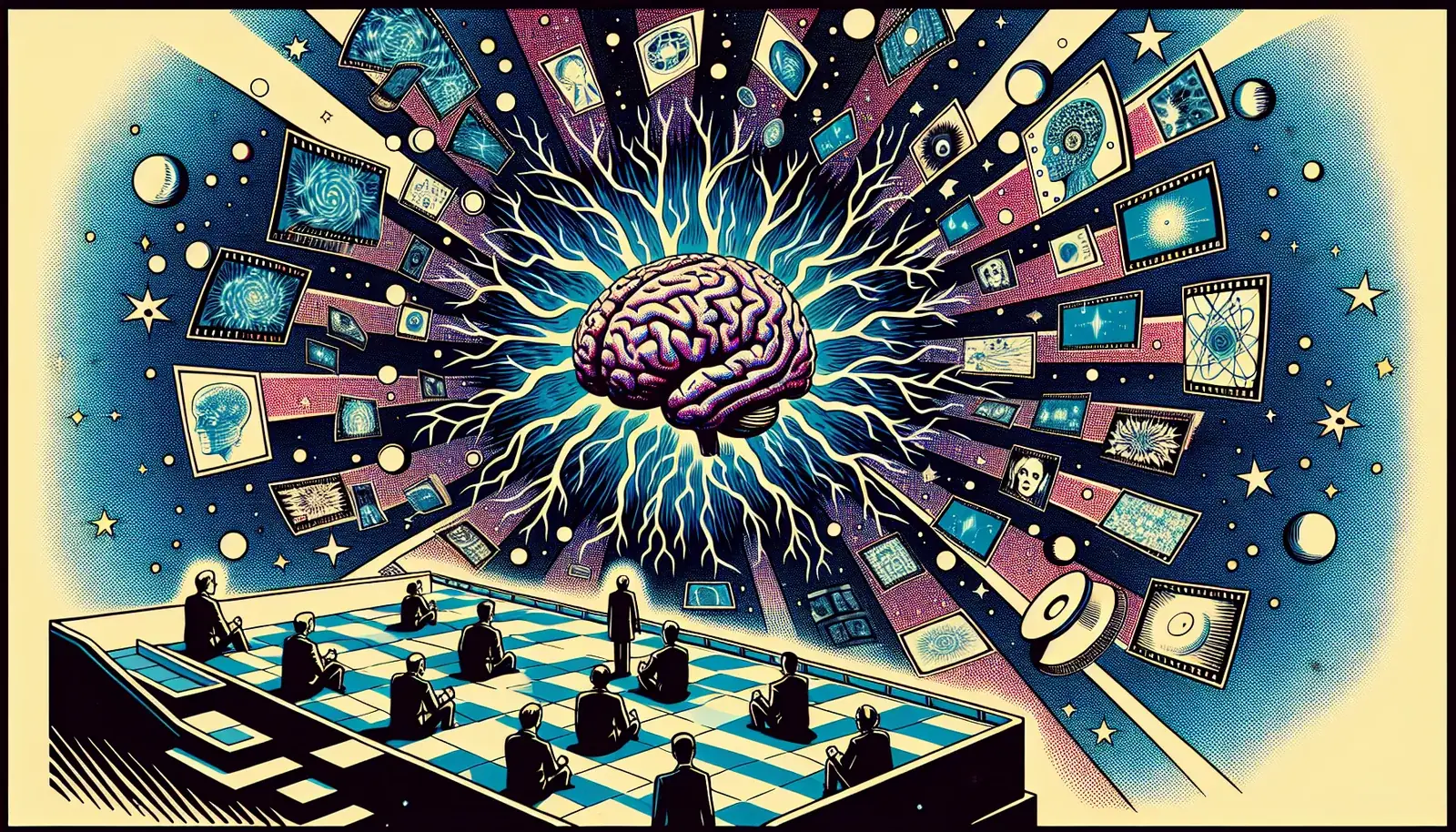
Google AI Video Research Tackles Continuity Across Scenes
Google outlines 4 research frameworks for longer AI videos, combining creative planning, visual memory and feedback to keep scenes more consistent.

Google AI video research is taking on a deceptively difficult filmmaking problem: remembering what happened in the previous scene. In a September 24 research overview, Google described four related frameworks for coordinating longer videos. The focus is continuity across an entire story, beyond the quality of any single generated clip.
- Google groups the work into Co-Director, CANVAS, A²RD and VQQA.
- The overview describes orchestration built around Gemini and Veo.
- Co-Director's research benchmark contains 400 fictional-product advertising scenarios.
- This is a research report; it does not announce a generally available video-editing application.
How does Google AI video planning work?
The Co-Director paper treats storytelling as a coordinated search problem. One part explores creative directions; another checks and refines the resulting sequence. Its hierarchy links the overall creative plan to production decisions instead of leaving each generation step to pursue an isolated prompt. The authors report improvements against their selected baselines, which should be understood as research results rather than a promise about every future production.
That distinction matters for AI research coverage. A beautiful shot can still be unusable when the protagonist's jacket changes between cuts. The creative brief and the continuity record serve different purposes, and a production process needs both.
What does CANVAS remember between scenes?
The CANVAS paper focuses on storyboards, retaining references for characters and backgrounds while planning locations. Its evaluation includes tests of longer-range consistency: returning to an earlier room should preserve the room, even after intervening scenes. The researchers introduce HardContinuityBench to examine that challenge.
These papers first appeared in April. September's news is Google's broader presentation of the research program, including work on longer video sequences and iterative quality checks. Treating that date accurately avoids mistaking a research overview for a newly released foundation model.
Why this matters for creative work
Consider a short educational film that revisits the same laboratory. Keeping its equipment and presenter consistent helps the viewer follow the explanation. Our reading is that the valuable advance here is dependable production coordination: fewer details for a human editor to repair between shots.
That is a different application of coordinated agents from the Claude enzyme-search project. Both nevertheless illustrate why a useful system can require planning, memory and checking around its underlying models. The next practical question is how these research methods translate into tools creators can actually use.
Sources: Google Research overview — September 24, 2026; Co-Director paper — April 27, 2026; CANVAS paper — April 15, 2026. The papers are primary research supporting Google's overview, not independent product reviews.
More AI Stories
Strands Decider 2B: What Amazon's Free Decision Model Does
Strands Decider 2B is a free 2B-parameter decision model that picks options in about 115ms on a single GPU. Here is how it works and where it fits.
Meta Muse Gadgets SDK: Build Your Own AI Agent Hardware
Meta's open-source Muse Gadgets SDKs bring its Muse agent to Raspberry Pi and ESP32 builds, and 5,000 free Home Link dongles are going to subscribers.
AstaBrief 8B: Ai2's Open Model for Cited Science Reports
AstaBrief 8B is Ai2's Apache 2.0 open model that writes cited research reports in 51 seconds, 3.5x faster than its Claude pipeline. Here is how it works.