
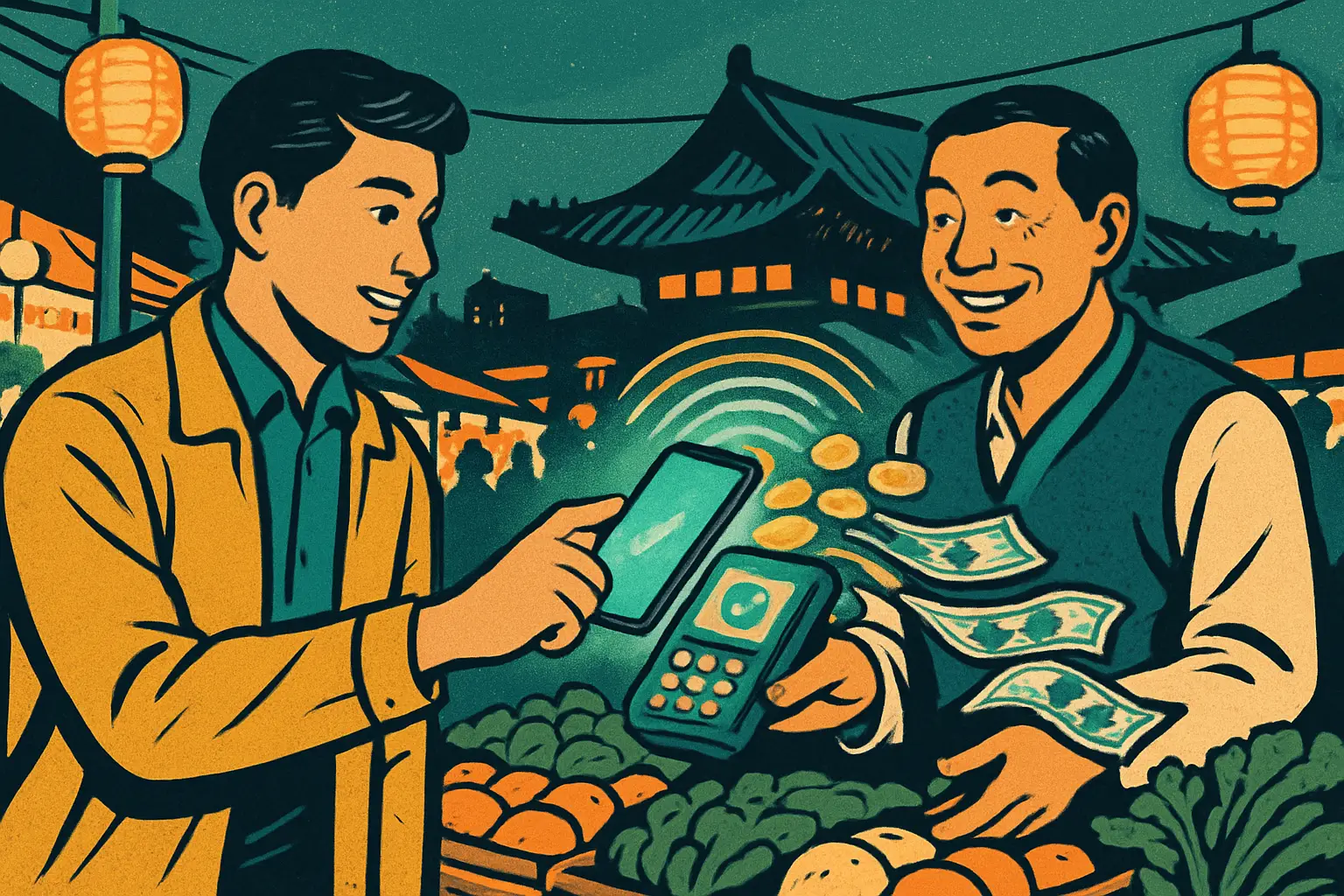
Circle Brings USDC Payment Rails to South Korea
Circle signed MOUs with Kakao and Toss Bank on July 23 to build USDC payment rails in South Korea, extending regulated stablecoin infrastructure.

Building the Rails Before the Traffic Arrives
The most durable stablecoin stories are infrastructure stories, and this is a clean one. On July 23, 2026, Circle — the issuer of the USDC stablecoin — signed two separate memorandums of understanding to explore blockchain-based payment infrastructure in South Korea: one with Kakao Group, whose apps KakaoTalk, Kakao Pay, and KakaoBank reach a huge share of the country, and one with Toss Bank, a leading digital bank. The aim is to build compliant, USDC-based payment rails inside platforms Koreans already use every day. No price speculation here — just the plumbing of digital-dollar payments getting laid down.
- Circle signed MOUs with Kakao Group and Toss Bank on July 23, 2026 to explore USDC payment rails in South Korea
- Kakao's platforms include KakaoTalk, Kakao Pay, and KakaoBank; Toss Bank is a major Korean digital bank
- USDC total supply was cited at $74.4 billion as of the announcement
- The deals build on Circle's April 2026 agreements with exchanges Upbit and Bithumb, which handle more than 95% of Korean daily trading volume
Why Partner With Kakao and Toss?
Distribution is everything in payments, and these two partners bring enormous reach. Kakao sits at the center of Korean digital life through messaging, mobile payments, and banking, while Toss Bank has become a go-to for younger, mobile-first customers. Embedding compliant stablecoin rails inside products people already open dozens of times a day is how digital-dollar payments become ordinary rather than niche. It is the same embedded-infrastructure playbook we have seen make stablecoins spendable elsewhere, from stablecoin-linked card networks to Visa's multi-chain stablecoin platform.
A Maturation Story, Not a Hype Cycle
What makes this encouraging is the pattern it fits. Circle spent the spring signing on Korea's dominant exchanges, Upbit and Bithumb, which together account for the overwhelming majority of the country's daily trading. Now it is extending from trading venues into everyday banking and messaging platforms — moving stablecoins from where they are traded toward where they might actually be spent. With USDC supply cited at $74.4 billion, the raw capacity is already there; agreements like these are about making that capacity reachable through familiar apps. Circle CEO Jeremy Allaire framed the effort around expanding USDC adoption across Korea.
What to Watch From Here
These are MOUs, which means the interesting part is execution: which pilots launch first, how regulators shape the rollout, and whether real consumer or merchant flows follow. Korea has one of the world's most active digital-payments cultures, so it is a natural proving ground for compliant stablecoin rails. For continued coverage of how digital-dollar infrastructure is maturing worldwide, follow our crypto section.
This article is news reporting on payment infrastructure and is not investment advice.
Sources: The Block — July 23, 2026; Stablecoin Insider — July 23, 2026.
More Crypto Stories

Uber Tokenized Treasury Pilot: Idle Cash That Works 24/7
Uber piloted buying a tokenized Franklin Templeton money market fund with HSBC tokenized deposits on Canton, with redemptions possible even on weekends.

Curve on Stellar: What StableSwap Means for Stablecoins
Curve Finance launched StableSwap on Stellar, its first deployment outside the EVM, rebuilt for Soroban. Here is what it means for stablecoin liquidity.

DTCC Tokenization Service Launch: What Changes for Investors
DTCC's Tokenization Service is live with 20 firms signed, minting tokenized versions of DTC-held stocks, ETFs and Treasuries on Canton and Besu networks.