
Marqeta and zerohash Bring Stablecoins to Cards
A Marqeta and zerohash deal lets people spend stablecoin balances at millions of merchants using standard cards, while merchants still get paid in fiat.

The Missing Link Between Digital Dollars and the Checkout Lane
Stablecoins have quietly become one of the busiest rails in finance, but spending them at an ordinary store has remained awkward. A partnership announced July 22, 2026 between zerohash and Marqeta sets out to close that gap. The integration lets people spend digital-dollar balances at tens of millions of merchants worldwide using a standard payment card, while merchants get paid in fiat exactly as they would on any other card transaction. The data point that frames why this matters: stablecoin monthly transaction volume hit $7.2 trillion in February 2026, surpassing the U.S. ACH network for the first time.
- zerohash and Marqeta partnered on July 22, 2026 to enable stablecoin spending on standard cards
- zerohash provides custody, compliance, and liquidity; Marqeta handles card issuance and network relationships
- Merchants are paid in fiat, so no checkout-side changes are required
- Marqeta processed nearly $400 billion in payment volume in 2025; zerohash's transaction volume grew 690% year over year
How Does Spending a Stablecoin on a Card Work?
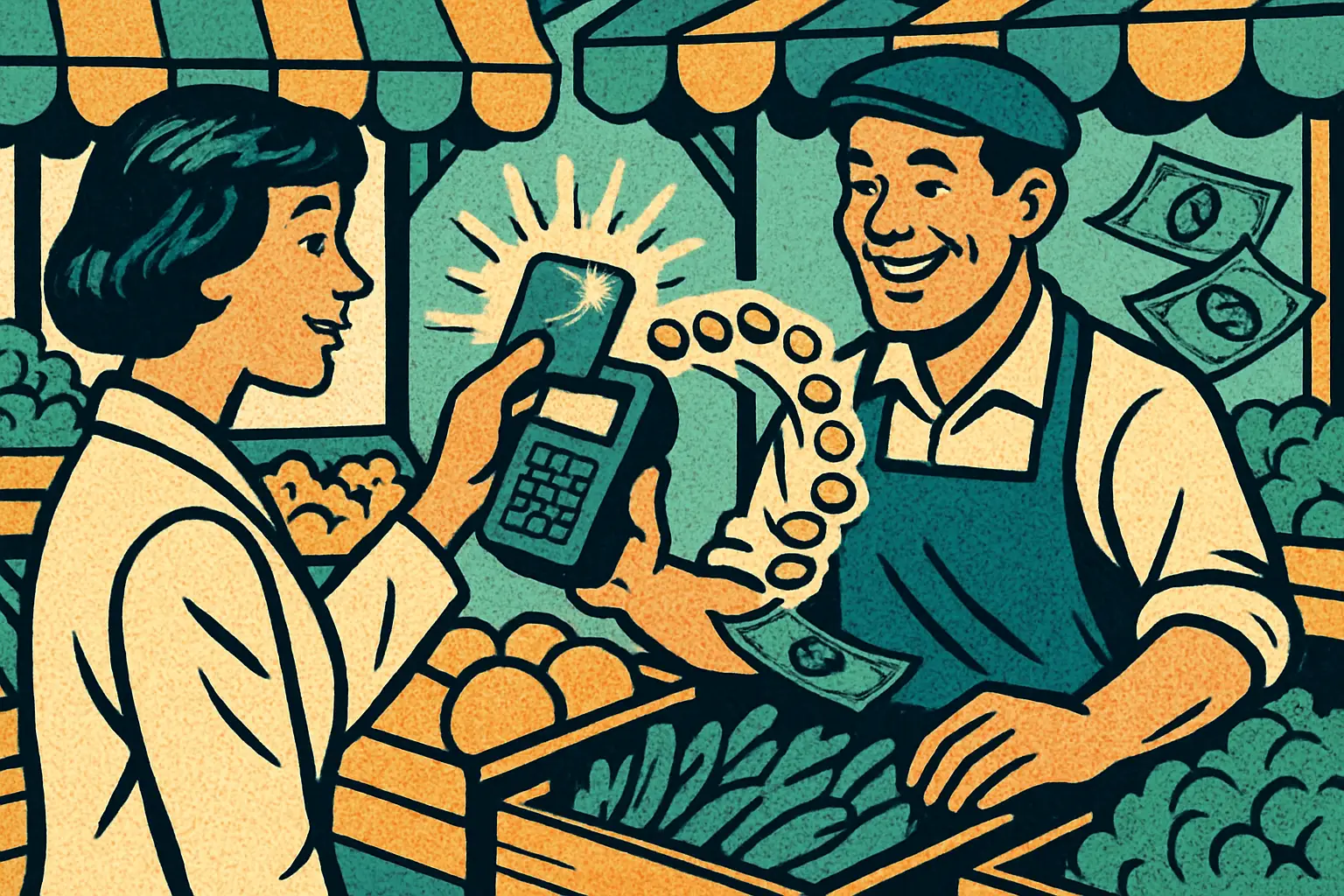
The elegance here is that the complexity is hidden. On the front end, a user holds a digital-dollar balance and taps a familiar card. Behind the scenes, zerohash handles the on-chain custody, compliance, and liquidity needed to move that value, while Marqeta manages issuance, acceptance, and the bank and network relationships that route the transaction. The merchant simply receives fiat. Neither the shopper nor the store has to rebuild anything or take on new regulatory burden — the stablecoin layer is embedded inside products people already use.
Why This Is a Maturation Story, Not a Hype Story
Market-watchers have long argued that stablecoins would find their footing not through speculation but through boring, high-volume utility — and payments is the most boring, highest-volume use case there is. Marqeta's near-$400 billion in 2025 payment volume gives the partnership serious reach, and zerohash's 690% year-over-year transaction growth signals real demand for compliant on-chain movement. This slots into a broader 2026 trend of stablecoin infrastructure going mainstream, from Visa's multi-chain stablecoin platform to logistics networks settling in stablecoins. The connective tissue between crypto rails and everyday commerce is finally being built.
What to Watch From Here
The interesting metrics going forward are adoption metrics: which card programs light up the feature first, how issuers price it, and whether the fiat-settlement design holds up smoothly at scale. The surpassing of ACH volume tells you the rails are already carrying the load; the Marqeta-zerohash deal is about making that capacity reachable from a wallet in your pocket. For continued coverage of how digital-dollar infrastructure is maturing, follow our crypto section.
This article is news reporting on payment infrastructure and is not investment advice.
Sources: GlobeNewswire — July 22, 2026; Finovate — July 2026; ITBrief UK — July 2026.
More Crypto Stories

SoFi Earn (SOFIE): How a 4.40% Tokenized Deposit Works
SoFi Earn (SOFIE) is a consumer tokenized deposit paying 4.40% APY with FDIC insurance that converts 1:1 into the SoFiUSD stablecoin around the clock.

Zerohash AUTH: Crypto Transfers Without Wallet Addresses
Zerohash AUTH lets users move crypto, stablecoins and stock tokens between 600+ linked accounts without copying a wallet address or picking a blockchain.

Switzerland's First Bitcoin ETF: What FINMA Approved
FINMA approved Switzerland's first retail Bitcoin ETF on October 20, a fund holding BTC directly with Swiss custody rules and point-of-sale safeguards.