
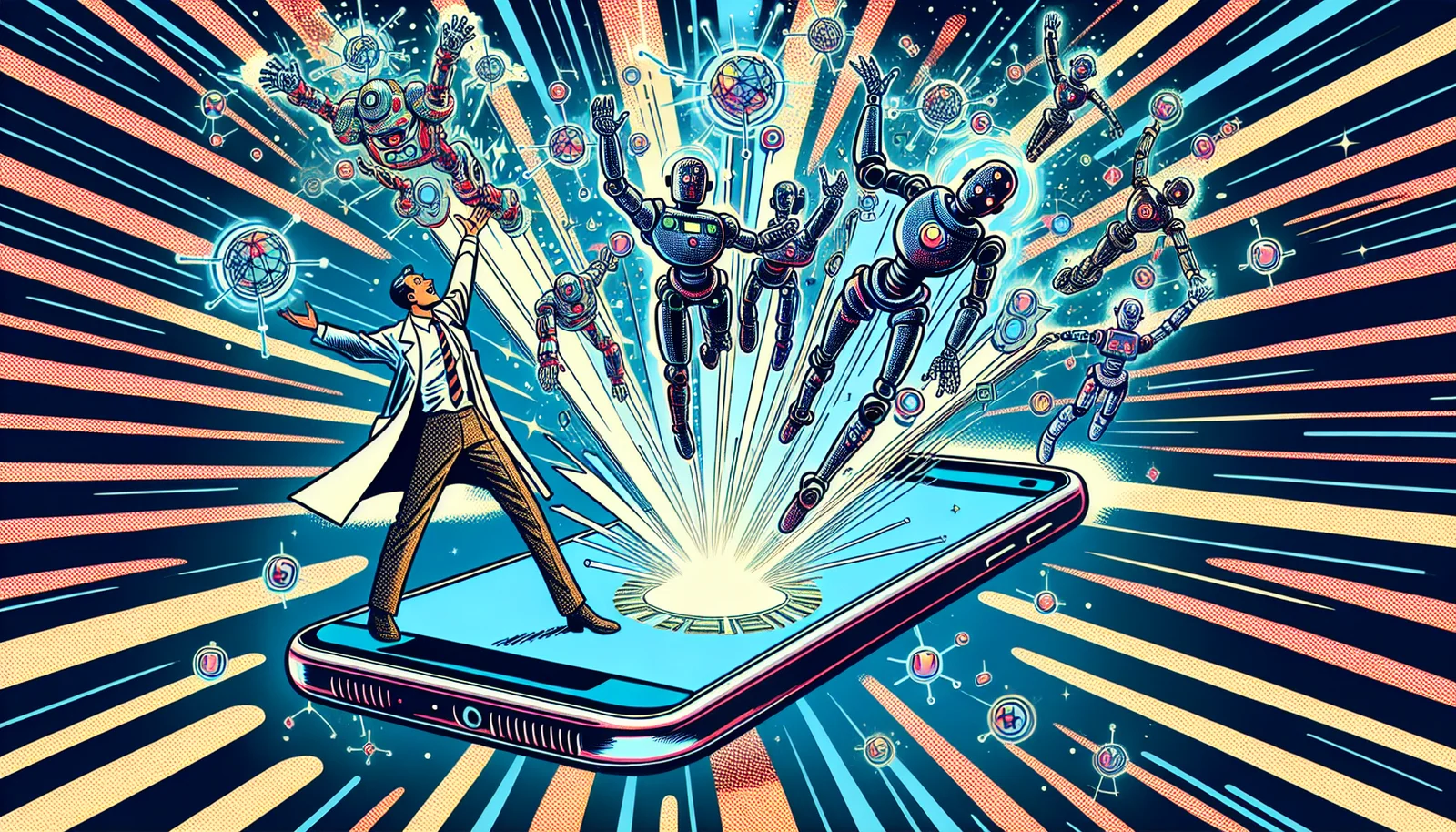
Apple's iOS 27 Opens Siri to Rival AI Assistants Beyond ChatGPT
Apple's iOS 27 will let Siri hand off to third-party AI assistants, positioning iPhone as an open AI platform in its biggest intelligence overhaul yet.

Apple's Biggest Siri Overhaul Yet Opens the Door to Rival AI
Apple has long positioned Siri as the intelligence layer of the iPhone experience. But Siri's shortcomings — compared to ChatGPT, Google Gemini, and increasingly capable large language models — have been a persistent point of discussion among developers and power users. iOS 27, announced via Bloomberg on March 26, 2026, represents Apple's most ambitious response yet: a Siri overhaul that doesn't just improve the assistant, but opens it to competition.
Bloomberg's Mark Gurman reported the plan, which will allow third-party AI services to integrate alongside ChatGPT as Siri's fallback intelligence options. Users will be able to route queries to their preferred assistant — whether that's Gemini, Claude, Perplexity, or a future entrant — directly from within Siri's interface. The move signals Apple's recognition that no single AI model will be best at everything, and that the iPhone's value lies in being the best device for accessing AI, not in owning AI capability outright.
What This Means for the AI Platform Wars
The strategic significance of Apple's decision extends well beyond Siri itself. The iPhone is installed on over a billion active devices worldwide. Opening that footprint to third-party AI assistants transforms iOS into something closer to an AI distribution platform — a surface where the intelligence layer competition that is defining the next decade of technology can play out at scale.
For consumers, the immediate benefit is choice and quality. Someone who prefers Claude for coding tasks, Gemini for real-time search, or ChatGPT for creative writing will be able to set preferences and have Siri intelligently route requests to the best model for each job. The vision Apple has outlined is for iPhone to become the universal interface for AI — agnostic about which model powers any given response.
ChatGPT Was Just the Beginning
Apple introduced its first third-party AI integration in iOS 18, allowing Siri to hand off complex queries to OpenAI's ChatGPT with explicit user permission. That initial partnership was a proof of concept. iOS 27's multi-provider architecture extends the same logic much further: rather than a single partnership, Apple is building a framework where multiple AI providers compete for user preference within the iOS ecosystem under Apple's platform rules.
This approach mirrors Apple's model in other competitive domains — payment systems, navigation apps, and browsers all compete within iOS. AI assistants will now join that open-but-governed ecosystem.
On-Device Intelligence Remains Core
Apple has framed its AI platform openness as complementary to, not a replacement for, its on-device Apple Intelligence investment. The privacy-preserving on-device features introduced in recent iOS versions — summaries, writing tools, photo editing, and contextual system actions — continue to handle tasks that don't require cloud models. Third-party assistants slot in for the use cases that benefit from the most capable large language models, where cloud computation is appropriate and user-consented.
The iOS 27 architecture reflects a pragmatic and confident position: Apple controls the device, the interface, and the user trust relationship. The AI model race can happen inside the Apple platform — and Apple wins either way.
Why This Is a Big Deal for AI Development
For AI labs and developers, iOS 27's open assistant framework represents one of the most significant distribution opportunities in the industry. Reaching iPhone users through a native Siri integration is fundamentally different from requiring a standalone app download. The labs that build the most useful, reliable, and differentiating AI assistants will see that quality rewarded with user preference data at iOS scale — a feedback loop that could meaningfully accelerate the gap between leading and lagging AI models.
Sources: Bloomberg (March 26, 2026), MacRumors (March 27, 2026), 9to5Mac (March 27, 2026)
More AI Stories

Nemotron 3.5 Bolt: Can a 74B Open Model Really Fit in 24GB?
Nemotron 3.5 Bolt packs a 74B-parameter open model into 24GB with 2-bit quantization-aware training. Here's what it means for local AI agents on Oct 15.

Anthropic Scion: Why Claude Needed New Source Control
Anthropic built Scion, a new source control system, after daily merges jumped from 2,500 to 30,000. Claude wrote most of it; checkouts now take seconds.

Gemini 4 Argon Pricing: What the $2 Intro Rate Gets You
Gemini 4 Argon is now broadly available at $2 in and $10 out per million tokens until November 30, with a 1M token limit and free access for scientists.