Life Sciences Verification Opens Claude to Bio Labs
Anthropic's Life Sciences Verification Program gives vetted research teams Claude access tuned for biology, with monitoring replacing live blocking.

Safety Rails That Know What a Biologist Looks Like
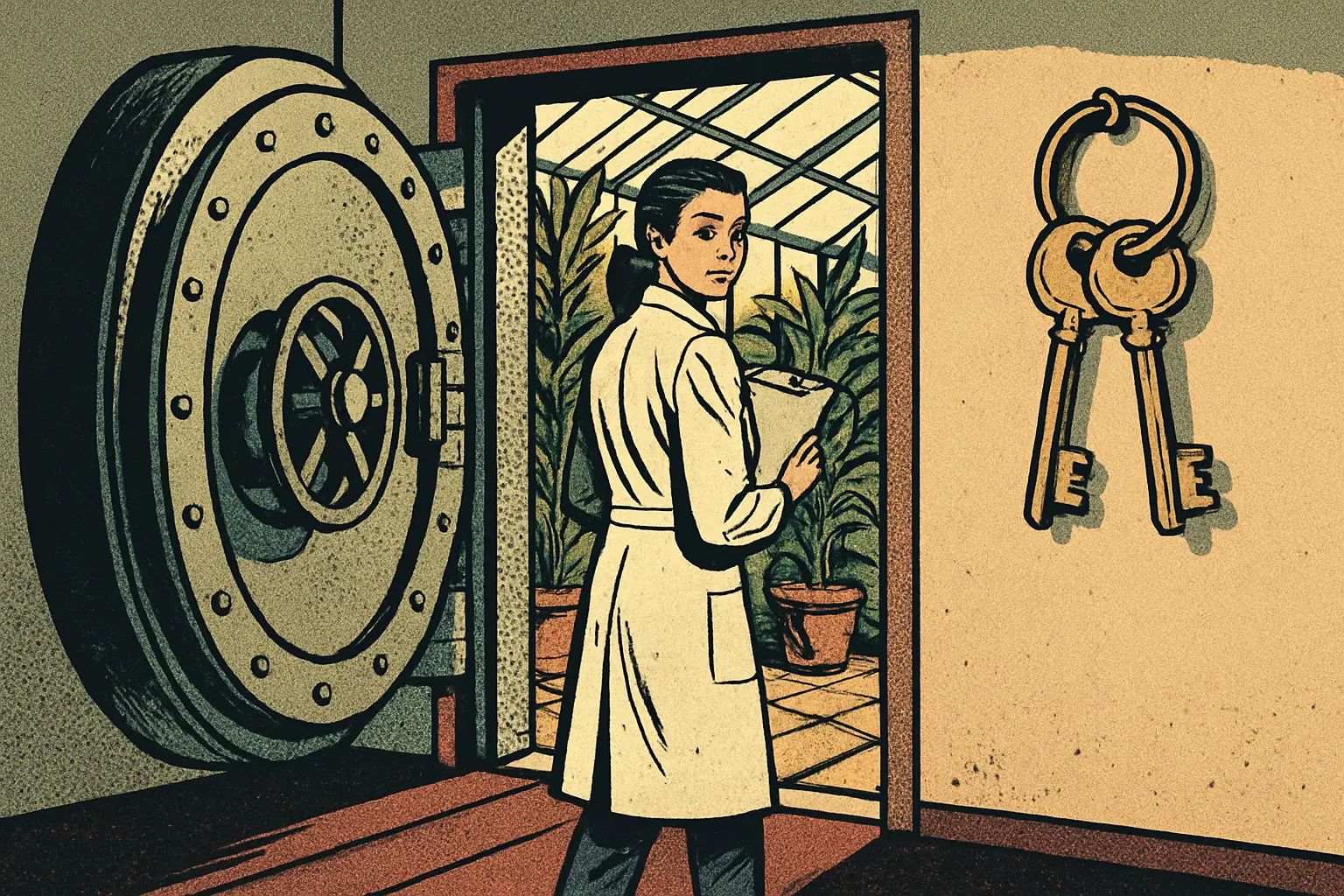
Anthropic announced on September 17, 2026 a Life Sciences Verification Program, which gives vetted research organisations access to Claude models under safeguards built for biology rather than against it. According to the company, dozens of organisations came through an early-access phase and it expects hundreds to enrol in the first week.
- Who it is for: organisations that pass a review covering research credentials, security standards and ethical oversight
- Two tiers: a Standard Use tier for general life sciences work, renewed annually, and a High-risk Use tier scoped to a single named project and researcher, renewed every six months
- Named early partners: Xaira Therapeutics, Edison Scientific and Manifold Bio
- Current gap: individual plans are not supported yet, and the High-risk tier remains limited on the Mythos model pending government coordination
Why Biology Safeguards Are Hard to Get Right
Every frontier lab restricts what its models will say about pathogens, toxins and synthesis routes. The difficulty is that the restricted vocabulary is also the working vocabulary of legitimate science. A model that refuses to discuss a viral vector refuses to help the person developing a gene therapy using one. That is not a hypothetical cost — it is the daily experience of researchers who find the tool going quiet exactly where their expertise begins.
Anthropic's answer here is a structural one. Rather than tightening or loosening the filter for everyone, the program moves verified organisations from real-time content blocking to offline monitoring of usage patterns against a stated use case. The company describes this as unlocking work currently blocked in its generally available Fable models, spanning basic science, supply chain, quality assurance, regulatory affairs and investment diligence.
The trade is legible. Individual prompts stop being interrogated in the moment; the account instead agrees to be reviewable against what it said it was doing. For an institution with an ethics board and a security programme that is a reasonable bargain, and it is roughly how controlled reagents and biosafety levels already work in a physical lab.
What Does the Two-Tier Split Actually Buy?
Standard Use is the broad one: team-wide access for drug discovery, R&D, clinical development and manufacturing, renewed each year. It is aimed at the ordinary bulk of pharmaceutical and biotech work that has no business being gated but keeps tripping general-purpose filters.
High-risk Use is deliberately narrower. It removes life sciences safeguards entirely, but for one researcher on one specified project, with a six-month clock. That narrowness is the safety mechanism — a scope small enough to be reviewed by a human, and a renewal cycle short enough that dormant access expires rather than lingering.
Both tiers sit downstream of the classifier work Anthropic published earlier this year, when it reported cutting false positives on biology prompts by 85 percent. Verification is the complement to that: better classifiers reduce the friction for everyone, while verification removes it for people who can demonstrate why they need it.
How This Fits the Wider Push to Put Models in Labs
The direction of travel across the industry is toward access programmes rather than blanket policies. Anthropic has already been widening the funnel for researchers — 10,000 free seats for scientists opened in August — and drug discovery specifically has drawn agent deployments like the Novo Nordisk and AWS collaboration.
What is new is the admission that a single global safety setting cannot serve both a curious member of the public and a vaccine developer, and that the honest fix is to know which one you are talking to. That does put a verification burden somewhere, and it currently leaves out independent researchers without institutional backing, which Anthropic says it intends to address with individual plans later.
Note that these are the company's own figures and descriptions of its own programme; enrolment numbers and the practical scope of what gets unblocked will be worth revisiting once researchers outside the early-access cohort have used it. More on model policy and releases in our AI coverage.
Sources: Anthropic — September 17, 2026.
More AI Stories

Paper2Agent Turns Research Papers Into AI Agents
Stanford's Paper2Agent rebuilds papers as agents that rerun their own analyses. It turned 74 of 100 computational biology papers into working agents.
Firefox Smart Window Runs Mistral Small 4 Privately
Mozilla's Firefox Smart Window beta now runs on Mistral Small 4 in North America and France, under a zero data retention agreement with no saved chats.
AI Data Centers Learn to Flex Power for the Grid
Emerald AI, Google and NVIDIA launched the AI Energy Management Alliance with 18 partners, saying flexible data centers could unlock 100 GW from the grid.