
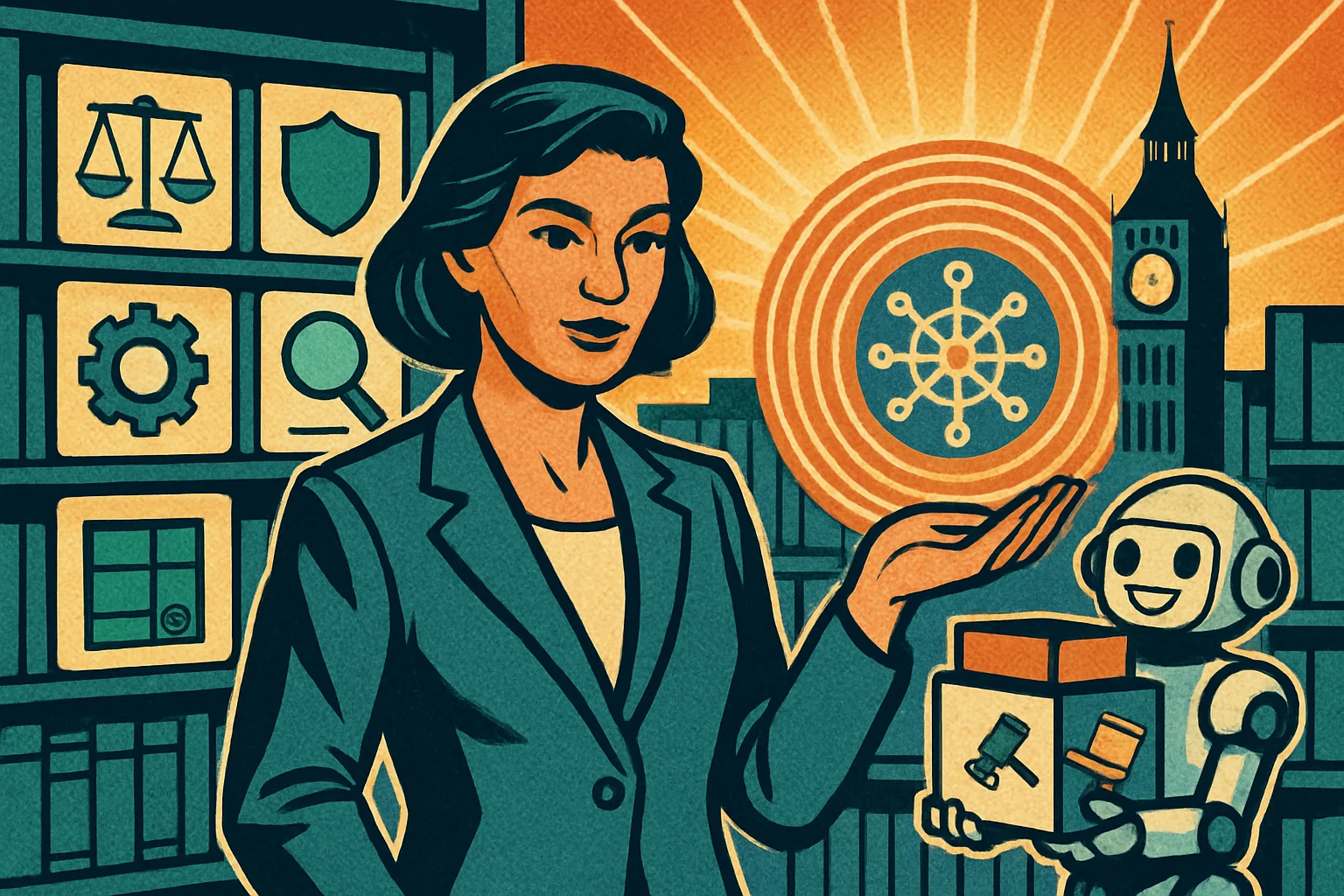
Code with Claude Lands in London — Anthropic Ships 20+ Legal MCP Connectors and 12 Practice-Area Plugins
Anthropic's Code with Claude London developer event opened on May 20, 2026 — the launch headlines include 20+ new legal MCP connectors and 12 practice-area plugins for law firms and in-house teams.

Anthropic Just Brought Code with Claude to London — And the Headlines Are All About Legal
Anthropic opened the London stop of its Code with Claude 2026 developer event on May 20, 2026 — the second leg of a three-city global tour following the San Francisco edition on May 6 and preceding the Tokyo stop on June 5-6. The London headlines center on a major expansion of Claude's legal capabilities: 20-plus new legal MCP connectors and 12 practice-area plugins designed to extend how law firms and in-house legal teams work across research, contracts, discovery, matter management, and legal aid. For legal-tech professionals, AI developers building vertical agent applications, and the broader enterprise AI community, the May 20 London announcements are the kind of structural development that converts Claude from a general-purpose assistant into a credible legal-vertical platform.
For the broader AI ecosystem watching how frontier labs are bringing their models into specific professional workflows, the London Code with Claude event is the clearest expression yet of Anthropic's vertical-packaging playbook. The 20-plus legal connectors and 12 practice-area plugins together describe a deployable legal AI surface that law firms can plug into their existing matter management, contract review, discovery, and legal aid workflows without building the integration plumbing themselves.
What the 20+ Legal MCP Connectors Actually Do
The structural pitch is that MCP — Model Context Protocol — gives Claude a standardized way to connect to the systems law firms already use. The new legal MCP connectors cover the breadth of the legal tech stack: case management platforms, contract lifecycle management tools, e-discovery systems, legal research databases, regulatory compliance services, and the broader supporting tooling that law firms run on. Each connector is a first-class integration that respects the access controls and audit logging of the underlying system, which is the right architecture for an industry where data governance and client confidentiality are non-negotiable.
Why MCP Is the Right Distribution Surface for Legal AI
The structural reason MCP is the right surface for legal AI is that law firms cannot reasonably rebuild every integration to every legal-tech tool they use. Standardizing the integration layer through MCP means each new connector benefits every Claude deployment, and each new tool the law firm adopts can plug into the same Claude workflow without bespoke engineering work. That is the kind of distribution model that scales — and it is the right way to bring frontier AI into a profession that has historically been cautious about adopting new tooling.
The 12 Practice-Area Plugins
Where the MCP connectors handle the system-level integration, the practice-area plugins handle the workflow-level customization. Each plugin packages prompts, templates, evaluation rubrics, and tool configurations for a specific area of legal practice — litigation, transactional, regulatory, intellectual property, employment, real estate, tax, and the rest of the major specialties. Lawyers using a plugin get a Claude experience that already understands the conventions, terminology, and document patterns of their practice area, rather than a generic Claude they would otherwise have to prompt-engineer for every interaction.
The Right Granularity for Legal Workflow
The 12-plugin granularity is the sweet spot for legal practice customization. Going more granular would fragment the platform into too many specialized tools. Going less granular would force lawyers to do the customization work themselves. The 12 practice areas Anthropic has chosen map to the way major law firms and corporate legal teams actually organize their work, and the plugins ship with the kind of legal-domain rigor that lawyers expect when AI is integrated into client-facing workflows.
The Bigger Code with Claude Story
The legal launch sits inside a broader Code with Claude 2026 narrative that includes five headline platform features: Dreaming, Outcomes, multi-agent orchestration, Claude Finance with 10 pre-built agents, and Add-ins. The Dreaming feature gives Claude managed agents the ability to review past sessions and learn patterns offline. Outcomes turn agent runs into structured artifacts. Multi-agent orchestration lets a lead agent delegate work to specialist subagents. Claude Finance brings the same vertical-packaging pattern to financial services that the legal launch brings to law firms. Add-ins extend the Microsoft 365 integration surface across Word, Excel, PowerPoint, and Outlook.
The Vertical-Packaging Playbook Is Becoming Anthropic's Signature Move
The combined picture from Code with Claude is that Anthropic has settled on vertical packaging as its primary route to enterprise distribution. Claude for Small Business, Claude Finance, the new Claude legal stack, the KPMG global alliance, the PwC professional services expansion — each of these is a packaged Claude experience for a specific audience, with the connectors, plugins, and workflows that audience needs already wired up. That is a meaningfully different distribution strategy from the general-purpose chatbot model, and it is one of the cleaner answers to the question of how frontier AI converts capability into enterprise revenue.
How This Lands for the Legal-Tech Community
For law firms evaluating AI deployment strategies, the May 20 London announcements give the profession a structured option that respects the access controls, audit requirements, and practice-area conventions the work actually demands. For legal-tech vendors, the MCP-based integration model gives them a clear path to make their tools accessible to AI agents in a controlled, auditable way. For in-house legal teams at large corporations, the same connectors and plugins give them a way to deploy Claude across matter management, contract workflows, and compliance processes without building bespoke integrations.
The Setup for the Tokyo Leg
Code with Claude continues to Tokyo on June 5-6, and the pattern from San Francisco and London suggests Anthropic will use each city stop to highlight a different vertical or platform extension. For developers building on Claude, the right way to track the rest of the tour is to watch which integration surfaces and which audience-specific packages Anthropic emphasizes next. Each stop adds another data point to the company's vertical-packaging strategy — and the cumulative picture is the clearest map yet of how Anthropic plans to distribute frontier AI across enterprise workflows.
The Setup Going Forward
For AI developers, legal-tech professionals, and enterprise teams tracking how Claude is becoming a deployable platform rather than a general-purpose model, the Code with Claude London announcements are one of the most concrete vertical-packaging signals of 2026. The 20-plus legal MCP connectors give law firms the integration surface they need. The 12 practice-area plugins give them the workflow customization. The broader Code with Claude announcements continue the vertical-packaging playbook that has defined Anthropic's 2026 enterprise strategy. The next watch items are the Tokyo stop on June 5-6, the rate of adoption across major law firms, and how competing frontier labs respond with their own legal-vertical packages. For AI builders and legal professionals alike, the May 20 launch is the moment Claude became a credible legal platform.
Sources: Anthropic Code with Claude London event page, May 19, 2026; MIT Technology Review, "Anthropic's Code with Claude showed off coding's future," May 21, 2026; Code with Claude 2026 announcements coverage, May 2026; MindStudio Code with Claude 2026 agent features summary, May 2026; AI Grants Code with Claude London recap, May 2026.
More AI Stories

Google AMIE Lancet Study: What 98 Clinic Patients Showed
Google's AMIE diagnostic AI talked with 98 real clinic patients before their visits, and its diagnosis lists matched doctors' final calls 90% of the time.

Microsoft-Decision-1: A $0.042 Decision Model on Foundry
Microsoft-Decision-1 scores yes/no and multiple-choice decisions in a single pass on Foundry for $0.042 per million input tokens, with free output tokens.

Gemini Agent for Work: What Google's Universal Agent Does
Google's new Gemini agent runs multi-day jobs in the cloud, routes work across Gemini and Claude models, and adds hard spend caps for business teams.