
AI Voice Clone Scams: How to Protect Your Family in 2026
AI voice clone scams can copy a voice from a few seconds of audio. A family safe word and a 30-second call-back routine shut them down. Here's the plan.

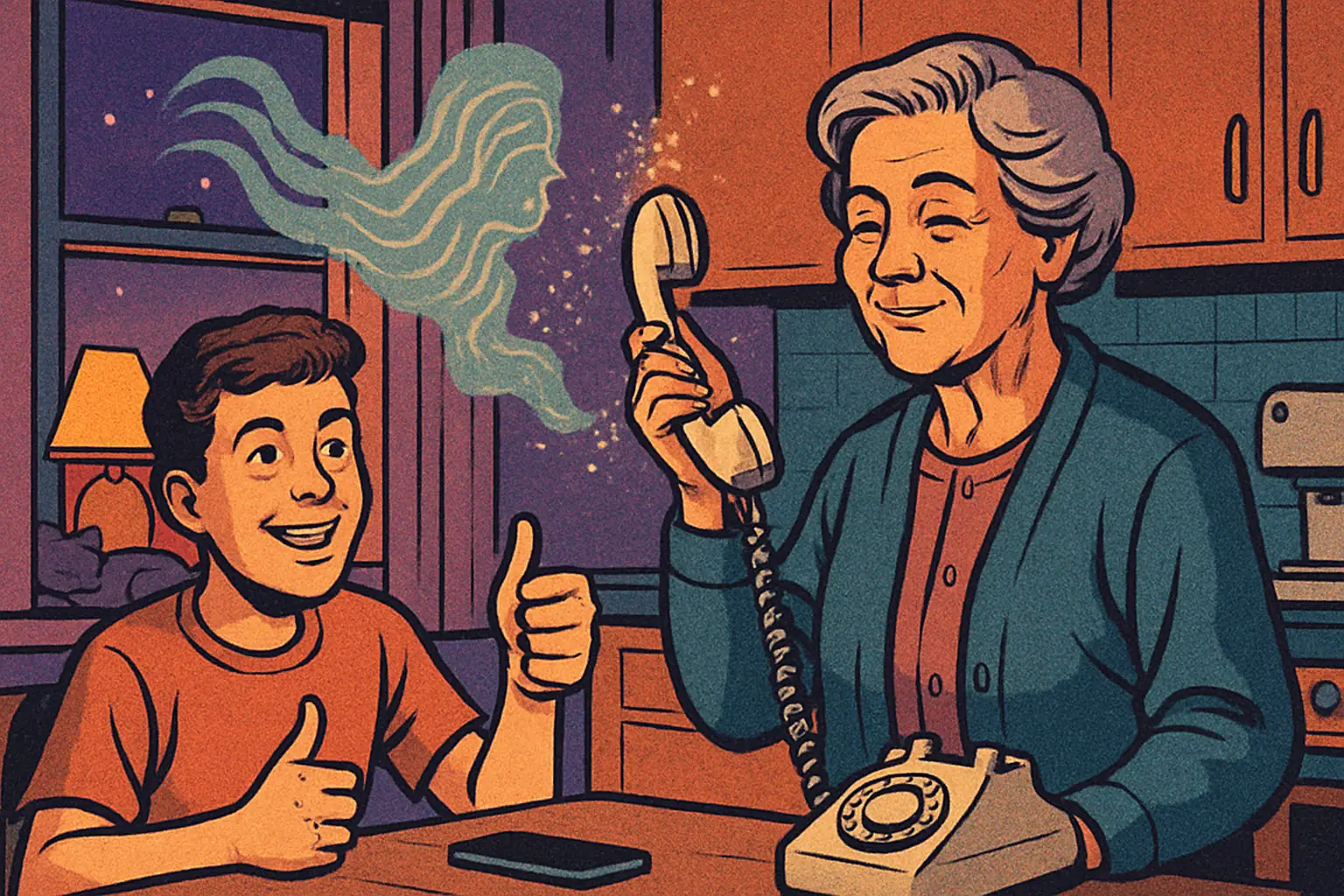
The phone rings, and it is your daughter's voice: shaky, rushed, asking you to wire money right now and please not tell anyone. Ten years ago that call would almost certainly have been real. Today, AI voice clone scams mean it might not be. The good news is that protecting your family takes no special technology. A shared safe word, a call-back habit and a few privacy tweaks defeat even a perfect voice clone, and you can set them up tonight in about ten minutes.
- How little audio it takes: the FTC warns a scammer needs only "a short audio clip" of a loved one, the kind posted online every day, plus a voice-cloning program
- The FBI's first tip: create a secret word or phrase with your family to verify identity, per its December 2024 public service announcement (I-120324-PSA)
- The FTC's core rule: don't trust the voice. Hang up and call the person back on a number you already know is theirs
- Payment red flags: wire transfers, cryptocurrency and gift-card numbers are the methods both agencies flag as signs of a scam
This guide is part of our ongoing AI security coverage, and it is written for everyone in the family, not just the tech-savvy one.
What Is an AI Voice Clone Scam?
An AI voice clone scam is a classic impostor scheme, the "grandparent scam" or "family emergency scam," upgraded with generative AI. Instead of a stranger mumbling "it's me, Grandma," the caller plays or generates speech that sounds like someone you love.
The FBI's Internet Crime Complaint Center describes the pattern plainly in its public service announcement on generative AI fraud: criminals generate short audio clips containing a loved one's voice to impersonate a close relative in a crisis, asking for immediate financial help or demanding a ransom. The same PSA notes that AI-generated audio can also be used to impersonate people to banks.
The Federal Trade Commission's consumer alert walks through the classic version: a panicked call from a "grandson" who says he wrecked the car and landed in jail. The FTC's explanation is short. All a scammer needs is a brief clip of your family member's voice, which they could get from content posted online, and a voice-cloning program.
Why AI Voice Clones Sound So Convincing
Modern text-to-speech and voice conversion models learn the pitch, rhythm and accent of a speaker from small samples. Consumer Reports tested six popular voice cloning apps in March 2025 and found it would be easy to create voices of other people from publicly available audio clips. Four of the six relied only on a checkbox where the user attests they have the right to clone the voice.
That is the honest picture. The encouraging part is that the defense doesn't depend on hearing the difference. It depends on verification, and verification is something a voice clone can't fake.
How Do You Know If a Call Is a Voice Clone?
You often can't tell by ear, and that is fine. The FBI does suggest listening closely to tone and word choice, because cloned calls can sound slightly off. Treat any of the following as a signal to slow down and verify:
- Urgency plus secrecy. "Send it now, and don't tell Mom and Dad" is the signature move of a family emergency scam
- Unusual payment methods. The FTC flags requests to wire money, send cryptocurrency, or buy gift cards and read out the card numbers and PINs
- A handoff to an "official." The loved one speaks briefly, then a "lawyer" or "officer" takes over to explain where to send money
- Odd phrasing. Your nephew suddenly calls you by your full name, or uses words he never uses
- An unfamiliar number, or a call that keeps dropping whenever you ask a question
None of these proves a scam on its own. Together, they are your cue to switch from listening to verifying.
How to Protect Your Family From AI Voice Clone Scams
Think of this like a fire drill. The plan matters far more than any single gadget, and it works for every age group.
1. Set Up a Family Safe Word
The FBI's first recommendation is to create a secret word or phrase with your family to verify their identity. The Los Angeles County Department of Consumer and Business Affairs gives the same advice in its version of the FTC alert: set up a family code word in advance, and ask for it before doing anything else.
Good safe words share a few traits:
- Memorable but never posted. Skip pet names, street names and anything visible on social media
- Easy to say under stress. A short, odd pairing like "orange canoe" works better than a long passphrase
- Shared in person. Agree on it face to face or over a call you initiated, never in a group chat that could be exposed
- Refreshed occasionally, and immediately if you think someone else has learned it
A twist many families like: agree on a question rather than a word, such as "what did we eat at the lake house?" Make the answer something that never appeared online.
2. Hang Up and Call Back
The FTC's core advice is "Don't trust the voice." Call the person who supposedly contacted you and verify the story, using a phone number you know is theirs. If you can't reach them, try another family member or their friends.
This one habit defeats almost every voice clone, because the scammer controls the incoming call but not the outgoing one. Save the numbers of your relatives' partners, roommates or close friends now, so you have a backup route in a real emergency.
3. Never Pay in Hard-to-Reverse Ways
Both agencies point to the same red flags. The FTC notes that scammers push payment methods that make it hard to get your money back, and the FBI advises never sending money, gift cards, cryptocurrency or other assets to people you know only from a call or online. A real emergency can wait the ten minutes it takes to verify through a normal channel.
4. Shrink Your Public Voice Footprint
The FBI suggests limiting online content of your image or voice where possible, making social media accounts private and keeping followers to people you know. You don't need to delete every video. Small steps help:
- Set family video posts to friends-only
- Skip publicly posted voicemail greetings that run long in your own voice
- Be cautious with "say yes into the mic" style calls from unknown numbers. Hang up and call back on a known number instead
5. Add a Second Layer to Financial Accounts
Consumer Reports recommends multiple layers of security on all financial accounts, so a cloned voice alone can't unlock anything. Turn on app-based or passkey sign-in wherever your bank offers it, and ask whether your bank relies on voice recognition for phone support. If it does, ask to add a PIN or an extra verification step.
What Tools Help Block AI Voice Scams?
Technology is catching up quickly, which is genuinely encouraging. Phone platforms now screen suspicious calls and messages on the device. Google, for example, expanded on-device scam detection in Android and Google Messages this month, which we covered in our look at Android's Gemini-powered scam protection.
The FTC has also pushed detection research forward. Its Voice Cloning Challenge, whose winners were announced in April 2024, rewarded four approaches:
- Synthetic voice detection that uses algorithms to judge whether voice patterns are human or synthetic
- Real-time call analysis that checks incoming audio in two-second chunks and assigns a "liveness score"
- Protective audio watermarks with distortions people can't hear but that throw off cloning tools
- Human-voice authentication embedded as a watermark
AI companies are also working on outreach. We covered one example in our story on OpenAI and AARP's scam safety push for older adults.
Tools help, but the safe word and the call-back habit remain the most reliable defenses, because they work on any phone and any carrier.
What Should You Do If You Already Sent Money?
Act fast, and don't feel embarrassed. These schemes fool careful, intelligent people every day.
- Call your bank or payment provider immediately using the number on your card or official app, and ask them to stop or reverse the transfer
- Report it to the FBI at the Internet Crime Complaint Center, ic3.gov. The FBI asks for details such as the caller's phone number, the date, payment type, amount and receiving institution
- Report it to the FTC at ReportFraud.ftc.gov, which feeds the data law enforcement uses to track scams
- Warn your family and set up a safe word if you haven't yet, since scammers sometimes call back
A Ten-Minute Family Checklist
- Pick a safe word or question and share it in person
- Save backup numbers for each close relative's partner, roommate or friend
- Agree on a rule: no one sends money because of a phone call without calling back first
- Lock down public videos of family members' voices
- Turn on extra sign-in protection at your bank
AI voice cloning is a real advance in speech technology, with good uses in accessibility, dubbing and assistive communication. A little preparation means your family gets the benefits without the risks. Put the plan in place this weekend, and the next too-urgent call becomes a ten-second check instead of a crisis.
Sources: FBI IC3: Criminals Use Generative AI to Facilitate Financial Fraud — December 3, 2024; FTC: Scammers use AI to enhance their family emergency schemes — March 20, 2023; FTC: Fighting back against harmful voice cloning — April 8, 2024; Consumer Reports: Voice cloning apps make it easy to steal your voice — March 10, 2025; LA County DCBA: Scammers Use AI to Enhance Family Emergency Scams — 2023.
More Ai Security Stories

SentinelOne Agentic Detection: How ADR Keeps AI Agents Safe
SentinelOne's Singularity ADR inventories AI agents and MCP servers, blocks prompt injection in-line and can pause one agent mid-task. Early access now.

Chrome Gemini Scam Detection: What the New Warnings Mean
Chrome's Gemini scam detection now runs server-side for every Enhanced Protection user, adding suspicious-site alerts and ClickFix copy warnings.

Microsoft Dynamic Permissions: Least Privilege for AI Agents
Microsoft adds Dynamic Permissions, Dynamic Agent Risk and Conditional Access for AI agents to Project Perception, plus discovery for 60 local agent types.