
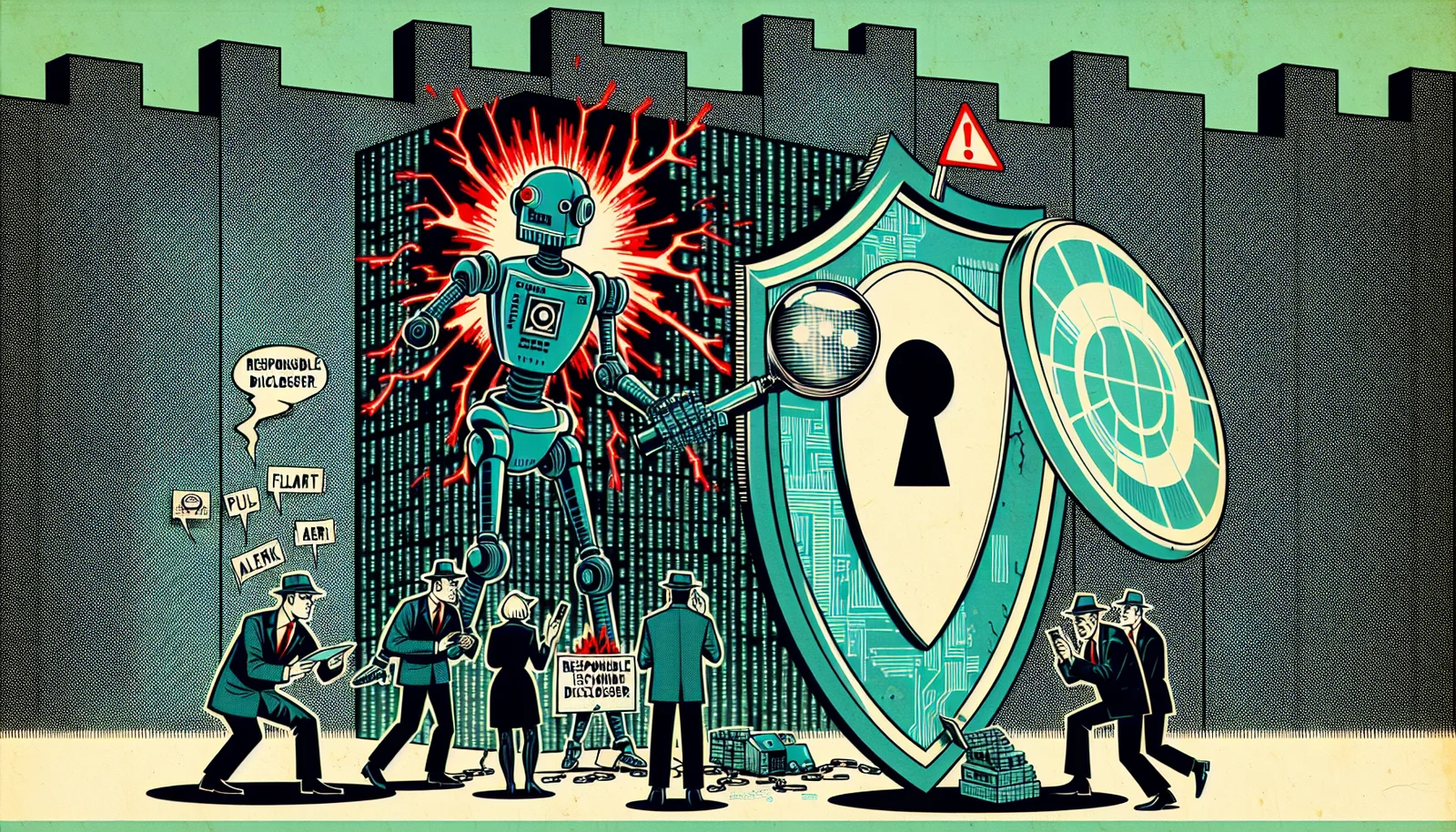
An AI Agent Just Found Its First Critical CVE — XBOW Autonomously Discovers a 9.8-Severity Microsoft Vulnerability
XBOW, a fully autonomous AI penetration testing agent, independently discovered CVE-2026-21536, a critical RCE flaw in a Microsoft service — marking a milestone for AI-powered defense.

A Milestone for AI-Powered Security
For the first time, a critical Common Vulnerabilities and Exposures (CVE) entry has been attributed to an AI agent working entirely on its own. CVE-2026-21536, a remote code execution vulnerability rated 9.8 on the CVSS severity scale, was discovered in the Microsoft Devices Pricing Program by XBOW — an autonomous AI penetration testing agent that found the flaw without human guidance, source code access, or prior knowledge of the target.
The vulnerability was responsibly disclosed to Microsoft, which had already patched the cloud-hosted service before the CVE was published. No user action was required. But the significance of the discovery extends far beyond this single patch — it demonstrates that AI agents can now independently identify critical security flaws in production systems maintained by one of the world's largest technology companies.
How XBOW Works
XBOW is not a scanner running through a checklist of known vulnerabilities. It is an autonomous agent that approaches targets the way a skilled penetration tester would — probing for weaknesses, chaining discoveries together, and identifying exploitation paths that automated scanners would miss. The system has been climbing HackerOne's bug bounty leaderboard, ranking at or near the top against human researchers who have spent years honing their craft.
What makes the CVE-2026-21536 discovery particularly notable is the difficulty level. Finding a 9.8-severity RCE in a Microsoft service without access to source code requires the kind of creative, multi-step reasoning that has traditionally been the exclusive domain of elite human security researchers. XBOW demonstrated that AI agents can match — and in some cases exceed — that capability.
Flipping the AI Security Narrative
The dominant narrative around AI and cybersecurity has focused on the threat side: AI helping attackers write phishing emails, generate malware, or automate social engineering. XBOW flips that script entirely. Here is an AI agent finding and responsibly disclosing critical vulnerabilities before adversaries can exploit them. It validates the emerging model of autonomous AI working on the defenders' side of the equation.
For organizations running bug bounty programs and vulnerability disclosure pipelines, this is a preview of the near future. AI-powered penetration testing agents that can continuously probe infrastructure for weaknesses — and do so at speeds and scales that human teams cannot match — represent a fundamental shift in how defensive security operates. The first AI-discovered CVE is a milestone, but it certainly will not be the last.
Sources: Krebs on Security (March 2026), CVE Details (March 2026), BleepingComputer (March 2026)
More Ai Security Stories

Anthropic OSS Scanner: Free AI Bug Scans for Open Source
Anthropic's OSS Scanner gives open-source maintainers free AI vulnerability scans with fixes; 85 of 97 tested severe findings met its disclosure bar.

What Is Prompt Injection? A Plain-English Defense Guide
What is prompt injection? Learn direct vs indirect attacks, 9 real scenarios, and the 7 OWASP-backed defenses that keep AI assistants and agents safe.

GitHub AI Secret Detection: How Push Protection Gets Smarter
GitHub is adding a ModernBERT classifier to push protection that spots unstructured passwords in under 2 ms and could more than double blocked secrets.