
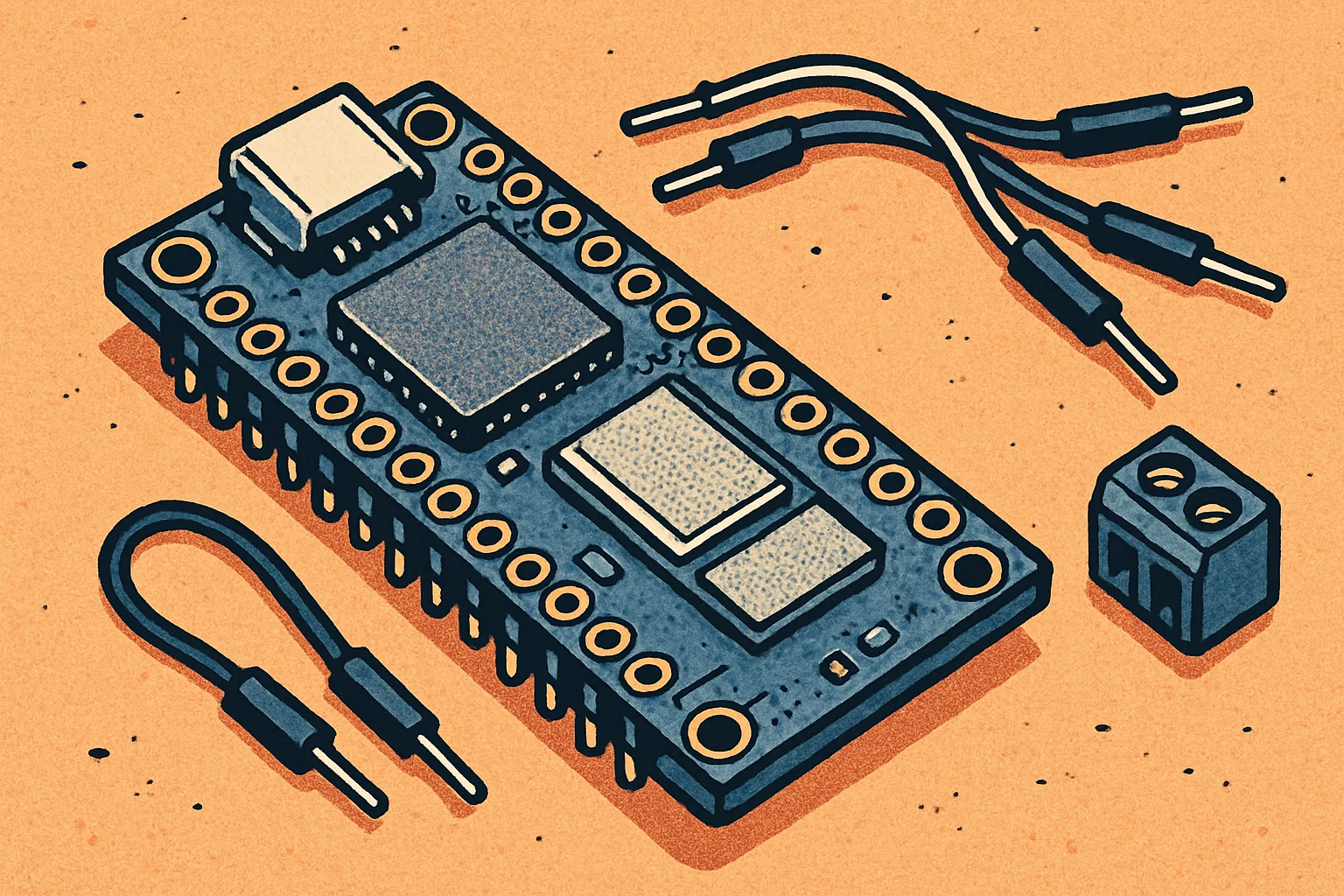
Waveshare ESP32-C6-Zero-B Adds 5V-36V Wide Input for Industrial Use
The Waveshare ESP32-C6-Zero-B is a tiny RISC-V board with a 5V-36V wide supply input, WiFi 6, and Zigbee/Thread radio, priced around $6-7.

A Hobbyist Favorite Gets Ready for the Rough Stuff
Waveshare's ESP32-C6-Zero family has been a staple in the compact-board drawer for a while, and the new ESP32-C6-Zero-B, detailed on June 29, 2026, addresses one of the most practical limitations of tiny dev boards: power. This variant adds a 5V-36V wide supply-voltage input, which is the single feature that moves an ESP32-C6 board from the breadboard toward genuine industrial and rugged deployments.
If you have ever tried to drop a hobbyist board into a vehicle, a piece of machinery, or a solar setup, you know the problem. Those environments rarely hand you a clean 5V rail. They give you 12V, 24V, or a noisy anything-in-between. A 5V-36V input range means the ESP32-C6-Zero-B can sit directly on those buses without a separate regulator board in front of it. That is a small change on the spec sheet with an outsized effect on where you can actually deploy it.
The RISC-V Core and Radios Underneath
Underneath, this is still the ESP32-C6 you know, built on the ESP32-C6FH8 RISC-V SoC. The RISC-V core is part of what makes this line appealing to tinkerers who like an open instruction set, and Espressif's toolchain support is mature. The board carries 8MB of flash, which is comfortable headroom for most firmware, OTA update slots, and a filesystem.
The radio stack is where the C6 really earns its place. You get WiFi 6 for modern, efficient wireless networking, Bluetooth 5 LE for low-power links and provisioning, and — crucially — an 802.15.4 radio for Zigbee and Thread. That 802.15.4 support is the reason this chip shows up so often in Matter and mesh sensor projects. Pairing that radio set with a wide-voltage input makes the Zero-B a natural fit for industrial sensor nodes that need to talk over both WiFi and a low-power mesh.
I/O and Toolchain
For connectivity on the hardware side, the board exposes roughly 20 GPIOs, which is a healthy count for something this small and leaves room for sensors, a couple of buses, and some control lines. USB-C handles programming and power on the standard path.
Software support is broad and beginner-friendly: ESP-IDF for full-control C/C++ development, Arduino for the fastest path from idea to blinking LED, and MicroPython for quick scripting and prototyping. That three-way support is a big reason the ESP32-C6-Zero line stays popular — you can meet it at whatever level you are comfortable with.
The Price/Performance Verdict
At around $6-7, the ESP32-C6-Zero-B is priced like the hobbyist board it descends from, not like a ruggedized industrial module. That is the compelling part. You are getting WiFi 6, Bluetooth 5 LE, an 802.15.4 mesh radio, a RISC-V core, 8MB of flash, and a 5V-36V supply input for the cost of a couple of coffees.
For makers building always-on sensors, field-deployed loggers, or Matter/Thread devices that need to run off whatever power is nearby, the wide-voltage input closes a real gap. It is a targeted, sensible upgrade that opens a very popular board to a whole new set of deployments.
Sources: CNX Software (June 29, 2026); Waveshare (2026).
More Mini Computers Stories

MaTouch ESP32-S3 E Ink Board: A $60 Voice-Ready Dashboard
Makerfabs' MaTouch ESP32-S3 pairs a 7.5-inch four-color E Ink screen with a four-mic array for $59.80. Here are the specs and what you can build.

ASRock NUC 300 Mini PCs: Wildcat Lake With Dual 2.5GbE
ASRock Industrial's NUC 300 series brings Intel Core 5 320 and Core 3 304 to mini PCs and boards with up to 64GB of DDR5-6400 memory and dual 2.5GbE.

DGX Spark 64GB: Who NVIDIA's $4,999 Local AI Box Is For
NVIDIA's DGX Spark 64GB starts at $4,999 on Oct 23 and runs models up to 100B parameters. Here is who the local AI box suits and how clustering works.