
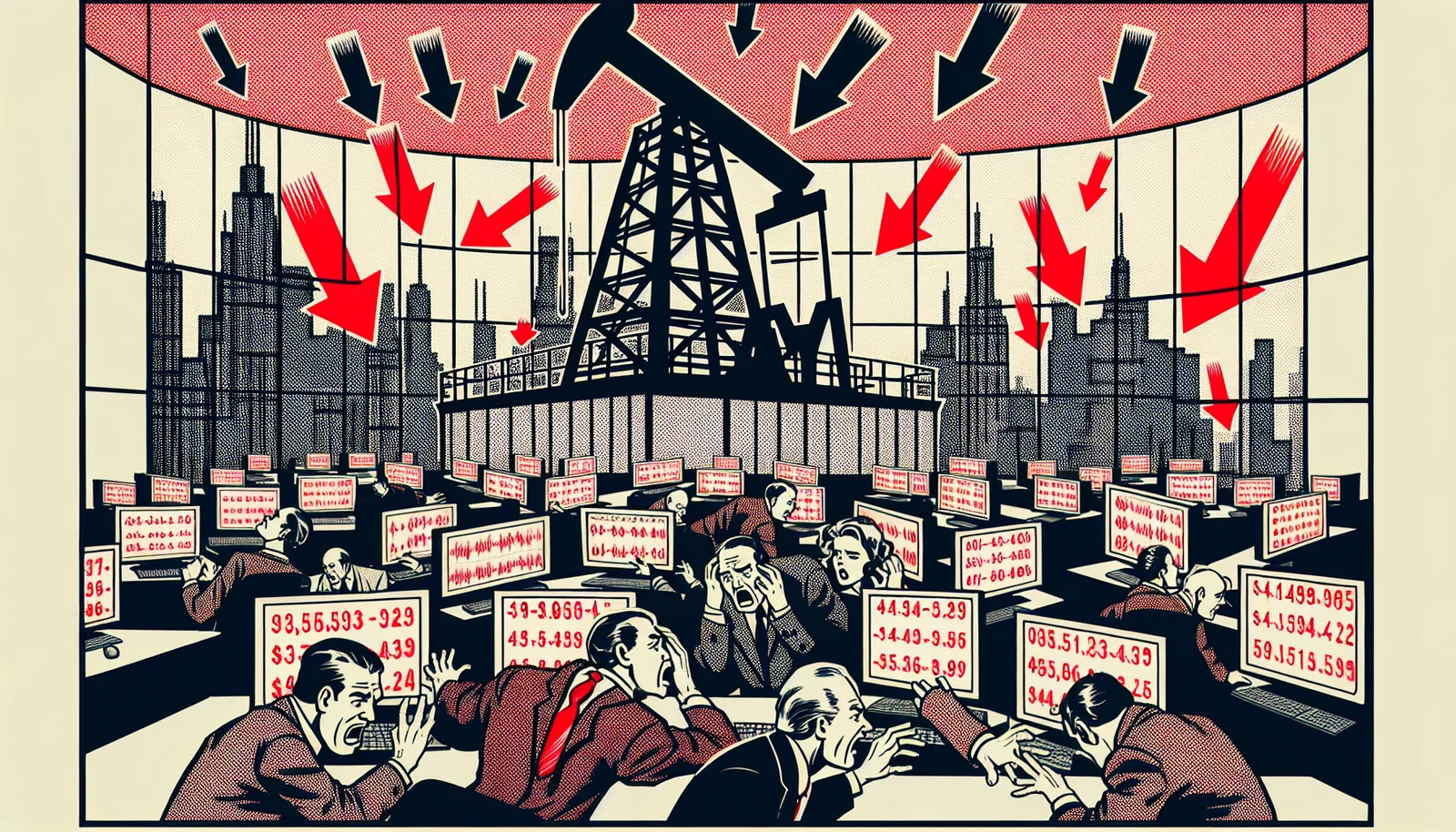
Wall Street Suffers Its Worst Day in Three Months as Weak Jobs Data and Surging Oil Collide
The S&P 500 drops 2.4% and the Nasdaq tumbles 3.1% after February's jobs report misses badly and crude oil spikes above $88 a barrel.

A Rough Day on the Street
Wall Street had been riding a wave of optimism heading into March. That wave broke hard on Friday. The S&P 500 fell 2.4 percent, the Nasdaq Composite dropped 3.1 percent, and the Dow Jones Industrial Average shed 1.9 percent in what became the market's worst single session since early December.
The selling was broad-based and relentless. All eleven S&P 500 sectors finished in the red, with technology and consumer discretionary leading the decline. The VIX, Wall Street's fear gauge, spiked 28 percent to 22.4 — its highest reading since the banking stress of early 2025.
The Twin Triggers
Two data points collided to produce the selloff. First, the February jobs report came in dramatically below expectations: 98,000 nonfarm payrolls added versus the 175,000 consensus estimate. The unemployment rate rose to 4.2 percent, and labor force participation declined. The report painted a picture of an economy that may be slowing more than the Federal Reserve anticipated.
Second, Brent crude oil surged above $88 per barrel on reports that OPEC+ will extend production cuts through the third quarter of 2026. Higher oil prices act as a tax on consumers and businesses alike, and they complicate the Fed's inflation calculus at precisely the wrong time.
Together, these forces create a stagflationary whisper — slow growth combined with persistent inflationary pressure — that the market had been hoping to avoid entirely.
Where the Smart Money Is Looking
Treasury yields reflected the confusion. The 10-year yield initially fell on the weak jobs data before reversing higher on oil-driven inflation concerns, finishing the day essentially flat at 4.18 percent. The 2-year yield dropped more decisively, pushing the yield curve closer to un-inversion — historically a recession signal rather than a comfort.
The immediate focus shifts to the March FOMC meeting on March 18-19. Futures markets are now pricing in a 45 percent probability of a rate cut in June, up from 28 percent a week ago. But with oil prices rising, the Fed faces an impossible trade-off: cut rates to support a weakening economy, or hold firm to fight the inflation that higher energy costs will produce.
For traders, the message is clear: buckle up. Volatility is back.
Sources: CNBC (March 6, 2026), Reuters (March 6, 2026), Bloomberg Markets (March 6, 2026)
More Stock Trading Stories

Applied Digital Q1 Revenue Jumps 322% on AI Data Centers
Applied Digital (APLD) reported fiscal Q1 2027 revenue of $341.9 million, up 322%, with 1.41 GW of AI data center capacity leased and $36B contracted.

Samsung Q3 2026 Profit: How AI Memory Drove a ₩107T Record
Samsung guided Q3 2026 operating profit to a record ₩107.4 trillion (about $80B), up 782.5% year on year on surging AI memory demand and chip prices.

TSMC Q3 2026 Revenue: Record Quarter Beats Guidance
TSMC posted record Q3 2026 revenue of about NT$1.49 trillion, beating guidance, as September sales rose 54.6% on AI chip demand ahead of its Oct 15 call.