
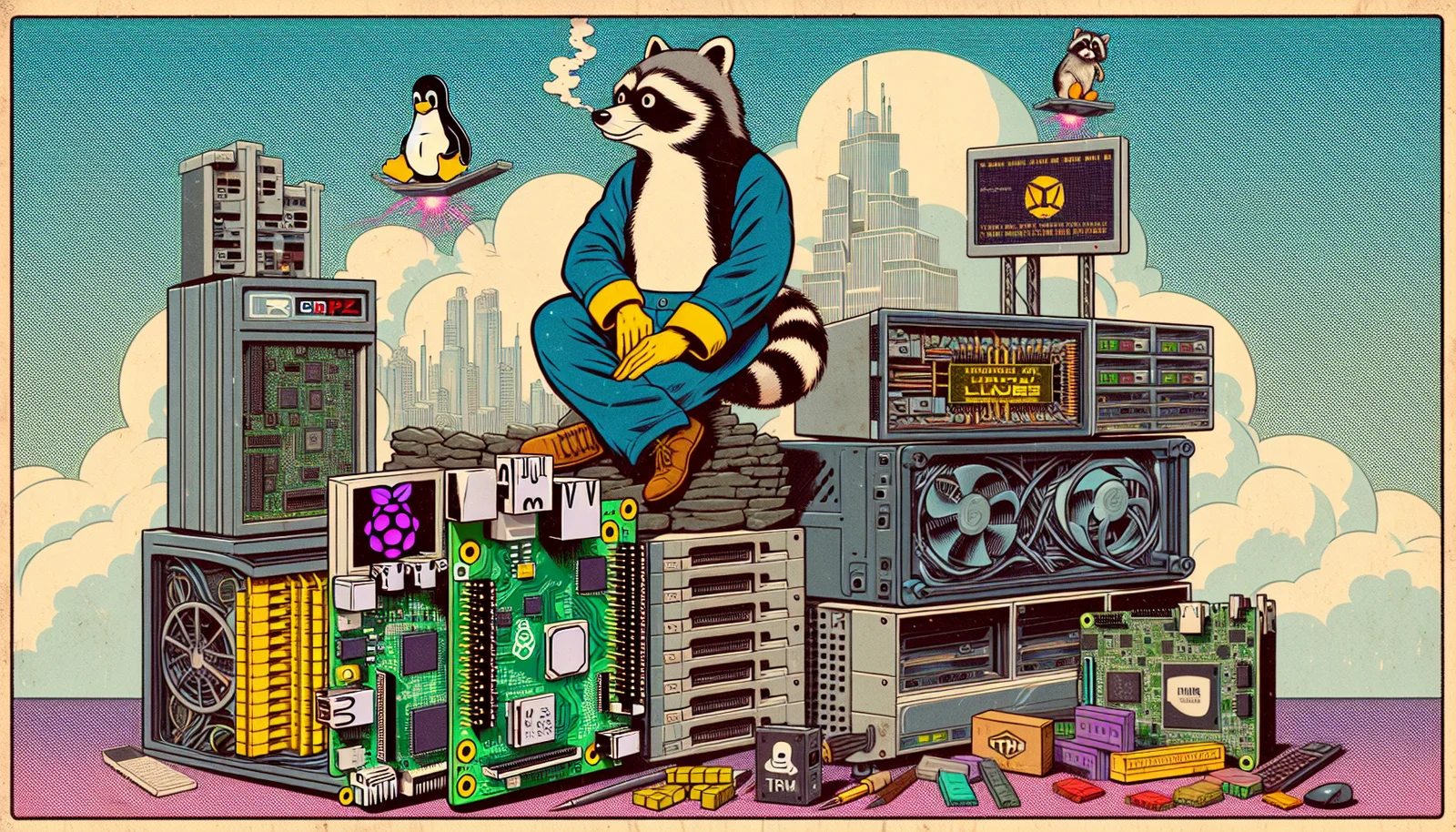
Ubuntu 26.04 LTS 'Resolute Raccoon' Lands With Linux 7.0 and a Dedicated Raspberry Pi 5 Image
Canonical's Ubuntu 26.04 LTS ships with the brand-new Linux 7.0 kernel, native CUDA and ROCm support, full RISC-V RVA23 profile, and a dedicated Raspberry Pi 5 image.

A Long-Term Support Release Built for the AI and SBC Era
Canonical released Ubuntu 26.04 LTS, codenamed Resolute Raccoon, on April 24, 2026. As a long-term support release it carries five years of standard support through April 2031, with extended security maintenance available through Ubuntu Pro out to 2036. For mini computer enthusiasts, single board computer hobbyists, and home lab operators, this is the LTS that will run a substantial portion of self-hosted infrastructure for the next half-decade.
The headline addition is Linux 7.0, the freshly released mainline kernel that debuts in Ubuntu 26.04 as the default. That kernel brings updated drivers, improved scheduler behavior under heavy multi-core workloads, and broader support for newer Arm and RISC-V silicon — all of which matter for the SBC and home lab audience.
Why This Release Matters for SBC and Home Lab Users
Ubuntu 26.04 LTS ships with a dedicated Raspberry Pi 5 image, which makes installation on the most popular single board computer of the moment a one-image-flash exercise rather than a configuration project. The Pi 5 image targets a minimum 4GB of RAM and 16GB of storage — comfortably within the spec range of modern Pi 5 builds — and pulls in the right bootloader, firmware, and kernel modules out of the box.
The desktop image targets 6GB of RAM and 25GB of storage. The server image is much lighter, asking for only 1.5GB RAM and 4GB of storage, which keeps it firmly within reach of resource-constrained single board computers and headless mini PC deployments. For lighter desktop installs on lower-spec SBCs, the Xubuntu and Lubuntu flavors continue to cover the 2GB-RAM territory cleanly.
TPM-Backed Full-Disk Encryption Comes Mainstream
Ubuntu 26.04 brings TPM-backed full-disk encryption as a first-class option in the installer. For home lab users running self-hosted services on hardware that occasionally moves between locations or sits in shared physical spaces, full-disk encryption that locks to the device's TPM module is a meaningful security upgrade — and it is now turnkey rather than a manual setup project.
AI and ML Support Lands at the OS Level
The release adds native packaging for both NVIDIA CUDA and AMD ROCm toolkits. That eliminates one of the persistent friction points for Ubuntu users running local AI inference workloads: getting GPU compute stacks installed and working consistently across kernel updates. Native packaging means apt-driven installation, dependency resolution that respects the rest of the system, and upgrade paths that survive kernel and graphics driver bumps.
For home lab operators running Ollama, llama.cpp, ComfyUI, or other local AI inference workloads, the operational overhead of maintaining a CUDA or ROCm setup just dropped substantially. The same goes for ML researchers, indie developers, and anyone running self-hosted LLMs on GPU-equipped mini PCs and workstations.
Full RISC-V RVA23 Profile Support
The kernel and userland in Ubuntu 26.04 ship with full support for the RVA23 RISC-V profile. That is significant for the growing ecosystem of RISC-V single board computers — the SpacemiT K3, the various Banana Pi RISC-V boards, and the ramping commercial RISC-V silicon expected through 2026 and 2027 — because it means a mainstream LTS distribution treats RVA23-compliant hardware as a first-class citizen.
For developers building or evaluating RISC-V hardware, the difference between "we have to run a custom Debian build" and "Ubuntu 26.04 LTS supports it natively" is a meaningful operational lift.
Modern Toolchain, Modernized Defaults
The development environment moves to GCC 15.2, Python 3.14, and Rust 1.93. That keeps Ubuntu firmly in line with current language ecosystem expectations and avoids the lag that occasionally made prior LTS releases feel dated within their first year.
Ubuntu 26.04 also drops X11 support entirely. The transition is to Wayland by default, with XWayland providing compatibility for legacy X11 applications. For mini computer users, the practical effect is minimal — the X11-to-Wayland transition has been gradual and most modern desktop applications work cleanly on Wayland — but it does mean that any specific tooling that has been clinging to X11 needs to be reviewed before upgrading production systems.
Hardware Support That Tracks the SBC Market
The release brings hardware-accelerated support for Intel's Panther Lake processors, including their integrated NPU capabilities. For mini PCs and embedded boards that ship with Panther Lake silicon — which is the next wave after Meteor Lake — Ubuntu 26.04 is the first LTS to provide turnkey support, including the NPU acceleration that makes those processors interesting for edge AI workloads.
What to Do With It This Weekend
For home lab enthusiasts, Raspberry Pi 5 owners, and SBC tinkerers, Ubuntu 26.04 LTS is the obvious upgrade target this spring. The dedicated Pi 5 image flashes onto a microSD or NVMe drive in the usual way. Server image installations on x86 mini PCs go quickly. And the five-year support window means whatever you build on Resolute Raccoon will keep getting security updates well into 2031.
Sources: CNX Software (April 24, 2026), Canonical Ubuntu Release Notes (April 24, 2026), OMG Ubuntu (April 2026)
More Mini Computers Stories
MaTouch ESP32-S3 E Ink Board: A $60 Voice-Ready Dashboard
Makerfabs' MaTouch ESP32-S3 pairs a 7.5-inch four-color E Ink screen with a four-mic array for $59.80. Here are the specs and what you can build.

ASRock NUC 300 Mini PCs: Wildcat Lake With Dual 2.5GbE
ASRock Industrial's NUC 300 series brings Intel Core 5 320 and Core 3 304 to mini PCs and boards with up to 64GB of DDR5-6400 memory and dual 2.5GbE.

DGX Spark 64GB: Who NVIDIA's $4,999 Local AI Box Is For
NVIDIA's DGX Spark 64GB starts at $4,999 on Oct 23 and runs models up to 100B parameters. Here is who the local AI box suits and how clustering works.