
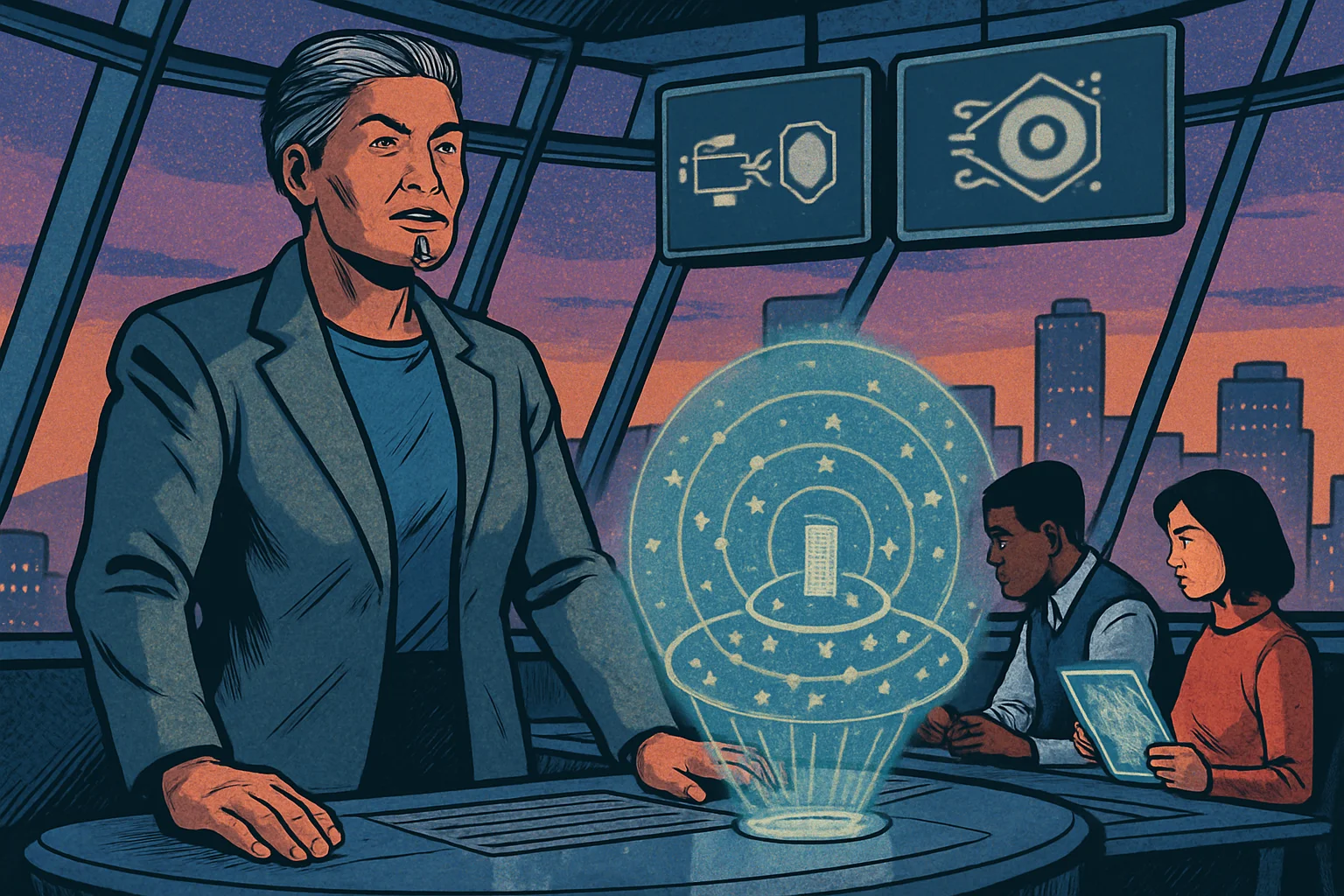
ServiceNow's AI Control Tower Expands at Knowledge 2026 — Traceloop Observability, 30 New Integrations, and Joint Governance With Microsoft and NVIDIA
At Knowledge 2026 on May 26, ServiceNow expanded AI Control Tower with Traceloop runtime observability, 30 new enterprise integrations, and joint governance partnerships with Microsoft Agent 365 and NVIDIA OpenShell.

ServiceNow Just Made the Strongest Pitch Yet for Being the Single Control Layer Over Enterprise AI
At the Knowledge 2026 conference in Las Vegas on May 26, 2026, ServiceNow expanded its AI Control Tower into the kind of cross-cloud governance surface that enterprise security teams have been asking for since agentic AI started landing in production. The expansion adds a new Discover capability that finds AI assets across the enterprise through 30 new integrations spanning AWS, Google Cloud, Microsoft Azure, SAP, Oracle, and Workday. It brings deep runtime observability into AI agent behavior via the recently completed Traceloop acquisition. And it extends the AI Control Tower governance layer through deeper joint product integrations with Microsoft Agent 365 and NVIDIA's OpenShell runtime.
For chief information security officers, AI governance leaders, and the broader enterprise security community watching how the AI agent governance category matures, the Knowledge 2026 ServiceNow announcements are the most concrete pitch yet for what a vendor-neutral, cross-cloud, cross-platform AI control layer looks like in practice. The architecture treats AI Control Tower as the single observe-and-govern surface for every AI asset in the enterprise — regardless of where it was built, where it runs, or which underlying model it uses.
The Discover Capability Closes the Shadow AI Visibility Gap
The single most operationally important addition in the Knowledge 2026 release is the new Discover capability inside AI Control Tower. Discover scans the enterprise's connected platforms — AWS, Google Cloud, Azure, SAP, Oracle, Workday, and the rest of the 30 new integrations — for AI assets that have been deployed across the organization, including the AI agents, models, and workflows that security teams may not have known about. The visibility output gives the governance team a comprehensive inventory of every AI surface in the enterprise, organized for review and policy enforcement.
Why Shadow AI Has Been the Defining Governance Problem of 2026
Industry research published this month has been converging on the same finding: no enterprise CISO reports complete visibility into AI operations across their organization, and roughly two thirds of surveyed CISOs acknowledge meaningful shadow AI activity. The structural problem is that AI capabilities are now bundled into nearly every SaaS product, embedded into developer tools, and deployed by individual teams operating below the central security team's radar. ServiceNow's Discover capability is the part of the AI Control Tower expansion that directly addresses that shadow AI inventory gap.
Traceloop Acquisition Powers Runtime Observability
The other major architectural addition is the runtime observability layer powered by Traceloop, the AI agent observability company ServiceNow recently acquired. Traceloop's instrumentation gives AI Control Tower deep visibility into how agents reason, where they make decisions, and when they need to be course-corrected. That kind of runtime introspection is the difference between governance that only sees what an agent was supposed to do and governance that sees what an agent actually did.
The Difference Between Static Policy and Runtime Observability
Traditional governance tooling has historically been built around static policy — what an AI system is configured to do, what data it is allowed to access, what actions it is authorized to take. Runtime observability adds the behavioral layer: how the agent actually reasoned through a task, which tools it actually called, how its decisions evolved across the steps of a long-running workflow. For AI agents that operate over long horizons and make consequential decisions, the runtime layer is the part of the governance picture that closes the loop between policy intent and operational behavior.
The Microsoft Agent 365 Integration Brings Governance to Local Agents
The deepened Microsoft partnership announced at Knowledge 2026 extends AI Control Tower's governance reach into Microsoft Agent 365 — the recently launched Microsoft surface for desktop and on-device AI agents. Earlier in 2026, AI Control Tower already integrated with Microsoft Foundry and Copilot Studio for cloud-deployed agents. The Microsoft Agent 365 expansion adds local agents to the governed surface, which is the part of the agent ecosystem that has historically been the hardest to bring under central governance.
Why Local Agent Governance Matters Now
Agent 365 was specifically built to make on-device AI agents discoverable to the enterprise's governance plane — and ServiceNow's AI Control Tower is the governance plane that integration is designed to work with. For enterprises rolling out desktop AI agents to their workforces, the joint ServiceNow-Microsoft architecture means the local agents inherit the same discovery, observability, policy, and audit posture that the cloud agents already operate under.
NVIDIA OpenShell and Project Arc Extend the Story to Data-Center AI
The third major partnership announcement at Knowledge 2026 is with NVIDIA, expanding AI Control Tower's reach into large-scale model workloads running on NVIDIA's Enterprise AI Factory validated design. ServiceNow also introduced Project Arc — a new enterprise autonomous desktop agent secured by the NVIDIA OpenShell runtime and governed by ServiceNow AI Control Tower. The combination extends the governance story from cloud applications to the data center to the desktop.
The Unified Governance Surface Story
The strategic narrative that ties together the three partnerships — Microsoft, NVIDIA, and the broader 30-integration expansion — is that AI Control Tower is positioning itself as the single unified governance surface that spans every meaningful enterprise AI deployment posture. Cloud-deployed agentic AI runs through the cloud-platform integrations. Desktop AI runs through the Microsoft Agent 365 integration. Data-center AI runs through the NVIDIA Enterprise AI Factory integration. SaaS-embedded AI runs through the SAP, Oracle, and Workday integrations. The architecture treats the enterprise AI footprint as a single governable surface rather than a collection of siloed deployment posture.
How AI Control Tower Lands Against the Broader Governance Landscape
The AI governance category has been one of the most actively contested areas in enterprise security through 2026. Microsoft's Purview Claude connector and shadow AI discovery capability landed earlier in May. The NSA's MCP security playbook formalized the deployment guidance for Model Context Protocol. Anthropic's Project Glasswing opened defensive cyber findings to the wider community. The Cohesity-CISA partnership brought AI-driven data security telemetry into the Joint Cyber Defense Collaborative. ServiceNow's AI Control Tower expansion is the most ambitious cross-cloud, cross-platform governance offering announced to date.
The Compete-On-Breadth Positioning
ServiceNow's strategic positioning is compete-on-breadth. The 30 new integrations, the dual-cloud reach into AWS, Google Cloud, and Microsoft Azure, the SaaS-application integrations into SAP, Oracle, and Workday, the runtime observability via Traceloop, and the joint product integrations with Microsoft and NVIDIA together form a governance surface that no single-vendor competitor can match on breadth alone. For enterprise security teams that have been pieceing together AI governance from multiple point solutions, the unified offering is the kind of consolidation pitch that resonates strongly.
The Setup Going Forward
For chief information security officers, AI governance leaders, and the broader enterprise security community, the ServiceNow Knowledge 2026 announcements on May 26 are the cleanest expression yet of what a unified AI governance surface looks like in 2026. The Discover capability closes the shadow AI inventory gap. The Traceloop runtime observability layer adds the behavioral introspection that static policy lacks. The 30 new integrations span the major enterprise cloud, application, and AI platforms. The Microsoft Agent 365 partnership extends governance to local desktop agents. The NVIDIA OpenShell partnership extends governance to data-center AI workloads. The next watch items are the customer rollout cadence of the new capabilities, the eventual feature-by-feature comparison with competing governance platforms, the integration partner ecosystem expansion, and how the broader AI governance category consolidates over the next several quarters. For enterprises building their AI governance program, the AI Control Tower expansion is the structural reference point worth evaluating this quarter.
Sources: ServiceNow Newsroom, "ServiceNow expands AI Control Tower," May 26, 2026; CX Today, "ServiceNow AI Governance Push: Knowledge 2026," May 27, 2026; Diginomica Knowledge 2026 coverage, May 26, 2026; Efficiently Connected Knowledge 2026 analysis, May 26, 2026.
More Ai Security Stories

Pwn2Own Ireland 2026 Results: 98 Zero-Days, AI Tools Tested
Pwn2Own Ireland 2026 paid researchers $1,262,000 for 98 zero-days in phones, smart home gear and AI tools, all reported to vendors under a 90-day deadline.

Anthropic OSS Scanner: Free AI Bug Scans for Open Source
Anthropic's OSS Scanner gives open-source maintainers free AI vulnerability scans with fixes; 85 of 97 tested severe findings met its disclosure bar.

What Is Prompt Injection? A Plain-English Defense Guide
What is prompt injection? Learn direct vs indirect attacks, 9 real scenarios, and the 7 OWASP-backed defenses that keep AI assistants and agents safe.