
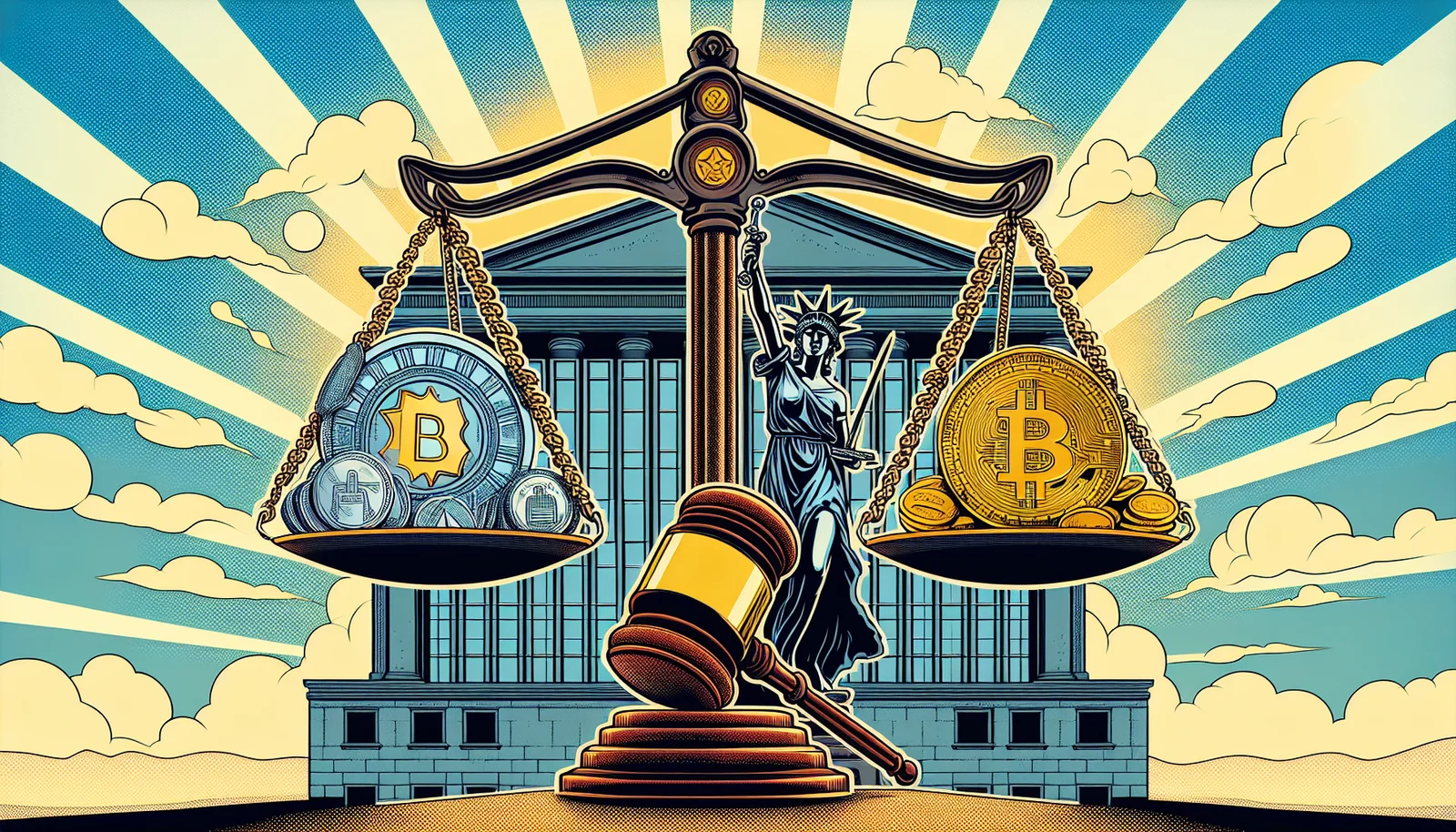
The SEC Officially Classifies XRP, Solana, and Ether as Non-Security Crypto Assets — Ending Years of Regulatory Uncertainty
In a landmark interpretation of federal securities law, the SEC sorts crypto into securities and non-securities, giving Bitcoin, Ether, XRP, and Solana the same commodity-like legal status.

The Classification Debate Is Over
The U.S. Securities and Exchange Commission has issued a landmark interpretation of federal securities law that may be the single most consequential regulatory action in cryptocurrency's history. The SEC officially sorted crypto assets into two categories: tokenized securities (which fall under existing securities regulations) and non-security crypto assets — a designation that now explicitly includes Bitcoin, Ether, Solana, and XRP.
The practical impact is immediate and profound. By classifying these major cryptocurrencies as non-securities, the SEC has effectively removed the legal cloud that has hung over the crypto industry for years. Exchanges can list these assets without fear of enforcement action. Investment firms can build products around them with regulatory clarity. And the projects themselves can operate without the existential threat of being deemed unregistered securities offerings.
What Changed and Why It Matters
The classification framework establishes clear criteria for distinguishing between tokens that function as investment contracts (securities) and those that function primarily as mediums of exchange, stores of value, or utility tokens (non-securities). For the four major assets named, the SEC's reasoning was straightforward: these networks are sufficiently decentralized, their tokens have established utility beyond speculation, and no single entity controls them in a way that creates the "investment contract" relationship that defines a security.
For XRP, the classification is particularly significant. Ripple Labs spent years in litigation with the SEC over whether XRP was a security — a case that consumed hundreds of millions of dollars in legal fees and created uncertainty that suppressed institutional adoption. The new classification effectively validates what Ripple argued throughout: XRP is a payment network utility token, not a security.
The ETF and Institutional Flood Gates
With regulatory clarity established, the institutional crypto market is poised for rapid expansion. U.S. XRP spot ETFs have already attracted over $1 billion in inflows since their launch, and Solana ETF applications are advancing through the approval process. The commodity classification opens the door for futures-based products, options markets, and inclusion in traditional portfolio allocation models.
For the broader crypto ecosystem, this moment represents maturation. The years of "regulation by enforcement" — where the SEC would sue first and define rules later — appear to be ending. In their place is a framework that gives both innovators and investors the clarity they need to build long-term businesses and allocate capital with confidence.
Sources: DL News (March 2026), Decrypt (March 2026), CoinGape (March 2026), The Block (March 2026)
More Crypto Stories

Securitize Stocks on Solana: How 12 Tokenized Shares Work
Securitize Stocks launched with 12 tokenized US equities on Solana, including Apple and Nvidia, each backed 1:1 by a real share and settled in USDC.

Ethereum Glamsterdam on Sepolia: What 200M Gas Means Next
Ethereum's Glamsterdam upgrade is live on Sepolia with in-protocol PBS, parallel validation and a near-200M gas limit, over 3x mainnet's current 60M.
Samsung Wallet USDC: How 82M Galaxy Phones Will Send Money
Samsung Wallet will let US users send USDC across borders over Solana from late October 2026, reaching about 82 million Galaxy devices at launch.