
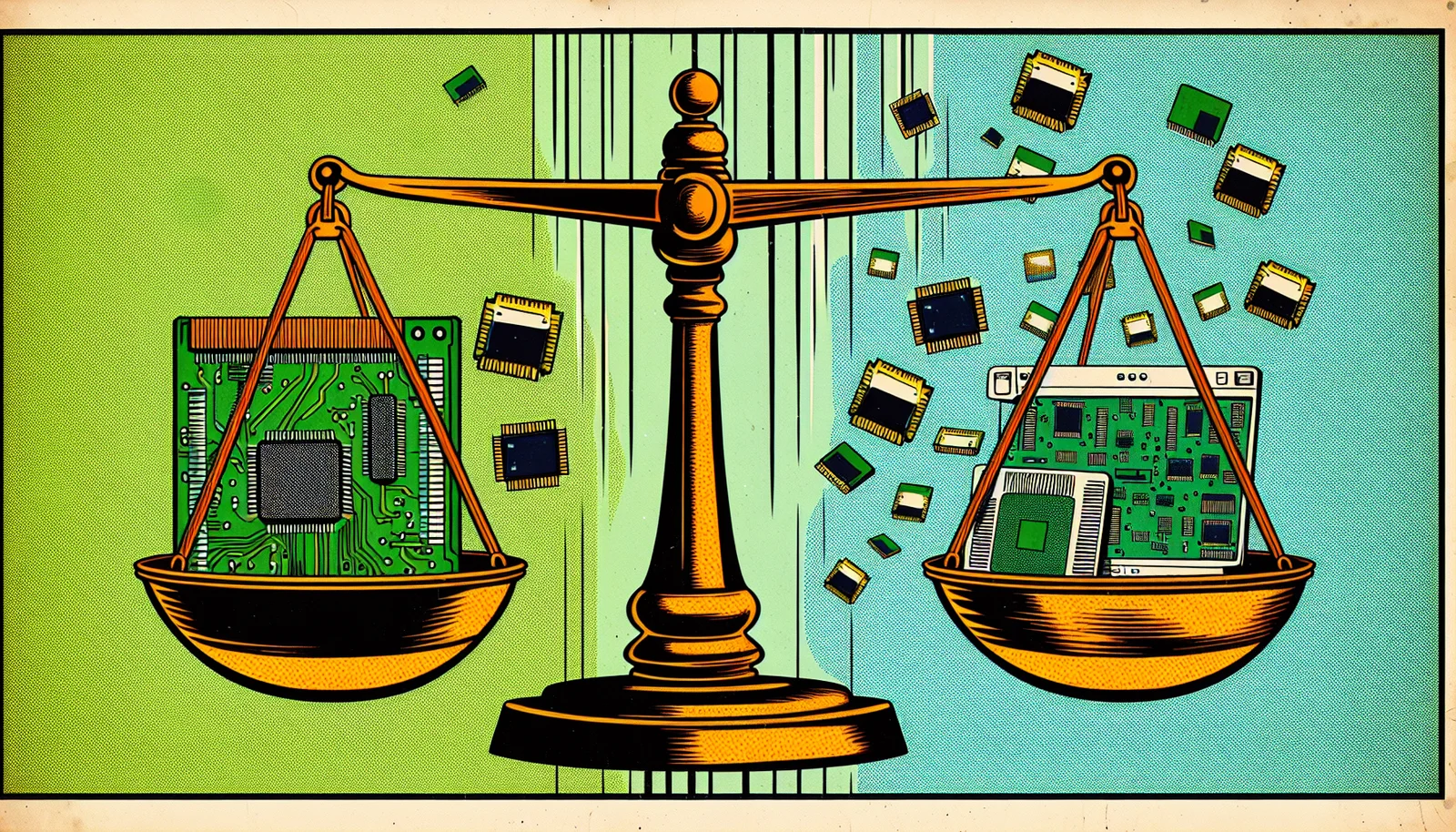
Raspberry Pi Prices Are Closing In on Mini PCs as the Global DRAM Shortage Squeezes the Market
A worldwide memory shortage is pushing Raspberry Pi kit prices uncomfortably close to budget mini PCs, forcing hobbyists to rethink their build strategies.

The Price Gap Is Shrinking Fast
For years, the Raspberry Pi's biggest selling point was obvious: you got a capable Linux computer for a fraction of what a full mini PC cost. That math is getting a lot harder to justify in 2026.
The global DRAM shortage — driven by surging demand for AI server memory and constrained fab capacity — has pushed DDR4 and DDR5 module prices up roughly 30 to 40 percent since the start of the year. And because single-board computers like the Raspberry Pi 5 require the same commodity memory chips as everything else, kit prices have climbed accordingly.
A fully configured Raspberry Pi 5 with 8 GB of RAM, an NVMe HAT, a quality power supply, and a case now runs between $120 and $150 depending on your vendor. Meanwhile, budget mini PCs from the likes of Beelink and MinisForum — complete with Intel N100 or N200 processors, 16 GB of RAM, and a 256 GB SSD — routinely sell for $140 to $180 on Amazon.
What You Get for the Extra Thirty Dollars
The value proposition of a budget mini PC has become genuinely compelling. An Intel N100-based box delivers roughly four to five times the multi-threaded CPU performance of the Pi 5's Cortex-A76 cores, comes with double the RAM, includes built-in storage, and runs Windows or Linux without any tinkering. For home server, media center, or light desktop use, it's simply more computer per dollar.
The Pi still wins on GPIO access, power consumption (typically three to five watts under load versus fifteen to twenty-five for an N100 box), and the sheer depth of its maker ecosystem. If you're building a robotics project, running a Klipper 3D printer controller, or prototyping IoT hardware, nothing matches the Pi's community and documentation.
The Hobbyist's Dilemma
The uncomfortable truth is that the Raspberry Pi is no longer the automatic default for general-purpose computing projects. When the price delta between a Pi kit and a complete mini PC shrinks to thirty dollars, the decision becomes about use case rather than budget. And for a growing number of hobbyists, the mini PC is simply the smarter buy.
The DRAM shortage isn't expected to ease until late 2026 at the earliest. Until then, expect this pricing pressure to persist.
Sources: Tom's Hardware (March 6, 2026), TechSpot (March 5, 2026)
More Mini Computers Stories

Radxa Dragon Q8B Review: Twice the Pi 5 Speed for $209?
Jeff Geerling's Radxa Dragon Q8B review finds the $209 Snapdragon 8cx Gen 3 board more than doubles Raspberry Pi 5 multi-core speed, with dual 2.5GbE.

ESP32-C3 Ad Blocker: Pi-hole-Style DNS Filtering for $2
The open-source esp32-c3-adblock firmware turns a $2 ESP32-C3 board into a network-wide DNS ad blocker that handles up to 537,000 domains without PSRAM.

Raspberry Pi Net Zero: How Pi Towers Swapped Gas for Pis
Raspberry Pi replaced a £150,000 building system with a £7,800 Pi-based one at Pi Towers, cut gas entirely in June 2026, and targets net zero in 2027.