
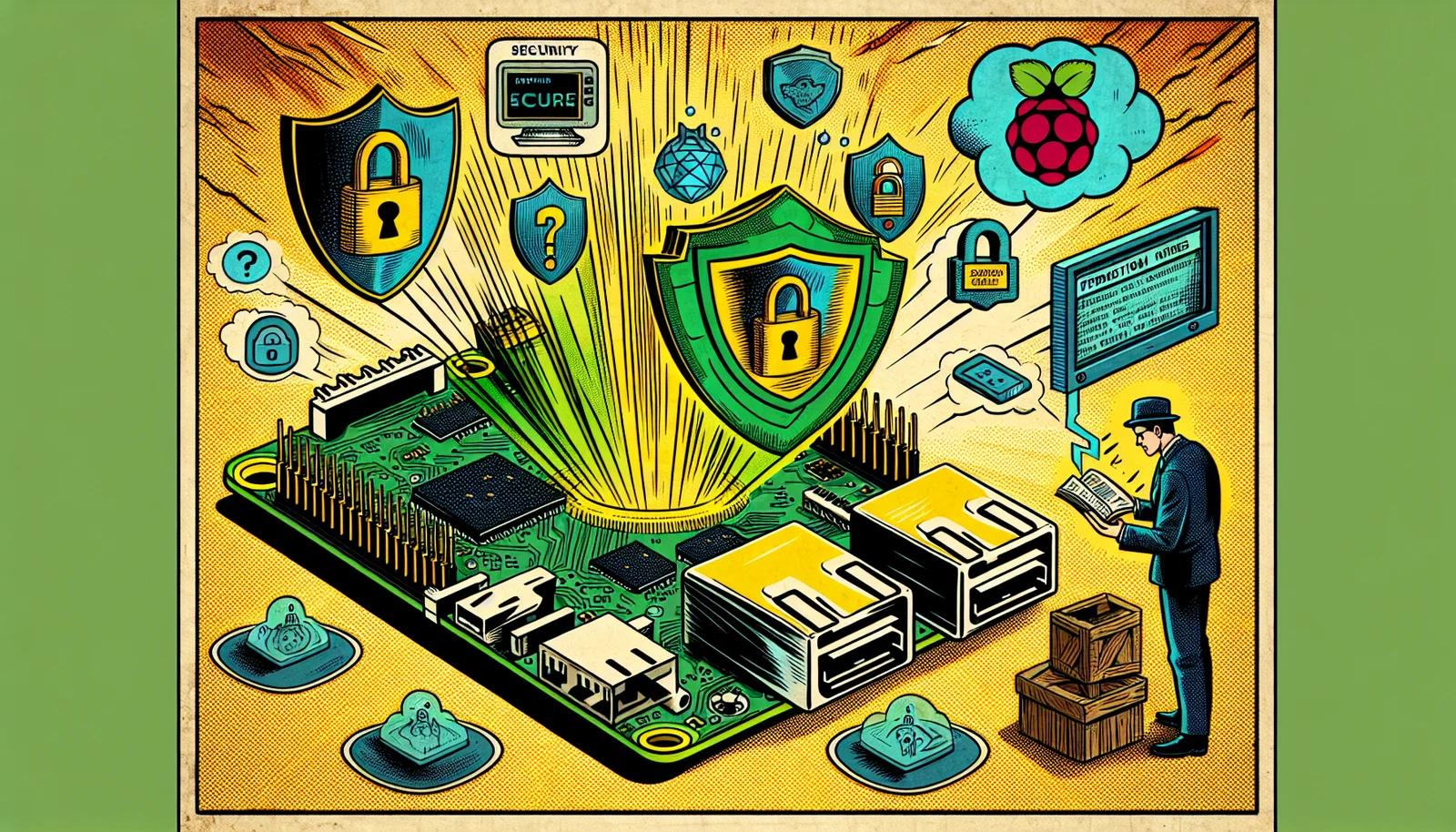
Raspberry Pi OS April 2026 Update Hardens Default Security for Makers
Raspberry Pi OS April 2026 update disables passwordless sudo by default on new installs, raising the security baseline for makers, IoT developers, and anyone deploying Pi hardware in production.

Raspberry Pi OS Gets a Security-First Update
On April 13, 2026, the Raspberry Pi Foundation released a new Raspberry Pi OS image that makes a change security-minded makers have been asking for: passwordless sudo is now disabled by default on fresh installs.
It is a small change to describe in a sentence. Its practical implications for anyone deploying Raspberry Pi hardware in real-world environments — IoT gateways, home lab servers, industrial sensing stations, edge computing nodes, educational setups — are meaningful and long overdue.
What "Passwordless Sudo" Was and Why It Mattered
For most of Raspberry Pi's history, the default user account on Raspberry Pi OS could run sudo commands — commands that execute with full system administrator privileges — without being prompted for a password. This was a deliberate convenience choice: new users, especially students and beginners, could focus on building things rather than managing user permissions.
The tradeoff was security. A Pi running with the default user and passwordless sudo enabled is a machine where any process running as that user, any script that gets executed, or any remote access that gets established has the same privileges as the root account. In a controlled, offline maker setup, this is a minor concern. In a Pi deployed as an IoT device sitting on a home network with internet exposure, or running in an industrial environment where physical access isn't tightly controlled — the exposure is real.
What the April 2026 Update Changes
New Raspberry Pi OS images written from April 13, 2026 forward will have passwordless sudo disabled by default. Users who specifically want passwordless sudo can still configure it manually. But out of the box, a fresh Pi installation now requires a password for elevated operations.
What This Means for Different Types of Pi Projects
IoT and edge deployments: This is where the change matters most. A Raspberry Pi running as an MQTT broker, a local AI inference node, a network monitoring device, or an industrial sensor gateway benefits significantly from a default configuration that doesn't hand root-equivalent access to any process that runs as the default user.
Development and prototyping: The friction increase is minimal. Typing a password once per terminal session to run privileged commands adds seconds to workflows, not minutes. Developers working on machines where this matters can configure sudo-with-password caching if needed.
Automated and headless deployments: Scripts and automation that relied on passwordless sudo for system-level operations will need explicit sudo password handling — through secure credential management, service accounts with specific permissions, or properly scoped sudoers entries. This is the right architectural direction anyway.
Why This Aligns With Production Security Practice
Enterprise Linux administrators have handled sudo configuration this way for years. Requiring a password for privileged operations, scoping sudoers entries to specific commands, and using dedicated service accounts with minimal necessary permissions are standard hardening practices on any Linux server that matters.
The April 2026 Raspberry Pi OS update brings the default configuration of the world's most popular single-board computer platform in line with what any production Linux deployment would look like from day one.
What Pi Users Should Do Now
For new deployments: Use the April 2026 or later Raspberry Pi OS image. Your fresh installs will have better default security without any extra configuration.
For existing deployments: This update does not retroactively change running installations. Review whether your current Pi user has passwordless sudo enabled. If the device is internet-exposed or running in an environment where physical security isn't guaranteed, adding a password requirement is worth the few minutes it takes.
For automated setups: If your project relies on passwordless sudo for scripts or automation, new installs will require you to configure it explicitly — and that is a good moment to consider whether a dedicated service account with narrower privileges would be a cleaner architectural choice.
The Broader Trend
The Raspberry Pi security update reflects a maturing ecosystem. Raspberry Pi hardware has moved well beyond hobbyist tinkering into production IoT, industrial automation, and embedded computing infrastructure. Better defaults are a gift to every Pi user who has ever deployed hardware and not thought about the sudo configuration.
Sources: Raspberry Pi Foundation Blog (April 14, 2026), DistroWatch (April 13, 2026), CNX Software (April 2026)
More Mini Computers Stories

MaTouch ESP32-S3 E Ink Board: A $60 Voice-Ready Dashboard
Makerfabs' MaTouch ESP32-S3 pairs a 7.5-inch four-color E Ink screen with a four-mic array for $59.80. Here are the specs and what you can build.

ASRock NUC 300 Mini PCs: Wildcat Lake With Dual 2.5GbE
ASRock Industrial's NUC 300 series brings Intel Core 5 320 and Core 3 304 to mini PCs and boards with up to 64GB of DDR5-6400 memory and dual 2.5GbE.

DGX Spark 64GB: Who NVIDIA's $4,999 Local AI Box Is For
NVIDIA's DGX Spark 64GB starts at $4,999 on Oct 23 and runs models up to 100B parameters. Here is who the local AI box suits and how clustering works.