
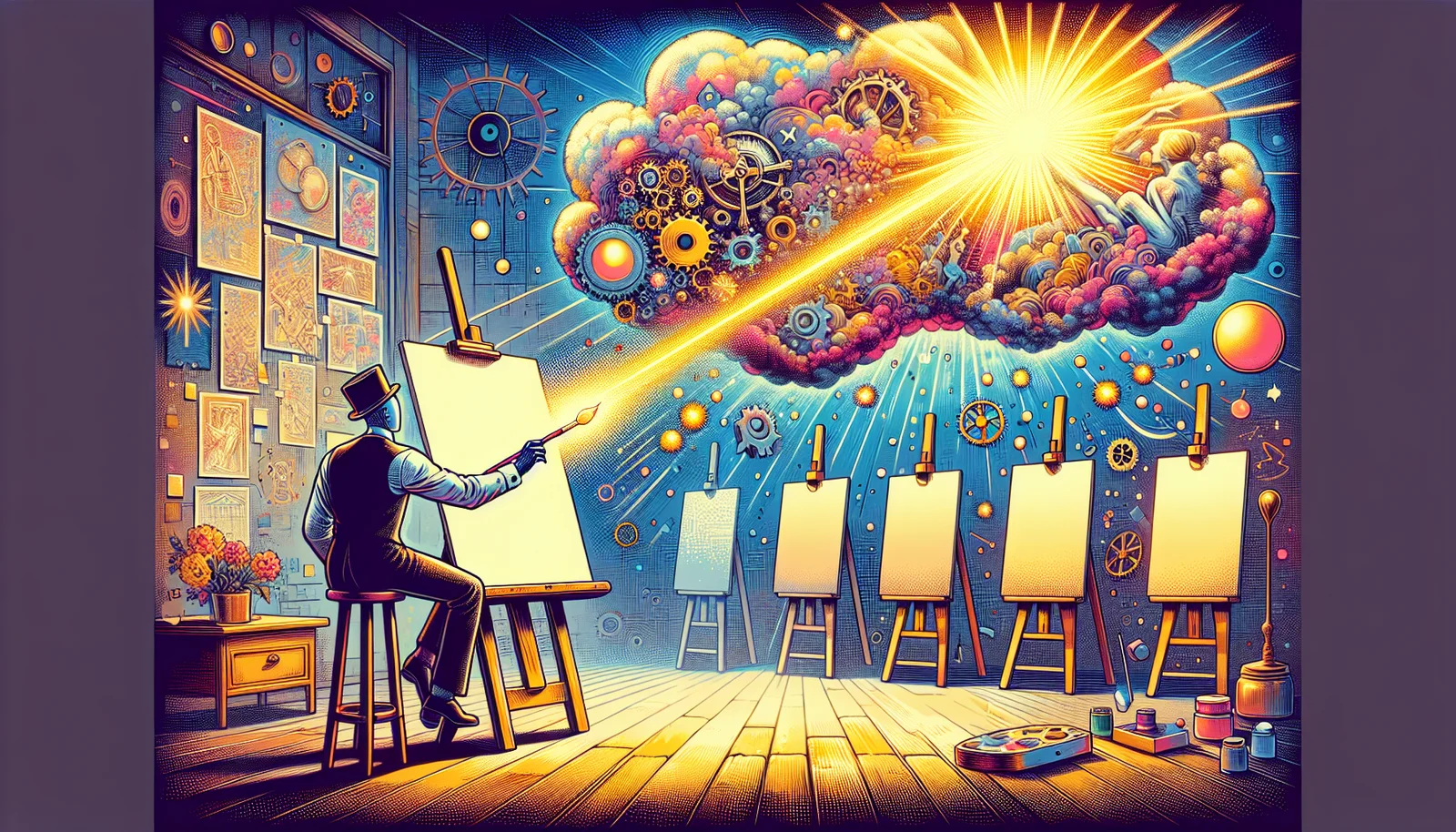
OpenAI Launches ChatGPT Images 2.0: Thinking Mode, 2K Output, and Readable Text
OpenAI's ChatGPT Images 2.0 adds reasoning, 2K output, accurate text rendering, and multi-image storyboards — available today in ChatGPT, Codex, and the API.
OpenAI Ships ChatGPT Images 2.0 — And It Finally Nails Text
OpenAI unveiled ChatGPT Images 2.0 today, April 21, 2026, and the upgrade marks the biggest leap in AI image generation since the original DALL·E era. Released under the API name gpt-image-2, the new model pairs native reasoning with 2K-resolution output, multi-image continuity, and — at long last — legible, accurate text rendering. It is rolling out today across ChatGPT, Codex, and the OpenAI API.
For anyone who has spent the past three years fighting with garbled AI menu items, crooked poster headlines, or storyboards that couldn't keep a character consistent between frames, ChatGPT Images 2.0 is the answer to nearly every outstanding complaint about the medium. And for the creators, marketers, and developers who rely on generative imagery as a production tool, it turns image generation from a "close enough" draft process into something closer to a finished-asset pipeline.
What Makes ChatGPT Images 2.0 Different
Native Reasoning Inside the Image Model
The signature addition is a "thinking" mode that gives the image model genuine reasoning capability. Rather than rendering directly from a prompt, Images 2.0 can deliberate: analyze the task, pull in real-time context from the web, plan a layout, and self-check the result. OpenAI describes the paired experience as a "visual thought partner" — the image model synthesizes information and structures a composition the way a thoughtful designer would, rather than reacting token-by-token to a text string.
That shift has a practical payoff. Ask it for a magazine spread, a full restaurant menu, or a three-panel explainer graphic and the model now considers hierarchy, composition, and legibility before it starts drawing.
2K Output and Flexible Aspect Ratios
Every image generated by the new model can reach 2K resolution on the long edge, and the supported aspect ratios span 3:1 to 1:3. That range covers the realistic production set: wide banners, standard slides, social posters, Stories-style vertical mobile assets, and square social crops. For anyone generating marketing collateral in bulk, the end of manual upscaling and crop workarounds is a meaningful quality-of-life change.
Text Rendering That Actually Reads
The text rendering improvement is the first feature every early tester has pointed to. In demos today, Images 2.0 produced a full Mexican restaurant menu that reads cleanly — no "enchuita," no "churiros," no hallucinated fourth language creeping into the headers. It is the kind of output you could hand directly to a print shop. The same improvement extends to poster headlines, product labels, infographic callouts, and multi-panel comic dialogue — the entire category of image work that previously required a designer to redraw the text layer by hand.
Non-Latin Script Support: Japanese, Korean, Hindi, Bengali
Text quality extends beyond the Latin alphabet. ChatGPT Images 2.0 has markedly stronger rendering of Japanese, Korean, Hindi, and Bengali scripts, opening the model up to creative and commercial workflows in markets where AI image tools have historically been effectively unusable for any composition involving text. That is a quietly significant global upgrade.
Multi-Image Continuity — Up to Eight Outputs in One Prompt
One prompt can now produce up to eight images with character and object continuity maintained across the set. Each output builds on the previous one rather than existing as an isolated render. That unlocks a genuinely new creative surface: storyboards, comic strips, product-shot variations, campaign sets that share a visual identity, explainer sequences. The workflow that previously required eight prompts, eight rounds of inconsistent output, and manual compositing can now come out of a single request.
Availability and Pricing
ChatGPT Images 2.0 is available today:
- ChatGPT — all tiers, including the free plan, get access to standard Images 2.0 generation
- Codex — OpenAI's developer tool gains image generation natively
- API — available as
gpt-image-2for developers, with pricing that scales based on output resolution and quality
The thinking / reasoning mode — the feature that delivers the visual-thought-partner behavior and multi-image continuity — is reserved for ChatGPT Plus, Pro, and Business subscribers. Free users still benefit from the 2K output, improved text rendering, and non-Latin script support in standard mode.
Where It Still Has Room to Grow
OpenAI is upfront about where Images 2.0 is not yet perfect. The model can still struggle with precise physical reasoning — think load-bearing architectural diagrams, accurate mechanical cross-sections, or medically precise anatomy — and extremely dense textures or highly detailed technical schematics may need a human review pass. Generation time for complex multi-panel outputs can stretch into the multi-minute range when the thinking mode is engaged, which is a reasonable tradeoff for the quality but worth planning into any production workflow.
These are the familiar edges of current image models. The significance of Images 2.0 is that nearly every other historical limitation — text, resolution, aspect ratio flexibility, continuity, multilingual rendering — has been addressed in a single release.
Why This Release Is a Turning Point
Up to now, the honest truth about AI image generation in production was that it was a draft tool. You prompted, you iterated, and then a human designer cleaned up the text, recomposed the layout, and redrew anything that needed to be pixel-accurate. ChatGPT Images 2.0 moves the bar substantially closer to finished assets — especially for text-heavy, multi-panel, or multilingual work where the previous generation of models simply could not keep up.
For creators, this means less post-generation cleanup and faster iteration cycles. For marketers, it means generating a full campaign set — banner, vertical social, square crop, storyboard — from a single prompt with consistent style and copy. For developers building image-enabled products on the API, gpt-image-2 raises the ceiling on what those products can reliably do. And for the broader AI-image category, Images 2.0 resets the expectation: reasoning, 2K, legible text, and continuity are now the baseline that every competing model will be measured against.
The future of generative imagery just got a lot more useful.
Sources: OpenAI (April 21, 2026), TechCrunch (April 21, 2026), PetaPixel (April 21, 2026), 9to5Mac (April 21, 2026), Axios (April 21, 2026), Interesting Engineering (April 21, 2026), Thurrott (April 21, 2026)
More AI Stories
Strands Decider 2B: What Amazon's Free Decision Model Does
Strands Decider 2B is a free 2B-parameter decision model that picks options in about 115ms on a single GPU. Here is how it works and where it fits.
Meta Muse Gadgets SDK: Build Your Own AI Agent Hardware
Meta's open-source Muse Gadgets SDKs bring its Muse agent to Raspberry Pi and ESP32 builds, and 5,000 free Home Link dongles are going to subscribers.
AstaBrief 8B: Ai2's Open Model for Cited Science Reports
AstaBrief 8B is Ai2's Apache 2.0 open model that writes cited research reports in 51 seconds, 3.5x faster than its Claude pipeline. Here is how it works.