
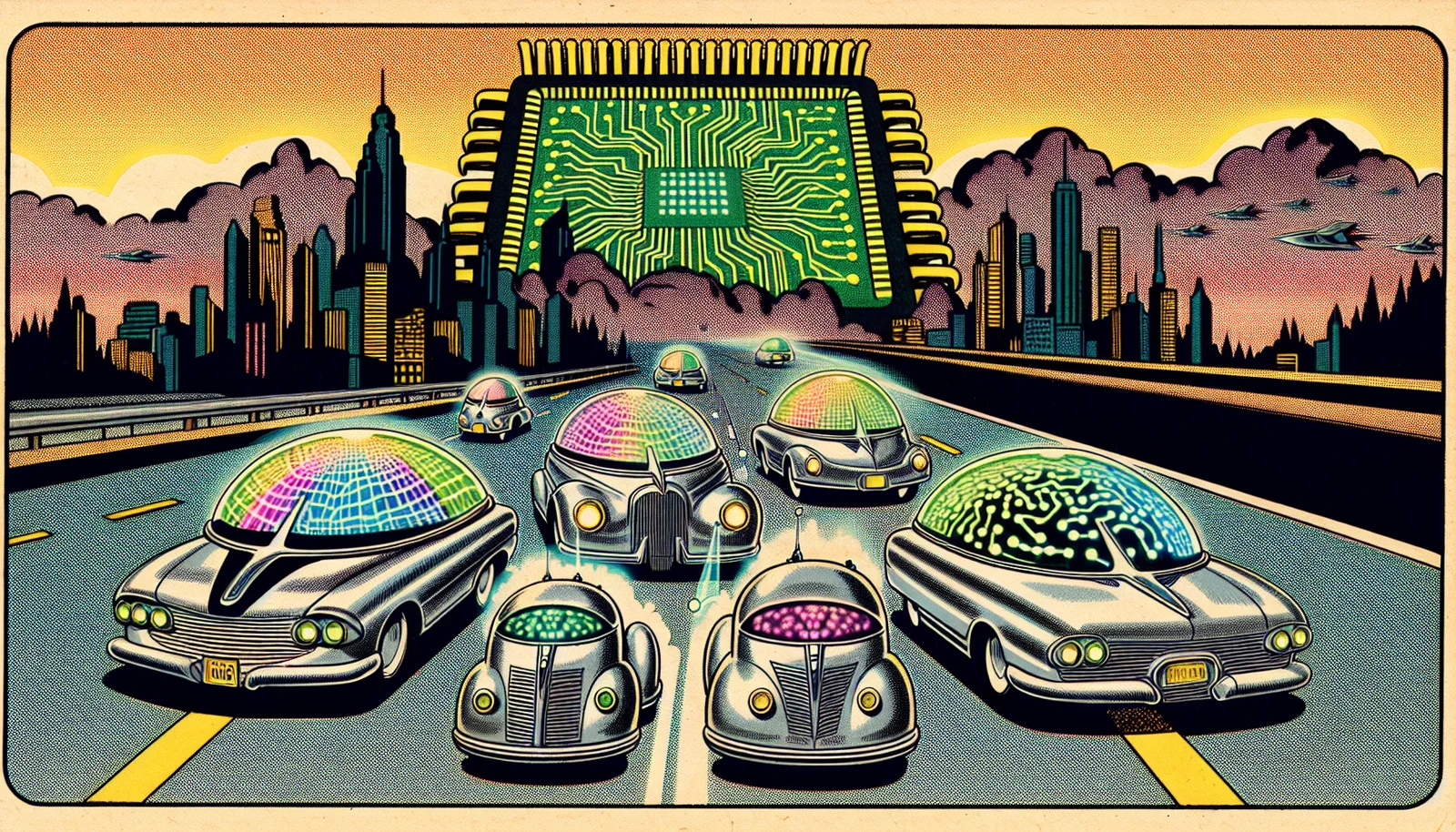
Five Automakers Are Building Level 4 Self-Driving Vehicles on NVIDIA Drive Hyperion — From Nissan to BYD
NVIDIA reveals that Nissan, BYD, Geely, Isuzu, and Hyundai are developing Level 4 autonomous vehicles using its Drive Hyperion platform, expanding AI chips beyond the data center.

From Data Centers to Driver's Seats
NVIDIA's GTC 2026 announcements extended far beyond GPU racks and AI models. In one of the conference's most commercially significant reveals, the company confirmed that five major automakers — Nissan, BYD, Geely, Isuzu, and Hyundai — are actively developing Level 4 autonomous vehicles on NVIDIA's Drive Hyperion platform. This represents a major diversification of NVIDIA's AI business beyond data center chips and into the $3 trillion automotive industry.
Level 4 autonomy means these vehicles can handle all driving tasks in defined conditions without human intervention — a significant step beyond the Level 2+ systems that currently dominate the market. The Drive Hyperion platform provides the compute backbone for this capability, combining NVIDIA's automotive-grade DRIVE Thor system-on-chip with a full-stack software platform for perception, planning, and actuation.
Why These Five Matter
The automaker lineup is deliberately diverse. BYD is the world's largest electric vehicle manufacturer by volume. Hyundai is a top-five global automaker. Nissan brings decades of autonomous driving research through its ProPilot program. Geely (parent of Volvo Cars and Polestar) represents the premium Chinese auto market. And Isuzu's involvement signals that commercial vehicles — trucks, vans, and logistics fleets — are part of the autonomous driving roadmap.
This diversity matters because it shows that autonomous driving isn't converging on a single vehicle type or price point. From BYD's affordable EVs to Isuzu's commercial trucks, the NVIDIA Drive Hyperion platform is flexible enough to serve fundamentally different use cases — each with different sensor configurations, safety requirements, and deployment environments.
The Physical AI Opportunity
NVIDIA CEO Jensen Huang framed the automotive push as part of the company's broader "physical AI" strategy — the thesis that AI will increasingly interact with the real world through robotics, autonomous vehicles, and industrial automation. With global robotics leaders also showcasing physical AI applications at GTC, NVIDIA is positioning itself as the compute platform of choice for every AI workload, whether it runs in a data center, on a factory floor, or behind the wheel.
Sources: NVIDIA Newsroom (March 17, 2026), Reuters (March 17, 2026), Automotive News (March 2026), CNBC (March 17, 2026)
More AI Stories

Google AMIE Lancet Study: What 98 Clinic Patients Showed
Google's AMIE diagnostic AI talked with 98 real clinic patients before their visits, and its diagnosis lists matched doctors' final calls 90% of the time.

Microsoft-Decision-1: A $0.042 Decision Model on Foundry
Microsoft-Decision-1 scores yes/no and multiple-choice decisions in a single pass on Foundry for $0.042 per million input tokens, with free output tokens.

Gemini Agent for Work: What Google's Universal Agent Does
Google's new Gemini agent runs multi-day jobs in the cloud, routes work across Gemini and Claude models, and adds hard spend caps for business teams.