
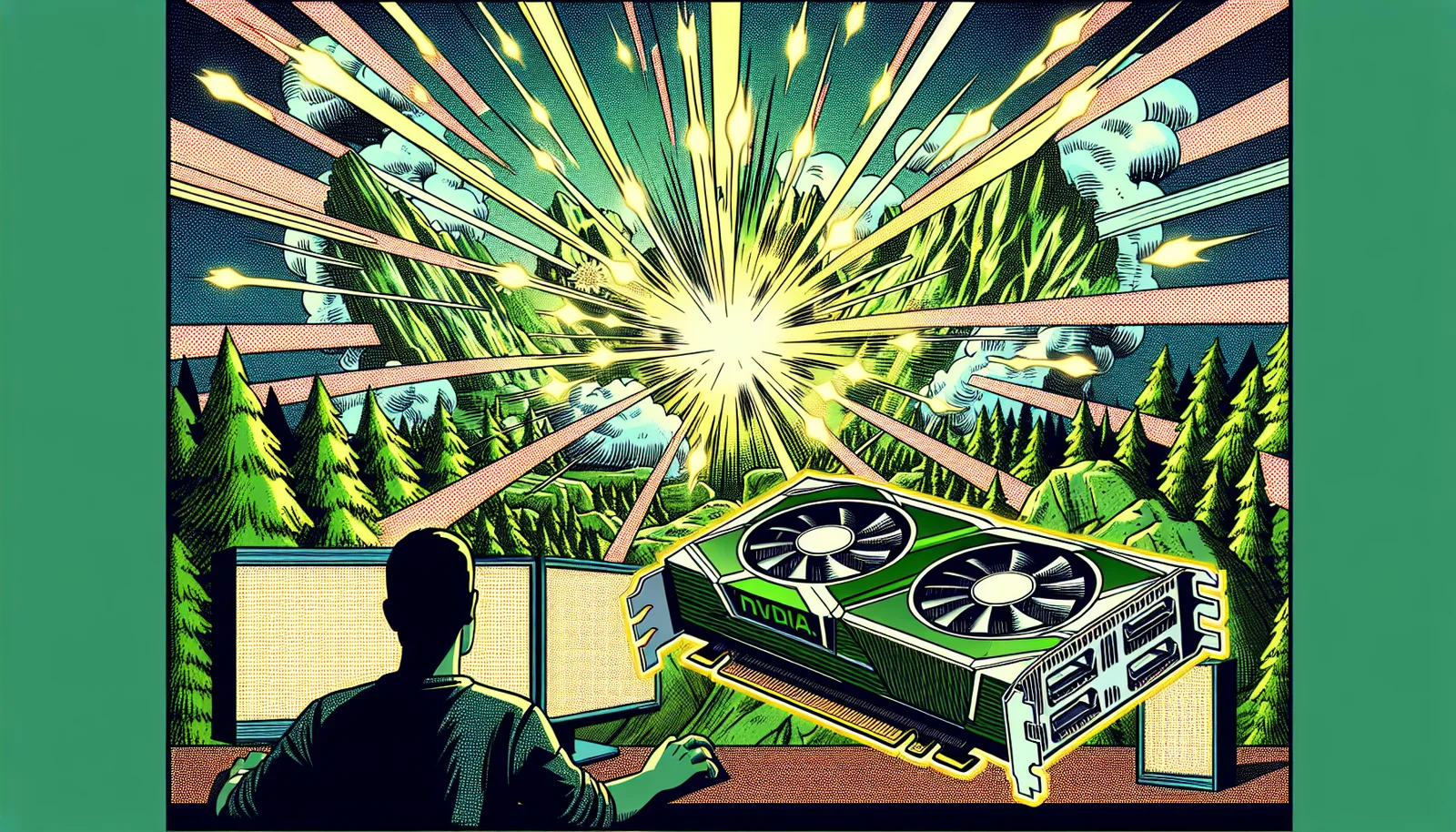
NVIDIA Unveils DLSS 4.5 at GDC 2026 — Dynamic Multi Frame Generation Pushes 240+ FPS With Path Tracing
NVIDIA's GDC showcase introduces DLSS 4.5 with up to five AI-generated frames per rendered frame, plus RTX Mega Geometry debuting in The Witcher 4.

Five Frames for the Price of One
NVIDIA dropped its biggest graphics technology announcement of the year at GDC 2026. DLSS 4.5 introduces Dynamic Multi Frame Generation — a system that can generate up to five additional frames for every traditionally rendered frame, dynamically scaling to match your display's refresh rate. The result: 240+ FPS gaming with full path tracing enabled on RTX 50-series GPUs, launching March 31.
The "dynamic" part is key. Unlike the fixed Multi Frame Generation in DLSS 4, the new system automatically adjusts how many frames it generates based on your monitor's refresh rate and the game's native performance. Playing on a 360Hz monitor? DLSS 4.5 scales up. Locked to 60Hz? It scales down to save power. Twenty games have been confirmed for DLSS 4.5 support at launch, including 007 First Light, CONTROL Resonant, and Tides of Annihilation.
RTX Mega Geometry Debuts With The Witcher 4
The second headline announcement was RTX Mega Geometry, a new rendering technology for handling massively detailed environments. NVIDIA and CD PROJEKT RED revealed that The Witcher 4 will be the flagship title for the technology, using it to render path-traced dense forests with millions of individually detailed plants and trees.
The technology has already been deployed in Alan Wake 2 as a proof of concept, where it delivered up to 300 MB of VRAM savings and performance gains of up to 20 percent compared to traditional geometry rendering. For The Witcher 4, the foliage system promises environments that are dramatically more detailed than anything in The Witcher 3 while actually being more efficient to render.
What This Means for PC Gaming
NVIDIA's GDC 2026 showing was entirely focused on software and AI rendering advances — notably with no new GPU hardware announcements. Reports suggest the RTX 60-series won't arrive until 2028, with AI data center demand consuming NVIDIA's wafer capacity and pushing consumer graphics card timelines further out.
The strategic message is clear: NVIDIA is betting that AI-powered rendering can deliver the visual and performance leaps that would traditionally require new silicon. If DLSS 4.5 delivers on its promise of 240+ FPS with path tracing on existing RTX 50-series hardware, the argument for waiting for next-gen GPUs gets a lot weaker.
Sources: NVIDIA GeForce News (March 10, 2026), Windows Central (March 10, 2026), PC Gamer (March 10, 2026)
More Gaming Stories

Forza Horizon 6 PS5 Release Date: January 26 and Expansion 1
Forza Horizon 6 arrives on PS5 January 26, 2027 with crossplay, cross-save and a free update, while Premium owners start 5 days early with Expansion 1.

Ace Combat 8 Sales Hit 1 Million: The Series' Fastest Ever
Ace Combat 8: Wings of Theve sold 1 million copies in about a week, the fastest in series history, and holds an 87 Metacritic score on PS5, Xbox and PC.

GTA 6 Radio Stations: All Six Revealed, Plus Podcasts
Rockstar revealed six GTA 6 radio stations, including Flash FM, and confirmed on-demand podcasts you can play on foot with in-game earbuds before Nov 19.