
NVIDIA's AI-Q Blueprint Brings Enterprise Agentic AI to Adobe, Salesforce, and SAP
NVIDIA's AI-Q Blueprint gives enterprises an open framework for building AI agents that perceive, reason, and act — slashing query costs by 50% with a hybrid routing architecture.

Enterprise Agentic AI Has a New Foundation
When NVIDIA unveiled its Agent Intelligence toolkit at GTC 2026, the headline was the ambition: a comprehensive open framework for enterprises to build AI agents that could actually perceive their data, reason across it, and take meaningful actions — not just retrieve text. The AI-Q Blueprint, which became broadly available in April 2026, is that promise turned into deployable infrastructure.
Sixteen major enterprise software platforms have signed on as early adopters, including Adobe, Salesforce, SAP, ServiceNow, and Cisco. That roster matters. These are the systems where most enterprise knowledge actually lives — documents in Adobe's cloud, customer records in Salesforce, financial processes in SAP. Agentic AI that cannot reach into these systems is agentic AI that cannot do its job.
How the Hybrid Routing Architecture Works
The AI-Q Blueprint's most practical innovation is its approach to cost and accuracy. Rather than routing every query to a frontier model — which maximizes capability but drives inference costs to unsustainable levels at enterprise scale — the architecture uses a hybrid routing model.
Complex, nuanced tasks are directed to frontier models where the reasoning depth justifies the cost. Research-oriented tasks, document retrieval, and structured queries are handled by NVIDIA's open Nemotron models, which are optimized for these workloads and significantly cheaper to run.
The result: query costs reportedly drop by more than 50% compared to routing everything through a frontier model, without meaningful accuracy loss on the tasks that Nemotron handles well. At the scale enterprises operate — millions of queries per month — that cost difference is not marginal. It is the difference between agentic AI that pencils out economically and one that does not.
What "Perceive, Reason, and Act" Actually Looks Like
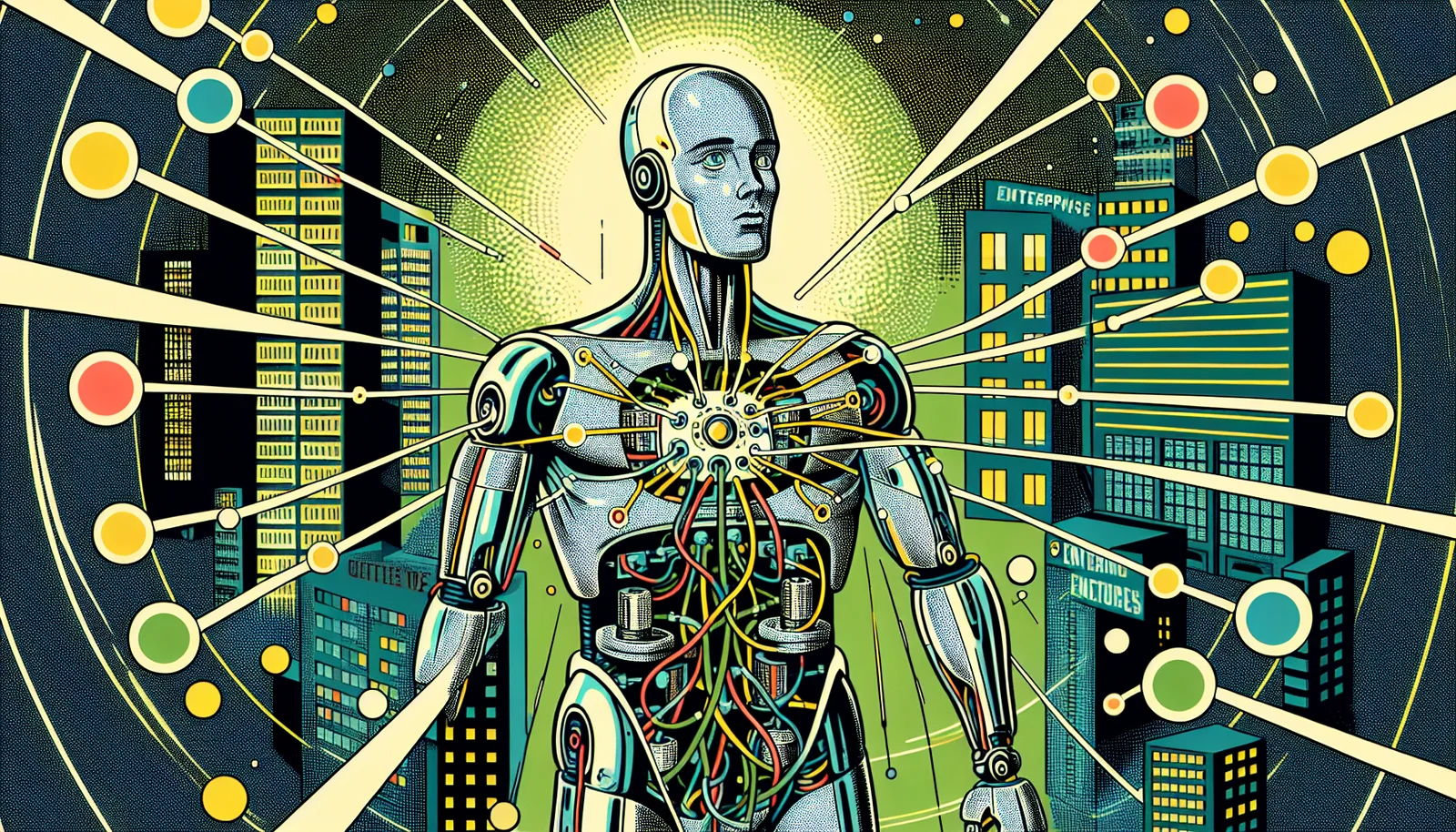
NVIDIA describes the AI-Q Blueprint as enabling agents that perceive enterprise knowledge, reason across it, and take action. The perception layer handles the challenge of diverse data formats — structured databases, PDFs, spreadsheets, email threads, real-time data streams. The reasoning layer coordinates multi-step tasks across these inputs. The action layer connects to enterprise system APIs to execute changes, generate outputs, or surface results.
For a practical example: an agentic workflow for procurement could perceive supplier contracts in Adobe's document cloud, reason about pricing trends in SAP's financial data, and surface a recommendation through Salesforce — all as a single coordinated agent workflow, not a series of manual tool-switching steps.
Open Architecture as a Strategic Choice
NVIDIA's decision to build AI-Q as an open framework, rather than a proprietary platform, is notable. Enterprise IT organizations are deeply wary of vendor lock-in after decades of experience with closed middleware platforms. An open architecture that works alongside existing infrastructure investments — rather than replacing them — is the only viable path to broad enterprise adoption.
The framework also allows the 16 early-adopter platforms to build native integrations rather than adapting around an opaque API, which means the agent capabilities available within Salesforce or SAP can be purpose-built for how those platforms actually work.
Why This Changes the Agentic AI Landscape
Prior to AI-Q, enterprise agentic AI largely meant custom development — building bespoke integrations for each system, managing your own inference infrastructure, and absorbing frontier model costs across every query. The Blueprint standardizes the hard parts: data perception, routing logic, and enterprise system connectivity. What remains is the domain-specific configuration for each organization's actual workflows.
For enterprise IT teams that have been watching the agentic AI space and waiting for something production-ready, April 2026 looks like the right moment to engage seriously.
Sources: NVIDIA Newsroom (April 2026), VentureBeat (April 2026), NVIDIA GTC 2026 Announcements
More AI Stories

Gemini Agent for Work: What Google's Universal Agent Does
Google's new Gemini agent runs multi-day jobs in the cloud, routes work across Gemini and Claude models, and adds hard spend caps for business teams.

Liquid AI d1 Models: Open Decision AI That Answers in 8 ms
Liquid AI's open d1-3B and d1-omni-600M decision models skip token generation and answer in one pass, as fast as 8 ms on an RTX 4090 and 50 ms on Jetson.

Claude Haiku 5.5 Pricing: What a 90% Cheaper Haiku Unlocks
Claude Haiku 5.5 launches at $0.10 per million input tokens with a 1M context window, adjustable effort, and a 72.4% OSWorld score, up from 15.7%.