
MoonPay Launches Open Wallet Standard for AI Agents
MoonPay releases the Open Wallet Standard, an open-source framework for AI agents to securely hold value and sign transactions across 8 blockchain families.

Giving AI Agents a Universal Wallet
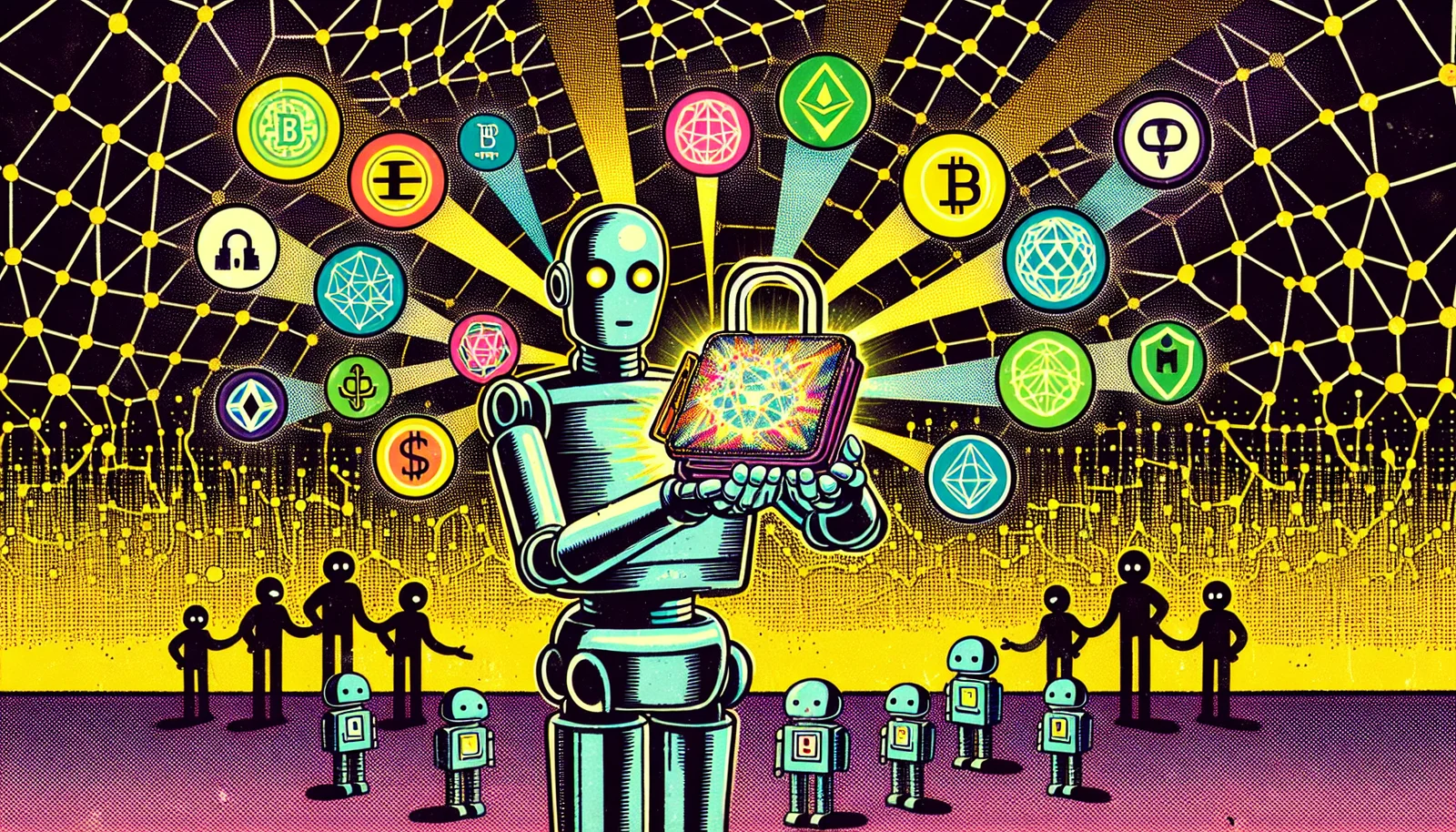
Every AI agent framework has been reinventing the wheel when it comes to managing cryptographic keys and signing blockchain transactions. MoonPay just offered the industry a standardized set of wheels. On March 23, the crypto payments company launched the Open Wallet Standard (OWS) — an open-source framework that provides AI agents with a secure, unified way to hold value and sign transactions across eight major blockchain families without ever exposing private keys.
The supported chains span the breadth of the crypto ecosystem: Bitcoin, Ethereum, Solana, and five additional blockchain families are covered at launch. For developers building AI agents that need to interact with decentralized finance protocols, NFT marketplaces, payment rails, or any on-chain application, OWS provides a single integration point rather than requiring custom key management implementations for each chain.
Why Standardization Matters Now
The timing of this release reflects a genuine pain point in the agentic AI space. As AI agents become increasingly autonomous — executing trades, managing portfolios, paying for services, and interacting with smart contracts — the question of how these agents securely handle cryptographic credentials has become urgent. Every major agent framework has been implementing its own approach to key management, creating a fragmented landscape where security practices vary wildly and interoperability is nonexistent.
OWS addresses this by providing a standardized abstraction layer. The framework handles key generation, secure storage, and transaction signing through a consistent API, regardless of the underlying blockchain. Private keys never leave the secure execution environment, which means an AI agent can authorize a transaction without the key material being accessible to the agent's reasoning layer or any external observer.
Broad Industry Support
The backing behind OWS is impressive. More than 15 organizations have endorsed the standard, including the Ethereum Foundation, the Solana Foundation, and PayPal. That roster spans blockchain protocol developers, payment infrastructure providers, and financial institutions — exactly the mix of stakeholders needed for a wallet standard to achieve meaningful adoption.
The framework is available immediately on GitHub, npm, and PyPI, making it accessible to developers across the JavaScript and Python ecosystems that dominate AI agent development. The open-source licensing ensures that any team can integrate, audit, and extend the standard without licensing friction.
The Bigger Picture for AI and Crypto
OWS sits at the intersection of two rapidly converging trends: the proliferation of autonomous AI agents and the maturation of blockchain-based financial infrastructure. As AI agents take on more economic activity — purchasing compute resources, paying for API access, managing investment strategies, settling micro-transactions — they need financial infrastructure that is secure, interoperable, and programmable. Traditional payment systems were not designed for machine-to-machine transactions at high frequency and low latency. Blockchain rails, paired with a standardized wallet framework, offer a more natural fit.
For the crypto industry, the adoption of OWS by AI agent developers represents a potentially massive expansion of on-chain transaction volume. If even a fraction of the billions of AI agent interactions that occur daily begin settling on blockchain networks, the demand for block space, gas tokens, and DeFi liquidity could increase meaningfully. MoonPay has positioned itself at the center of that opportunity by making the infrastructure layer open and accessible to all.
Sources: Bitcoin News (March 24, 2026), PR Newswire (March 23, 2026), The Block (March 23, 2026), Decrypt (March 2026), Crypto Briefing (March 2026)
More Crypto Stories

Securitize Stocks on Solana: How 12 Tokenized Shares Work
Securitize Stocks launched with 12 tokenized US equities on Solana, including Apple and Nvidia, each backed 1:1 by a real share and settled in USDC.

Ethereum Glamsterdam on Sepolia: What 200M Gas Means Next
Ethereum's Glamsterdam upgrade is live on Sepolia with in-protocol PBS, parallel validation and a near-200M gas limit, over 3x mainnet's current 60M.

Samsung Wallet USDC: How 82M Galaxy Phones Will Send Money
Samsung Wallet will let US users send USDC across borders over Solana from late October 2026, reaching about 82 million Galaxy devices at launch.