
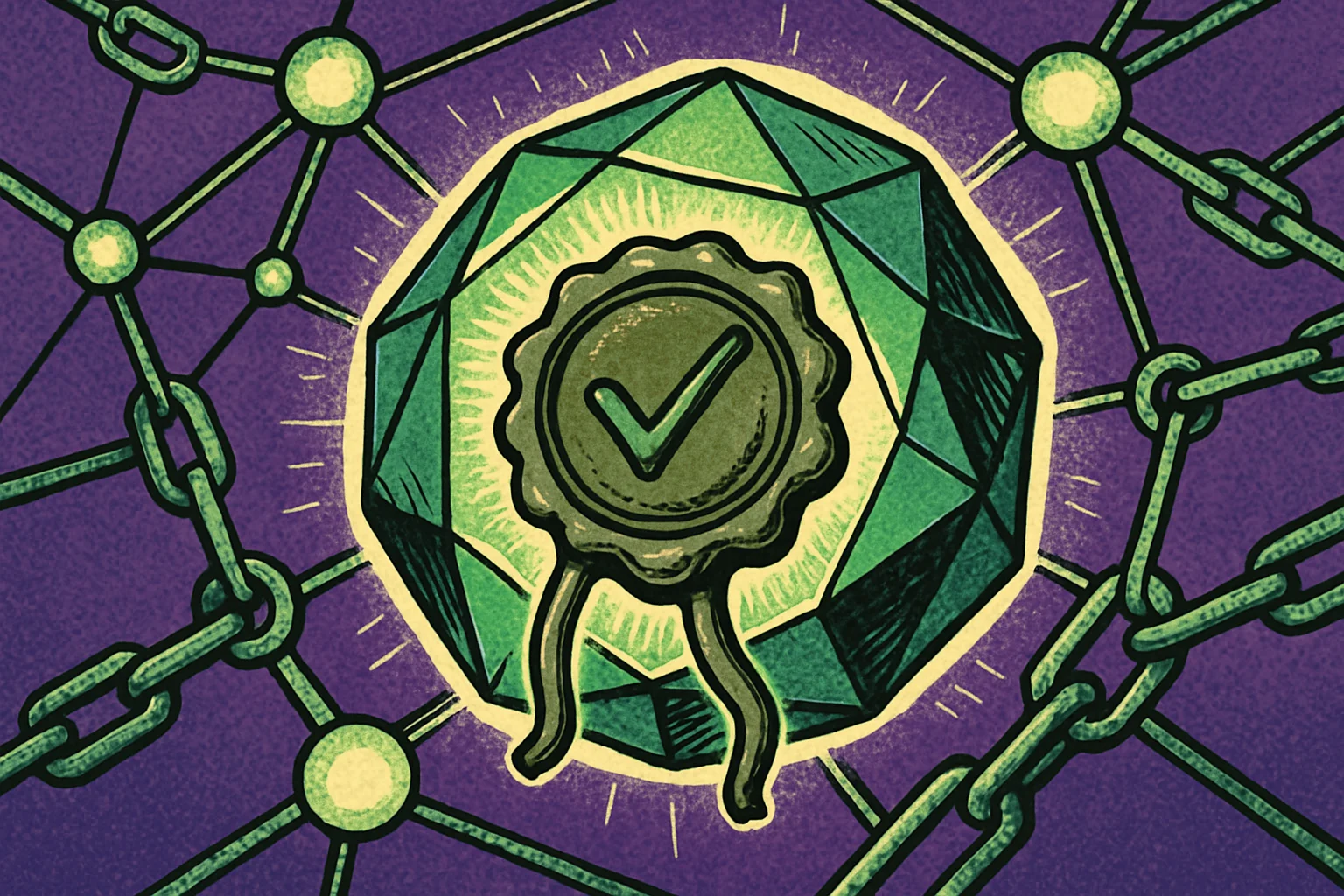
Moody's Brings Credit Ratings On-Chain to Solana for Tokenized Assets
Moody's deployed credit ratings on Solana mainnet June 17, 2026, embedding machine-readable signals into tokenized bonds and boosting RWA transparency.

Moody's Credit Ratings Go Live on Solana
Here's a development worth tracking carefully. On June 17, 2026, Moody's Ratings deployed its credit-ratings infrastructure on Solana mainnet, via a partnership with AlphaLedger. The result: live, machine-readable Moody's ratings are now written directly into the token metadata of tokenized bonds and fixed-income securities.
That's the confirmed news, and it's a meaningful structural shift for tokenized assets. The credit signal no longer sits behind a proprietary terminal — it now travels with the asset on-chain.
How the Token Integration Engine Works
This deployment extends Moody's Token Integration Engine (TIE), which was first rolled out earlier in 2026 on the Canton Network. The move to Solana marks its expansion to a major public, permissionless chain — a notably different environment from a permissioned network.
The mechanics are elegant in their simplicity. Instead of an investor cross-referencing a rating in a separate system, the rating becomes part of the asset's own metadata. When the token moves, the credit rating moves with it. For anyone evaluating a tokenized bond, the trusted signal is right there, embedded in the instrument itself and readable by machines.
Why This Addresses a Real Trust Gap
Let's be analytical about why this matters. One persistent challenge for tokenized real-world assets (RWAs) has been trust: how does an on-chain buyer verify the creditworthiness of an off-chain obligation without leaning on opaque, siloed data sources?
Putting Moody's ratings directly into token metadata is a constructive answer. It brings a recognized credit signal into the same data layer as the asset, where it can be verified transparently rather than gated behind a terminal subscription. That's infrastructure-level progress for the RWA category — the kind of plumbing that makes the whole ecosystem more legible.
Legacy Finance Meets Public Chains
There's a broader theme here. A long-established name in traditional finance is choosing to build on a permissionless public chain. Tokenized assets have often been discussed as a bridge between traditional and decentralized finance, and embedding a Moody's signal on Solana is a tangible example of that bridge being constructed deliberately and constructively.
What to Watch From Here
Now for analysis, clearly separated from the facts: the significance is less about any single bond and more about the standard it could help establish. If machine-readable credit signals travel natively with tokenized securities, downstream tooling — analytics, risk dashboards, automated compliance checks — can consume them directly.
The data-driven read is straightforward and level-headed: this is foundational infrastructure rather than a speculative headline. Trusted ratings moving on-chain make tokenized assets more transparent, and transparency is what mature markets are built on. For anyone watching the RWA space, the Moody's-on-Solana deployment is a quietly important milestone in how credit information and digital assets converge.
Sources: CoinDesk — "Moody's Rolls Out Credit Ratings on Solana in Tokenized Asset Push" — June 17, 2026; Cointelegraph — "Moody's brings credit ratings onchain via Solana, explained" — June 2026.
More Crypto Stories
SEC Crypto Custody Proposal: What It Means for Advisers
The SEC proposed crypto custody rules on Oct 1 letting advisers and funds use state trust companies and self-custody. Public comments run for 60 days.

Evernorth XRPN Nasdaq Debut: Inside the 473M XRP Treasury
Evernorth won its SPAC vote and plans to list on Nasdaq as XRPN on October 8, holding about 473 million XRP backed by over $1 billion in funding.

Roughrider Coin: How 90+ North Dakota Banks Settle on Solana
Fiserv's digital asset platform is live with Roughrider Coin: a dollar-backed stablecoin linking 90+ North Dakota banks on Solana. Here is how it works.