
MoneyGram Card Spends USDC Anywhere Visa Is Accepted
MoneyGram launched its first stablecoin-backed Visa card in Colombia on September 10, holding a USDC dollar balance that converts at checkout.

A Dollar Balance You Can Spend at a Corner Shop
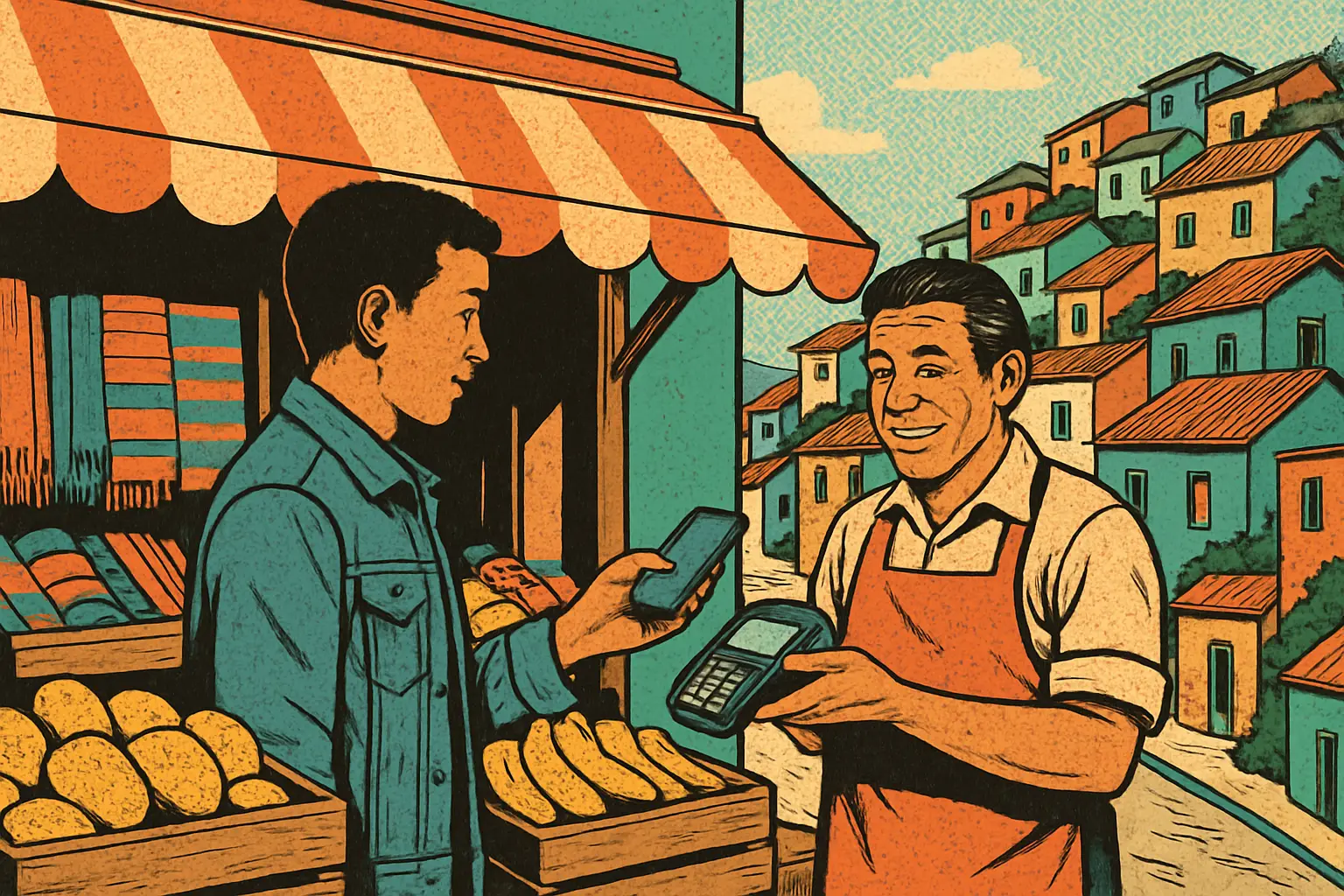
MoneyGram has launched its first stablecoin-backed Visa card, with Colombia as the debut market. It went live on September 10, 2026 as a virtual card issued through the MoneyGram app, holding a US dollar balance in USDC and spending anywhere Visa is accepted via Apple Wallet or Google Wallet. At the point of sale the stablecoin balance converts to local currency and settles over Visa's network, which means the merchant experiences an ordinary contactless transaction and never has to know what is backing it.
- Launched September 10, 2026 as a virtual card in the MoneyGram app, Colombia first
- Balance is held in USDC; converts to local currency at checkout and settles over Visa
- Built with Rain for card infrastructure, Crossmint wallet technology, and the Stellar network
- A physical card with ATM access is planned before the end of 2026, with more countries to follow
Why the Conversion Point Is the Whole Product
Stablecoin cards are not a new category, but the interesting variable is always where the conversion happens. Here it happens at checkout, on Visa's rails, which pushes every piece of friction onto the issuer and leaves none for the merchant or the cardholder. No wallet address, no gas consideration, no waiting for confirmations. The user experience is a phone tap.
That design also explains the partner list. Rain supplies the stablecoin card infrastructure, Crossmint provides wallet technology, and Stellar carries the settlement layer. MoneyGram is not building a chain or a token here — it is wiring an existing dollar stablecoin into a payment network it already understands, which is a considerably less exciting and considerably more shippable proposition.
What Problem Does This Solve in Colombia?
The practical case is holding value. For someone earning or receiving money in a currency that moves against the dollar, the choice has historically been between local-currency savings and the cost and paperwork of a dollar account. A card with a USDC balance offers a third option: keep the balance in dollars, spend in pesos at the moment of purchase, and pick up local cash at a MoneyGram location when physical currency is needed.
That last piece is the part a crypto-native competitor cannot easily copy. MoneyGram reports 60 million active customers, operations in more than 200 countries and territories, and close to 500,000 retail locations — meaning the on-ramp and off-ramp already exist in neighbourhoods, not just in apps. The company has been assembling this since 2021, when it partnered with the Stellar Development Foundation for cash-to-USDC and USDC-to-cash conversion, and it launched its own MGUSD stablecoin earlier this year — a story we covered when MGUSD went live on Stellar for MoneyGram's 60 million customers.
What Comes Next, and What Is Still Unknown
MoneyGram has said a physical card is coming before the end of 2026, adding ATM withdrawals and in-person purchases where digital wallets are not accepted, with additional countries to follow. It has not named those markets or published pricing. Fee structure, conversion spread, and eligibility requirements remain undisclosed, and those three numbers will determine whether this is genuinely cheaper than the alternatives or merely more convenient. For reference, the World Bank figure cited alongside the launch puts the average cost of a debit-card remittance payout at 3.61%.
It is also worth noting the sourcing: the launch was reported by The Block on September 10 and picked up widely across crypto trade press, but detailed terms have not been published by an independent wire service. Treat the mechanics above as the company's description of its own product.
The Pattern Worth Tracking
The broader shift is stablecoins disappearing into products where the user never encounters the word. Our crypto coverage has watched the same move from several directions this month, from Visa opening settlement data to onchain card lenders to U.S. Bank's live cross-border test on Stellar. A stablecoin card at a Colombian market stall is not a story about blockchain adoption. It is a story about a dollar balance that finally behaves like money.
Sources: The Block — September 10, 2026; crypto.news — September 2026.
More Crypto Stories

Circle Arc Mainnet Launches With USDC Paying Gas Fees
Circle opened Arc's public mainnet with 11 founding validators, 100+ apps live, and gas priced in USDC rather than a volatile native gas token.

Zama Opens 16 Confidential Morpho Vaults on Ethereum
Zama expanded encrypted DeFi to 16 Morpho vaults and launched a confidential swap protocol after its first vault reached $40M TVL in seven weeks.

Crypto Data Firm Kaiko Lands $110M From S&P Global
Kaiko extended its Series B to $110 million, with S&P Global leading and Nasdaq, BNP Paribas and Coinbase Ventures joining the crypto data firm.