
moddo Pinch Is the Smallest Arduino Board Yet at 11mm
The moddo Pinch is a 10.9 x 10.5 mm Arduino-compatible board that fits inside a USB-C shell, with 12 GPIO, 11 PWM channels, and pre-orders open at $15.90.

An Arduino Board That Hides Inside a USB-C Connector
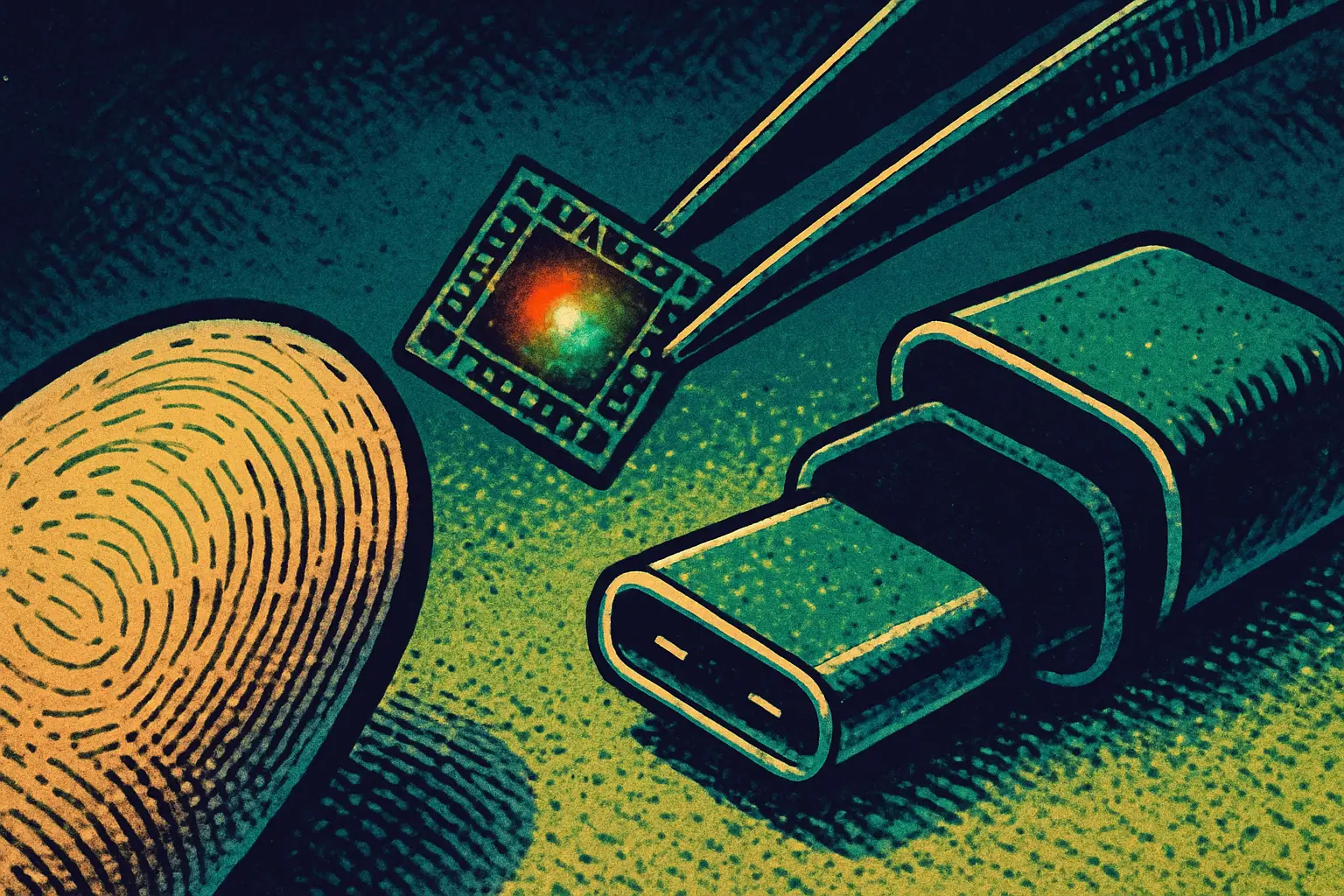
Canadian startup moddo has unveiled Pinch, a 32-bit Arduino-compatible development board measuring 10.9 x 10.5 mm. That is small enough to sit inside a USB-C connector shell, which is exactly the demo the company leads with. It is a fun size record, but the more useful question for anyone browsing mini computers projects is what you can actually build on a board this small - and the answer is more interesting than the dimensions alone.
- 10.9 x 10.5 mm board built around a Microchip SAMD11 (ATSAMD11D14A) Arm Cortex-M0+ at 48 MHz
- 4 KB SRAM and 16 KB flash, with roughly 12 KB free for sketches after the bootloader
- 12 GPIO, 5 analog inputs, 11 PWM channels, one DAC, I2C, SPI, and two UARTs on a 16-pin 1.27 mm header
- Pre-orders for the PCB kit are open at $15.90, with shipping slated for September 2026
What Is Packed Into 10.9 Millimeters?
The Pinch is built on the Microchip SAMD11, an Arm Cortex-M0+ running at 48 MHz with 4 KB of SRAM and 16 KB of flash. Around it, moddo has fit a genuinely complete little platform: 12 GPIO, 5 analog inputs, 11 PWM channels, a DAC, I2C, SPI, and two UARTs, all broken out on a 16-pin header at 1.27 mm pitch. There is also an RGB LED, a combined reset and bootloader button, and a 3.3 V LDO rated for 300 mA.
USB-C handles both power and programming, so no external programmer is required. Because the SAMD11 includes native USB rather than a bridge chip, the Pinch can enumerate as an HID device - which opens the door to miniature keyboards, macro pads, and pointing devices without extra hardware.
For breadboard work, that 1.27 mm pitch would normally be awkward, so moddo offers a 2.54 mm breakout board that adapts the Pinch to standard prototyping rows.
What Fits in 12 KB of Flash?
This is the design constraint that shapes the whole project, and it is worth being clear-eyed about. The bootloader consumes roughly 4 KB of the 16 KB flash, leaving about 12 KB for your sketch. That is a budget, not a limitation to route around - and plenty of durable embedded work lives comfortably inside it.
HID gadgets are the natural fit: a four-key macro pad, a volume dial, a foot switch, a hardware shortcut for a specific application. Sensor bridges are another: read an I2C temperature, humidity, or accelerometer part and forward the values over UART or USB. Wearables benefit most of all, because a board this size disappears into a strap, a badge, or a piece of clothing where a Nano or Pico simply would not.
What 12 KB does not comfortably hold is a heavy graphics library, a full networking stack, or verbose floating-point string formatting. Working within that means preferring fixed-point math, trimming unused libraries, and keeping the main loop tight - the same discipline that makes any embedded firmware more predictable. Builders who have worked with the Pico as a driverless USB Wi-Fi adapter will recognize the pattern: pick one job, do it well in firmware, and let the host handle the rest.
How Do You Program the Pinch?
moddo provides a custom Arduino SAMD board package published on GitHub under moddoio/moddoBoards-SAMD. Install it through the Arduino IDE's board manager, select the Pinch, and the normal compile-and-upload workflow applies over USB-C. Keeping the toolchain inside the standard Arduino environment is the right call - it means existing sketches, libraries, and muscle memory carry over instead of forcing a new stack on people.
That familiarity matters when you are choosing a target for a small automation build. Boards like the Olimex PICO-EVB automation board go the other direction, adding industrial I/O and physical bulk; the Pinch trades all of that away for size and asks you to be selective.
When Can You Get One?
Pre-orders for the Pinch PCB kit are open at $15.90, with shipping targeted for September 2026. moddo says the design is in final testing and moving toward mass production, so the schedule is the one to watch.
If you have a project where the enclosure, not the code, is the hard constraint, this is a compelling new option in the microcontroller lineup.
Sources: CNX Software - July 14, 2026; Hackaday - July 15, 2026; Elektor Magazine - July 2026.
More Mini Computers Stories

Xerxes Pi 2026 and Nano: A $49 Raspberry Pi CM5 Homelab Kit
Xerxes Pi 2026 and Xerxes Nano bring NVMe, PoE+ and OCuLink to Raspberry Pi CM5 and Jetson modules, with Kickstarter rack kits starting at $49.

Adafruit Floppsy Rev D: An RP2350 Floppy Disk Archiver
Adafruit Floppsy Rev D uses a Raspberry Pi RP2350 with 8MB PSRAM and a 2.8-inch touchscreen to image and emulate PC and Apple II floppies without a PC.

M5Stack PaperDIY: A $25 ESP32-S3 E-Paper Kit You Assemble
M5Stack PaperDIY packs a 4.7-inch 960x540 e-paper panel, an ESP32-S3 with 8MB PSRAM and a battery into a $25 kit that you put together yourself.