
Microsoft Releases Zero Trust for AI: A Security Framework Built for the Age of AI Deployment
Microsoft's new Zero Trust for AI initiative delivers reference architectures, assessment tools, and governance workshops specifically designed to secure AI systems in enterprise environments.

Never Trust, Always Verify — Even Your AI
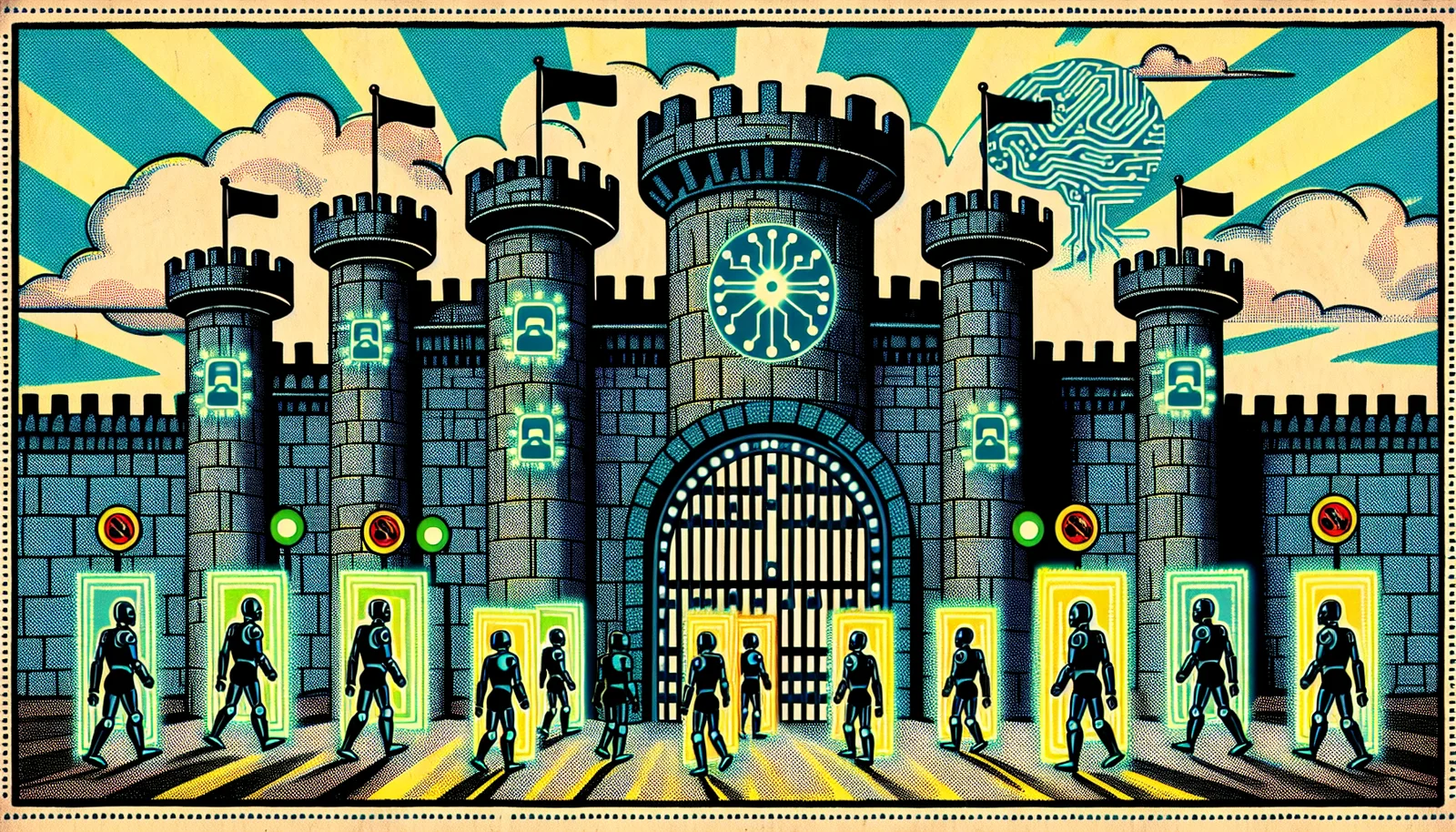
Zero Trust security is not a new concept. The principle — never assume a connection or identity is safe simply because it originates inside the network perimeter — emerged from the recognition that the traditional castle-and-moat model of enterprise security fails when attackers get inside, when users roam across cloud environments, and when devices cannot be trusted at face value. Most mature enterprise security programs have been implementing Zero Trust principles for years.
What zero trust has not had, until now, is a coherent application to AI systems. Microsoft's announcement of "Zero Trust for AI" in March 2026 fills that gap with updated workshops, a reference architecture, and an assessment tool specifically designed to secure AI deployments — not just secure the infrastructure AI runs on.
The Gap Zero Trust for AI Addresses
AI systems in enterprise environments create security challenges that traditional Zero Trust frameworks were not designed to address. Consider what a deployed enterprise AI system actually looks like: it ingests data from multiple internal sources, it generates outputs that may influence business decisions, it runs on infrastructure shared with other workloads, and it may be accessible to users across the organization through natural language interfaces.
Each of these characteristics creates specific risk surfaces. Data ingestion pathways can be vectors for prompt injection or data poisoning. Output generation can surface sensitive information to unauthorized users if access controls are misapplied. Infrastructure sharing creates lateral movement risk if the AI system is compromised. Natural language interfaces make traditional perimeter controls difficult to apply.
Microsoft's Zero Trust for AI framework addresses these challenges by extending the core Zero Trust principles — verify explicitly, use least privilege, assume breach — to the specific architecture and behavior of AI systems.
What the Framework Delivers
The Zero Trust for AI initiative includes three concrete deliverables available now:
Reference Architecture: A detailed blueprint for how AI systems should be structured from a security standpoint — covering data access controls, output sandboxing, identity management for AI service principals, network segmentation, and logging requirements. The architecture is designed to be practical for organizations already running Azure AI services, though the principles apply to any cloud or on-premises AI deployment.
Assessment Tool: A structured evaluation framework that allows security teams to identify gaps in how their existing AI deployments align with Zero Trust principles. The tool maps findings to specific remediation steps, giving security teams a prioritized action list rather than a gap report without direction.
Governance Workshops: Facilitated sessions designed for cross-functional teams — security, IT, legal, and AI product owners — to align on policies, responsibilities, and incident response procedures specific to AI systems. AI governance is increasingly recognized as a shared responsibility rather than purely a security team concern, and the workshops reflect that reality.
A full Zero Trust Assessment specifically for AI workloads is in development and expected to be available in summer 2026.
Why This Framework Arrives at the Right Moment
Enterprise AI deployment has accelerated dramatically. According to multiple industry surveys, the majority of large enterprises have AI systems in production environments as of 2026 — and most of those deployments predate any formal AI-specific security framework. The gap between deployment pace and security posture is real.
Microsoft's contribution is grounding AI security in a framework — Zero Trust — that enterprise security teams already understand and have operational experience implementing. Rather than asking security teams to learn an entirely new discipline from scratch, Zero Trust for AI provides a bridge: here is how the principles you already apply translate to this new class of system.
For security leaders building out their AI governance programs, the reference architecture and assessment tool provide starting points that reduce the time from awareness to action. The governance workshops address the organizational alignment challenges that are often harder to solve than the technical ones.
Sources: Microsoft Security Blog (March 19, 2026), Microsoft Zero Trust for AI Initiative (2026)
More Ai Security Stories

Anthropic OSS Scanner: Free AI Bug Scans for Open Source
Anthropic's OSS Scanner gives open-source maintainers free AI vulnerability scans with fixes; 85 of 97 tested severe findings met its disclosure bar.

What Is Prompt Injection? A Plain-English Defense Guide
What is prompt injection? Learn direct vs indirect attacks, 9 real scenarios, and the 7 OWASP-backed defenses that keep AI assistants and agents safe.

GitHub AI Secret Detection: How Push Protection Gets Smarter
GitHub is adding a ModernBERT classifier to push protection that spots unstructured passwords in under 2 ms and could more than double blocked secrets.