
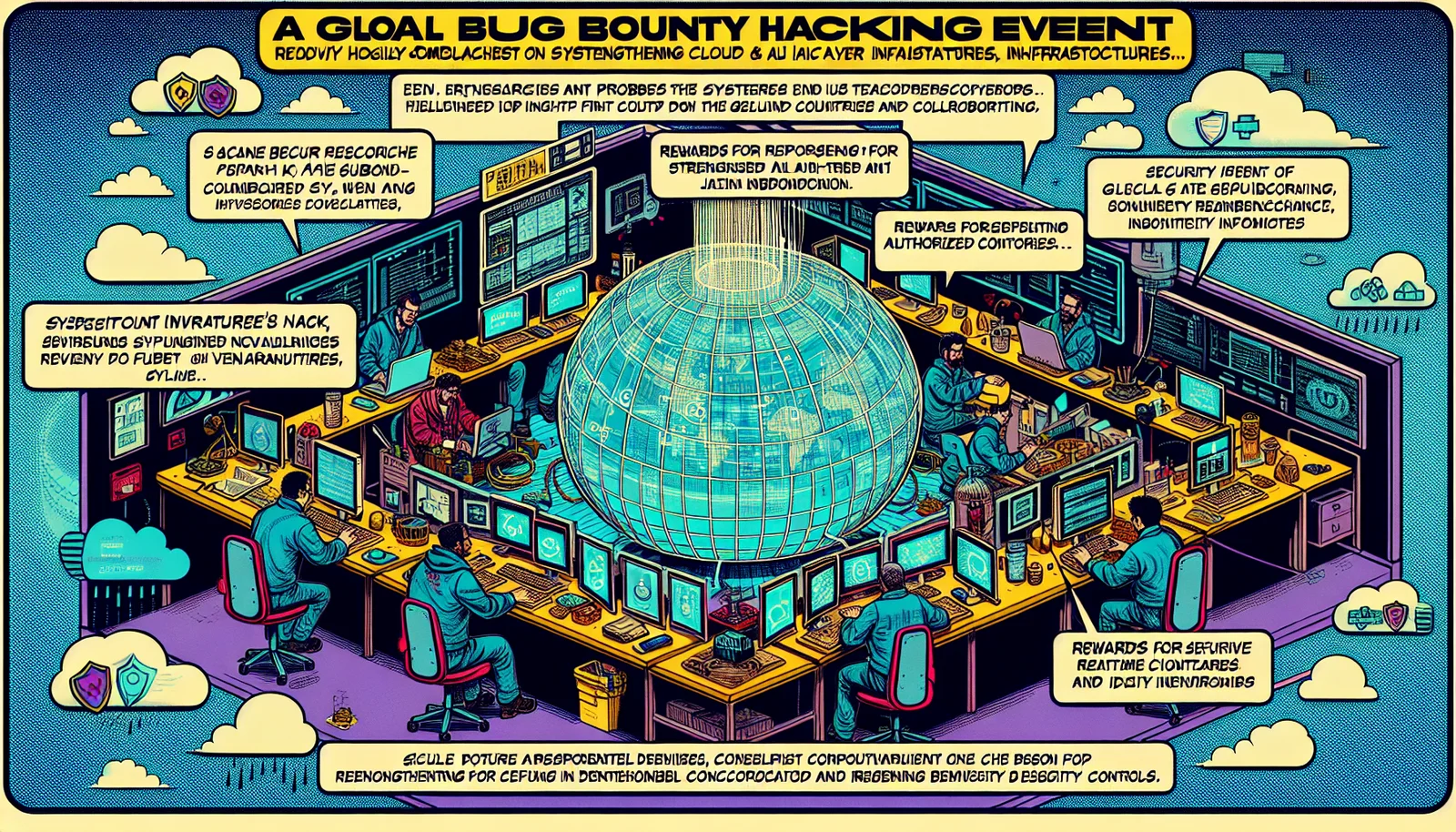
Microsoft's Zero Day Quest 2026 Pays $2.3M to Researchers Who Hardened Cloud and AI
Microsoft's Zero Day Quest 2026 awarded $2.3 million across 80+ high-impact cloud and AI vulnerabilities — turning hacker creativity into a stronger Secure Future Initiative.

A Bug Bounty Designed to Make Cloud and AI Safer for Everyone
Microsoft's Zero Day Quest 2026 wrapped up this month with a result that says a lot about where defensive security is heading: $2.3 million awarded to researchers from more than twenty countries, more than 80 high-impact vulnerabilities identified across cloud and AI services, and a clear demonstration that public bug bounty programs remain one of the most effective tools for hardening modern infrastructure before attackers can find the same flaws.
The competition's results were detailed in Microsoft's Security Response Center disclosure on April 15, 2026 — a follow-up to the live hacking event that brought together hundreds of researchers in an authorized environment to test the limits of Microsoft's cloud and AI security posture.
What Researchers Found
Across the qualifying research challenge and the live hacking event, researchers submitted nearly 700 individual cases. After triage and validation, more than 80 of those submissions were classified as high-impact vulnerabilities — flaws serious enough to warrant immediate engineering attention and inclusion in Microsoft's broader Secure Future Initiative remediation pipeline.
The vulnerability classes that surfaced are exactly the categories that matter most for cloud and AI security in 2026:
- Credential exposure paths — situations where authentication tokens or secrets could be retrieved through unintended channels
- Server-side request forgery (SSRF) chains — multi-step attack patterns that combine individual SSRF flaws into more powerful capabilities
- Cross-tenant access scenarios — the highest-severity class for any multi-tenant cloud service, where weaknesses in identity controls or tenant isolation could let issues from one tenant impact others
- AI service vulnerabilities — flaws specific to the inference, orchestration, and data-handling layers of Microsoft's AI services
What makes this list valuable is exactly that it represents the modern cloud and AI threat surface comprehensively — not just classic web vulnerabilities. Researchers explored where identity isolation might bend, where shared infrastructure might leak, and where AI-specific patterns might create new abuse paths.
Who Participated
Zero Day Quest drew researchers from more than twenty countries, with backgrounds ranging from high school students to college professors. That diversity of participation matters for a defensive bug bounty program: different research traditions, different threat-modeling instincts, and different system mental models surface different classes of vulnerability.
All testing was conducted within Microsoft's authorized environment, with researchers following strict guidelines that prevented any access to customer data or other tenant systems. The competition's design specifically channels research curiosity toward the kinds of system-level questions that produce strategically valuable findings — without ever risking real-world impact.
The Secure Future Initiative Connection
Zero Day Quest 2026 is not just a one-off bug bounty event. The findings flow directly into Microsoft's Secure Future Initiative (SFI) — a multi-year, company-wide program launched in response to the U.S. Department of Homeland Security's Cyber Safety Review Board recommendations on cloud security practices. SFI established Microsoft's commitment to building security in "by default, by design, and in operations."
Each vulnerability identified through Zero Day Quest serves as feedback for SFI requirements. A SSRF chain that worked in 2026 informs the engineering controls that prevent the same class of flaw in 2027. A cross-tenant isolation weakness drives architectural changes that strengthen tenant boundaries platform-wide. The bug bounty is, in effect, a structured input to Microsoft's broader security engineering roadmap.
A $5 Million Prize Pool Sets the Tone
The 2026 event ran with an announced $5 million prize pool — described as the largest in Microsoft bug bounty history. The $2.3 million actually awarded reflects the quality bar for high-impact findings rather than a shortfall in the pool. Bounty programs that pay only for genuinely meaningful vulnerabilities maintain a stronger signal-to-noise ratio in the research they attract, and the structure of Zero Day Quest is calibrated to that principle.
The comparison point is meaningful. Microsoft's broader bug bounty programs paid out $17 million in rewards across the prior fiscal year. The targeted Zero Day Quest format complements ongoing bounty work by concentrating researcher attention specifically on cloud and AI security during a defined event window.
Why This Model Works
Bug bounty programs at this scale demonstrate one of the most powerful patterns in modern cybersecurity: aligning the economic incentives of independent security researchers with the defensive needs of major platform providers. A researcher who discovers a cross-tenant access flaw can earn a substantial reward by reporting it through Zero Day Quest and seeing it remediated. The same researcher could theoretically — and disastrously — choose another path. The bounty program makes the responsible-disclosure path the rational economic choice.
Multiplied across hundreds of researchers and thousands of submission attempts, that incentive alignment produces a steady stream of high-quality vulnerability research that Microsoft's internal security teams then transform into systematic platform improvements.
For the broader cybersecurity ecosystem in 2026, Zero Day Quest is one of the more visible examples of a pattern that increasingly defines defensive security at scale: industry-leading platform providers running well-funded, well-structured bug bounty programs that turn the global community of security researchers into a coordinated proactive defense layer.
What This Means for Cloud and AI Customers
Every Microsoft cloud customer and every user of Microsoft AI services benefits from the work done at Zero Day Quest 2026, even if they never see the findings directly. The 80+ high-impact vulnerabilities identified are vulnerabilities that no longer threaten production deployments. The architectural improvements driven by SFI feedback strengthen the platform's resilience against future attack patterns of the same class.
For security teams evaluating cloud and AI providers, programs like Zero Day Quest are useful signals of a provider's security maturity. A vendor that consistently invests in attracting top research talent, paying well for high-quality findings, and feeding those findings into systematic engineering improvements is operating at a level that produces measurably better defensive outcomes over time.
The 2026 results are exactly the kind of outcome that turns a $5 million prize pool into multi-year defensive value across Microsoft's platform footprint — and across every customer that runs on it.
Sources: Microsoft Security Response Center (April 15, 2026), SecurityWeek (April 2026), BleepingComputer (April 2026), PRSOL:CC (April 21, 2026)
More Ai Security Stories
Thales Sentinel Envelope Plus: Shielding Code From AI Agents
Thales Sentinel Envelope Plus hardens compiled apps against AI reverse engineering. In tests, an AI agent found 0 of 10 bugs after using 970x more tokens.

Android 17 Advanced Protection: 6 New Anti-Spyware Defenses
Android 17 Advanced Protection adds 6 new defenses, including Intrusion Logging with 12 months of encrypted logs and USB lockdown. Here's how each works.

Legit Security Agent Auto-Fixes Vulnerable Dependencies
Legit Security's agentic remediation now fixes vulnerable open-source dependencies, re-scans before and after, and opens a pull request for review.