Microsoft Project Perception Puts AI Agents on Defense
Microsoft unveiled Project Perception on July 27, an agentic security platform with red, blue and green AI agents plus the MAI-Cyber-1-Flash model.

Three Agents, Three Jobs, One Loop
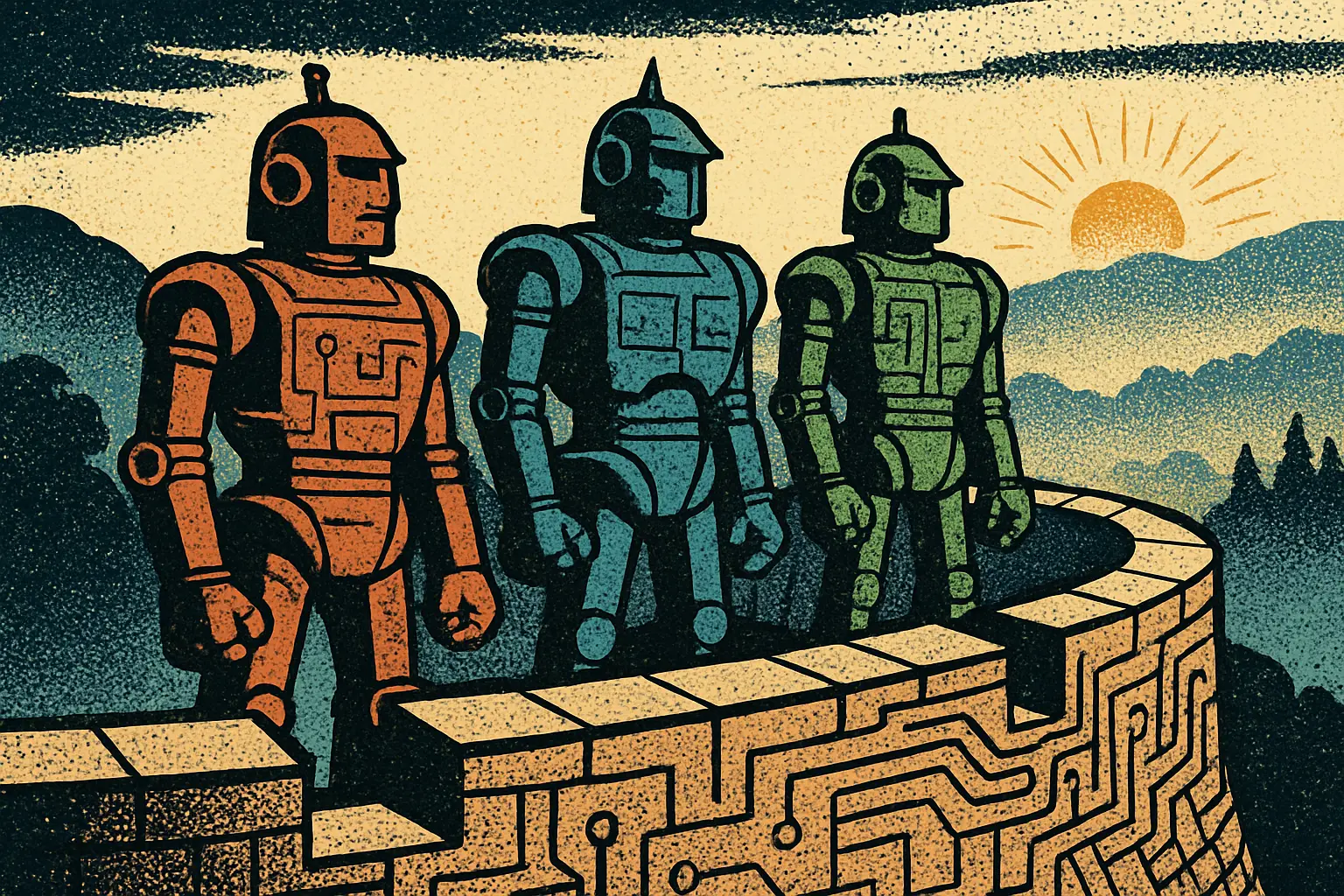
Microsoft used a San Francisco event on July 27, 2026 to introduce Project Perception, an agentic security platform, alongside MAI-Cyber-1-Flash, a security-specialized model that integrates with the company's MDASH code-scanning harness. The design is the interesting part. Rather than one general-purpose security assistant, Perception ships three agents with distinct mandates — described as red, blue, and green — that find vulnerabilities, decide which of them actually matter, and write and deploy the fixes.
- Project Perception is an agentic security platform announced July 27, 2026, built around specialized red, blue, and green team agents
- MAI-Cyber-1-Flash is Microsoft's security-focused model for identifying and remediating vulnerabilities
- MDASH, Microsoft's multi-model agentic scanning harness, now integrates with Microsoft Defender and is in expanded preview for eligible organizations
- Microsoft expects AI-discovered flaws to mean more Windows security updates per Patch Tuesday as discovery accelerates
Why Split the Work Across Three Agents?
Because the three jobs have genuinely different success criteria, and collapsing them into one model produces a system that is mediocre at all of them. A red-team agent is rewarded for finding things — its useful bias is toward suspicion and volume. A blue-team agent has the opposite job: given a pile of candidate findings, work out which are reachable, exploitable, and worth an engineer's attention this week. A remediation agent needs precision above all, because a patch that breaks production is worse than the vulnerability it closed.
Separating them means each can be tuned and evaluated against its own metric. It also creates a natural adversarial check — the blue agent's job includes disagreeing with the red agent, and disagreement between independent components is one of the few reliable ways to catch a confident, wrong answer. That principle shows up repeatedly in well-built agentic systems, and it is the same instinct behind good agent sandbox design.
What Does This Mean for Patch Tuesday?
Something quietly significant: more updates, more often. Microsoft has said that increased use of AI for vulnerability discovery means customers should expect a larger number of security fixes in each monthly release. That is worth framing correctly, because a growing patch count reads as alarming if you assume the flaws are new. They are not. They are old flaws being found faster.
For defenders, the operational implication is that patch throughput becomes the constraint. If discovery accelerates and deployment does not, the backlog grows regardless of how good the finding tools are. Teams reading our AI security coverage should be looking at their own patch pipeline capacity now, not after the first month where the update count doubles.
The Model and the Harness
MAI-Cyber-1-Flash handles the identification and remediation work, and it plugs into MDASH — Microsoft's multi-model agentic scanning harness — which now integrates with Microsoft Defender and is available in expanded preview to eligible organizations. The multi-model framing matters: MDASH is a harness that orchestrates models rather than a single-model product, which leaves room for the underlying models to improve without a platform rewrite.
The Broader Direction
Microsoft's security leadership has framed the shift as attacks moving from AI-assisted to AI-operated to substantially autonomous, and the defensive response has followed the same curve. That direction is now visible across the industry: Google's agentic threat intelligence work and the Open Secure AI Alliance's open-source defensive stack are addressing the same problem from different angles — one commercial and integrated, one open and inspectable.
That variety is healthy. Defenders benefit from having both a deeply integrated option inside the tooling they already run and an open one they can audit line by line. The encouraging read on this week's announcements is that the defensive side of the field is now getting purpose-built tooling at roughly the same pace as the capabilities it is meant to counter.
Sources: Cybersecurity Dive — July 27, 2026; Axios — July 27, 2026; BleepingComputer — July 2026.
More Ai Security Stories

OpenAI and AARP Help Older Adults Spot Online Scams
More than 1,000 older adults across 10 US cities joined free AI Skills Jam workshops on using ChatGPT safely and recognising attempted scams.
Postman Passport Gives AI Agents Keyless API Access
Passport hands agents a cryptographic reference instead of a real API key, keeping credentials inside your network and revocable in seconds.
Zanzibar-Style Authorization Explained for Developers
A practical guide to relationship-based access control: how Google Zanzibar works, when ReBAC beats roles, and what open-source options exist in 2026.