
Microsoft Patches an Entra ID Agent Identity Flaw Before AI Agents Could Be Hijacked
Microsoft shipped a patch on April 28, 2026 for a privilege escalation flaw in Entra ID's Agent ID Administrator role — closing a service principal takeover path that targeted AI agent identities.

A Defensive Win for the AI Agent Identity Layer
Microsoft shipped a patch on April 28, 2026 for a privilege escalation vulnerability in its Entra ID Agent ID Administrator role — and the fix matters more than the typical enterprise identity patch because it closes a path that specifically targeted AI agent identities. For security teams running production AI agent fleets in Azure environments, this is one of the cleaner defensive wins of the spring 2026 patch cycle.
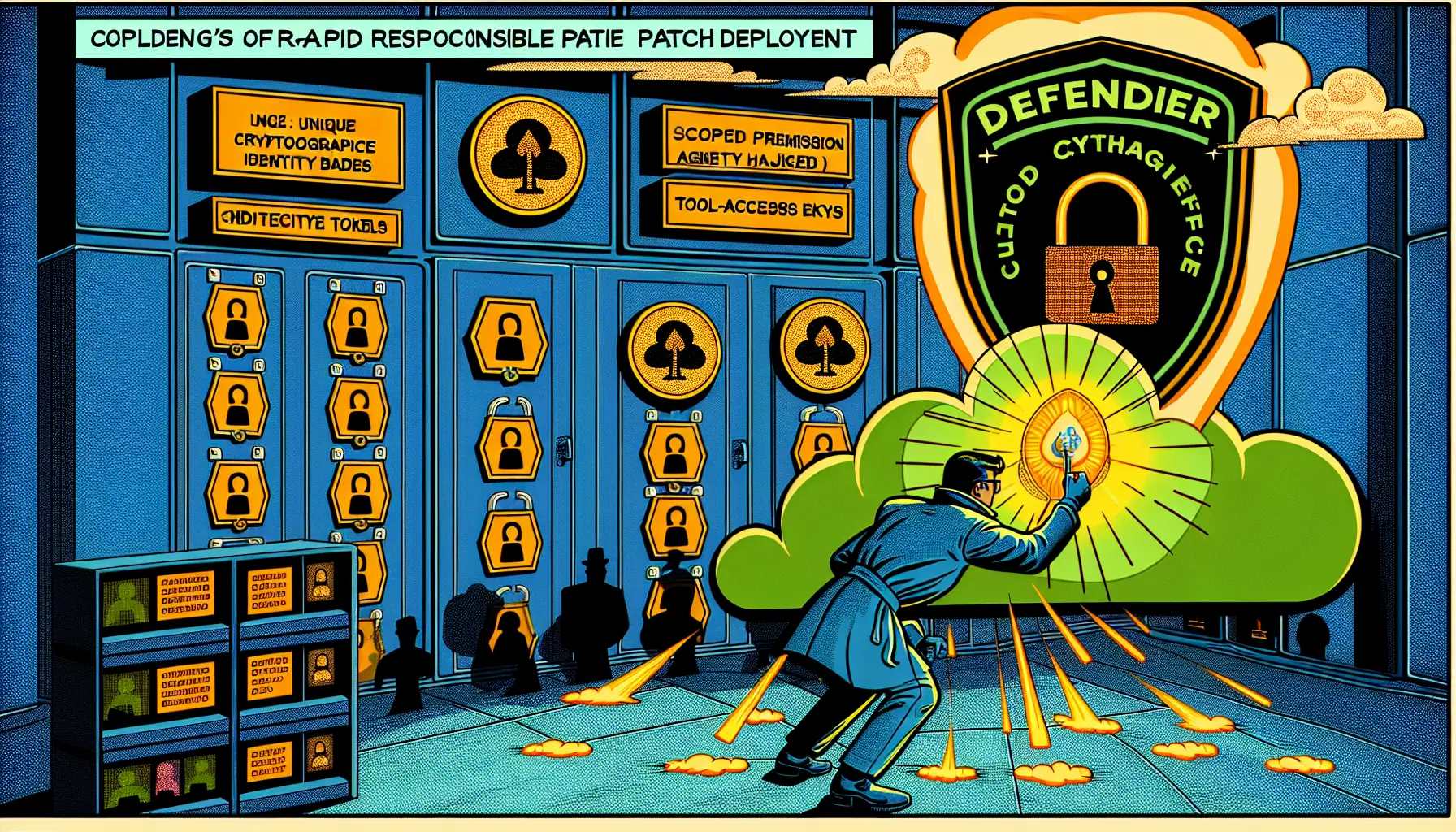
The vulnerability allowed a malicious actor with sufficient role privileges to perform service principal takeover, effectively hijacking an AI agent's identity and inheriting its permissions and data access. In an agentic enterprise environment where each agent has unique scoped credentials to call internal tools, query data sources, and act on behalf of users, a service principal takeover is one of the most consequential failure modes that the agent-identity architecture can have. Microsoft's patch removes that path before any large-scale exploitation could materialize.
What the Vulnerability Actually Was
Entra ID's Agent ID Administrator role is part of Microsoft's broader agent identity infrastructure — the layer that gives every AI agent in an enterprise a unique, scoped, auditable identity. The role manages agent identity lifecycle operations, which gives it elevated privileges over agent service principals.
The privilege escalation flaw allowed actors holding the Agent ID Administrator role to perform actions that exceeded the role's intended permission boundary, specifically enabling service principal takeover. A service principal in Azure represents an application or agent identity, and taking it over effectively grants the attacker the agent's full identity and access scope.
For AI agents that have been delegated meaningful tool access — calling Microsoft Graph APIs, querying business data, executing workflows — a service principal takeover is the equivalent of an attacker inheriting the agent's full operational capability. That is the failure mode the patch closes.
Why Agent Identity Matters in 2026
The agent identity layer is one of the foundational primitives of the AI-era enterprise security architecture. As enterprises deploy AI agents for customer service, internal automation, development workflows, and security operations, each agent needs a unique cryptographic identity that supports auditing, authorization scoping, and lifecycle management.
Microsoft has been steadily building out its agent identity infrastructure across Entra ID and the broader Microsoft 365 platform, and Google Cloud announced its own Agent Identity primitive at Cloud Next '26 last week. Other major cloud providers are converging on similar architectures. The pattern is consistent — agents are first-class identity citizens in modern cloud security, and the role-and-permission infrastructure that governs them has to be as carefully designed as the human-identity-and-permission infrastructure has been for decades.
The Entra ID Agent ID Administrator vulnerability and patch is one snapshot of that infrastructure maturing. New role types ship, edge cases emerge, defenders find them, vendors patch them, and the next generation of the architecture starts with the prior generation's lessons baked in. That is the same maturation cycle that human-identity-and-access infrastructure went through, compressed into a much shorter timeframe.
How Microsoft Handled the Patch
The patch shipped as part of Microsoft's continuous platform update cadence rather than as an out-of-band emergency release. Microsoft's notes indicate that no user action is required for many of the protections, since the platform updates itself frequently by default for cloud-managed components.
For enterprise security teams, the practical action items are nonetheless meaningful. Audit current Agent ID Administrator role assignments to confirm the role is scoped to only the personnel who genuinely need it. Review service principal authentication logs for unexpected role-change activity in the recent past. Confirm that conditional access policies covering Agent ID Administrator role usage are tight — multi-factor authentication, location-based access restrictions, just-in-time elevation where supported.
The broader posture-improvement opportunity is to use this patch as a prompt for a fuller audit of the agent identity architecture. As enterprises deploy more agents, the cumulative attack surface grows, and the discipline of maintaining tight role assignments and scoped service principal permissions matters more than it did when there were only a handful of agents in production.
Coordinated Response Across the Identity Stack
Microsoft also released a parallel patch on April 28 for CVE-2026-32202, a Windows Shell spoofing vulnerability that had been actively exploited in the wild. Cisco shipped patches for four critical Identity Services and Webex flaws on April 27. Apache ActiveMQ's CVE-2026-34197 was patched and added to the CISA Known Exploited Vulnerabilities catalog on April 27 as well.
Across the identity-and-communication stack, the pattern over the last 48 hours has been the same — defenders shipping patches at speed, CISA coordinating the federal response, and the broader vendor community moving in lockstep. For AI security teams watching how the agentic enterprise security infrastructure is maturing, the coordinated response cadence is one of the most positive signals available.
What Security Teams Should Take Away
For Azure-native enterprises, the immediate action is straightforward. Verify the Entra ID patch has been applied (most cloud-managed environments will have it automatically), audit current Agent ID Administrator role assignments, and tighten conditional access policies covering that role.
For multi-cloud enterprises, the broader takeaway is that agent identity infrastructure is rapidly becoming a first-class security architecture concern across every major cloud platform. AWS, GCP, and Azure are all converging on agent identity as a discrete security primitive. The patch-and-improve cadence on Microsoft's Agent ID Administrator role is the kind of operational cadence that all three platforms will be running on for the foreseeable future.
For security architects designing new AI agent deployments, the practical lesson is to treat agent service principals with the same care as human service accounts have historically been treated. Tight role scoping, minimal permission grants, just-in-time elevation, and strong conditional access policies are the architectural defaults that prevent service principal takeover from being a realistic attack path even if a future role-management vulnerability emerges.
The agent identity layer is one of the most important pieces of the AI-era security architecture, and the speed at which Microsoft and other cloud providers are shipping defensive primitives for it is one of the cleaner positive signals in the broader 2026 cybersecurity landscape.
Sources: The Hacker News (April 28, 2026), Microsoft Security Update Guide (April 28, 2026), CISA KEV Catalog (April 27, 2026), CrowdStrike Patch Tuesday Analysis (April 2026)
More Ai Security Stories

Thales Sentinel Envelope Plus: Shielding Code From AI Agents
Thales Sentinel Envelope Plus hardens compiled apps against AI reverse engineering. In tests, an AI agent found 0 of 10 bugs after using 970x more tokens.

Android 17 Advanced Protection: 6 New Anti-Spyware Defenses
Android 17 Advanced Protection adds 6 new defenses, including Intrusion Logging with 12 months of encrypted logs and USB lockdown. Here's how each works.

Legit Security Agent Auto-Fixes Vulnerable Dependencies
Legit Security's agentic remediation now fixes vulnerable open-source dependencies, re-scans before and after, and opens a pull request for review.