
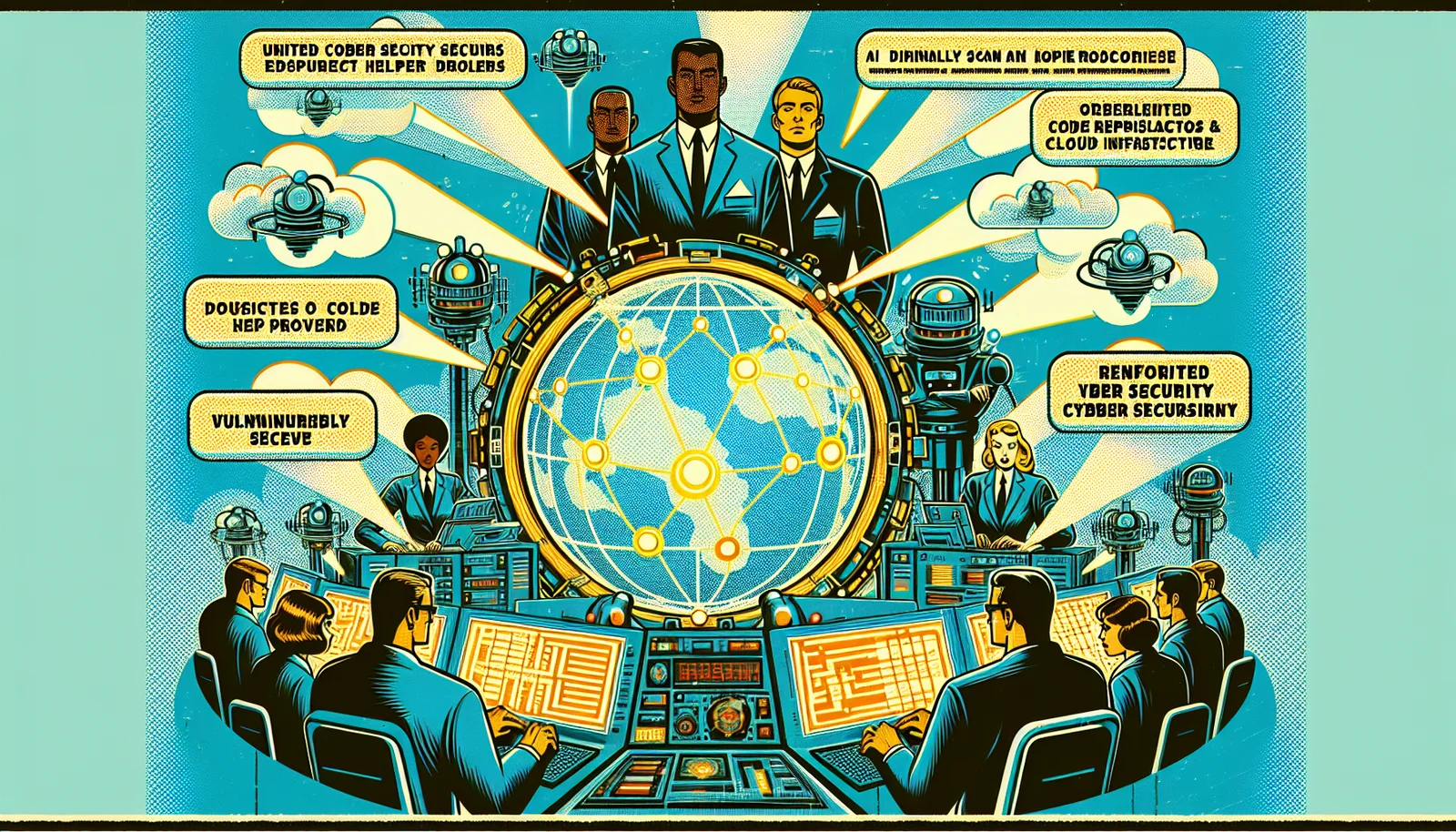
Microsoft Rolls Out AI-Powered Defense Stack and Joins Project Glasswing for Vulnerability Hunting
Microsoft's new Secure Now dashboard, AI-driven SDL upgrades, and Project Glasswing collaboration with Anthropic give defenders an AI-accelerated toolkit for the modern threat landscape.

Defense Catches Up to AI-Accelerated Offense
Microsoft published its AI-Powered Defense announcement on April 22, 2026, laying out the most comprehensive defensive AI strategy the company has shipped to date. The motivation is explicit: AI models can now autonomously discover weaknesses, chain multiple lower-severity issues into working end-to-end exploits, and operate at speeds that traditional vulnerability management cycles were never designed to match. Microsoft's response is to bring AI to the defender's side of that equation — at the same scale, integrated into the same pipelines that already secure cloud, AI, and enterprise infrastructure.
The strategy lands across four interconnected initiatives. Each addresses a specific defensive gap that AI-accelerated offense has opened up, and each integrates with the existing Microsoft Security stack rather than asking customers to adopt yet another standalone tool.
Project Glasswing Collaboration With Anthropic
Microsoft is one of the launch partners on Anthropic's Project Glasswing initiative, which gives critical infrastructure organizations early access to Claude Mythos Preview specifically for defensive vulnerability discovery. Microsoft's role is significant: the company is evaluating Claude Mythos Preview against its CTI-REALM benchmark, an internal cyber threat intelligence and vulnerability assessment framework that captures realistic vulnerability discovery scenarios.
Initial testing showed substantial improvements relative to prior models. That result is consistent with what Anthropic reported about Mythos Preview's broader capability: an AI system that can find high-severity vulnerabilities across major operating systems and browsers when directed defensively. Microsoft positioning that capability against its own benchmark — and using it inside its Security Development Lifecycle process — turns Mythos Preview into a practical defender's tool rather than a theoretical capability claim.
A Coalition of Defenders, Not Just One Vendor
Project Glasswing's launch coalition includes Amazon Web Services, Apple, Broadcom, Cisco, CrowdStrike, Google, JPMorgan Chase, the Linux Foundation, NVIDIA, and Palo Alto Networks alongside Microsoft. That breadth matters. The threat surface that AI-accelerated offense targets is a shared infrastructure layer — operating systems, browsers, cloud platforms, financial systems — and defending it requires coordination across the companies that operate that infrastructure. Microsoft's $100 million-credit commitment from Anthropic and the $4 million in donations to open-source security organizations signals that the funding model is designed to treat the entire ecosystem rather than a single vendor's customers.
The Secure Now Dashboard
Microsoft Security Exposure Management gains a new "Secure Now" dashboard at security.microsoft.com/securenow. The dashboard combines AI-driven guidance with actionable remediation across five vulnerability dimensions: patching, open-source software dependencies, customer code, internet-facing assets, and baseline security hygiene.
The defensive advantage of consolidating those five dimensions into one prioritized view is straightforward. Most large organizations already have telemetry on each individual dimension, but that telemetry typically lives across separate consoles operated by separate teams. The Secure Now dashboard gives defenders a single AI-prioritized list of where to focus attention based on real exposure rather than raw vulnerability count.
From Alert Volume to Exploitability Prioritization
The same architectural shift shows up in Microsoft's new AI-Powered Scanning Harness, which is scheduled to enter preview in June 2026. The scanning harness uses multi-model validation to assess exploitability and prioritize findings — meaning the output is not just a longer list of potential issues, but a smaller, ranked list of issues that are actually exploitable in the customer's environment.
For security teams operating in alert-fatigue territory, that is the kind of capability that changes day-to-day operations. AI-driven exploitability assessment lets defenders concentrate their finite human attention on the issues that matter most, which is the practical definition of what AI-powered defense should look like.
Enhanced Security Development Lifecycle
Microsoft's Security Development Lifecycle — the internal process that already shapes how Microsoft itself ships secure software — is now integrating advanced AI models for vulnerability identification across broader software surfaces. The integration coordinates fixes through existing Microsoft Security Response Center (MSRC) processes, which means vulnerabilities discovered by AI flow through the same disclosure and patching workflow that handles human-discovered issues today.
That continuity is the right design choice. AI-discovered vulnerabilities are still vulnerabilities; the defenders, vendors, and downstream customers are the same. Routing AI findings through MSRC keeps the disclosure ecosystem intact rather than fragmenting it across new AI-specific channels.
Rapid Defender Deployments
The fourth initiative is operational rather than strategic: detections in Microsoft Defender are being released simultaneously with security updates, so customers get protective coverage at the moment a vulnerability becomes publicly known. That collapses the historical gap between disclosure and detection deployment, which is precisely the gap AI-accelerated offense exploits hardest.
What This Means for Defenders Across the Industry
The strategic message in Microsoft's announcement is that AI-powered defense is now operational, productionized, and integrated into the existing security stack rather than a research curiosity or a future capability. For enterprise security teams running Microsoft Defender, Sentinel, or the broader Microsoft Security ecosystem, the practical effect is that the tools they already use are getting more capable in ways that meet AI-accelerated offense head-on.
For the broader security community, Microsoft's Project Glasswing participation, $100M Anthropic credit allocation, and open-source security donations point toward a defensive coalition model — one where the major infrastructure operators coordinate on the AI defense problem rather than each building their own siloed tooling. That coalition model is the right answer to a threat surface that is itself shared.
Sources: Microsoft Security Blog (April 22, 2026), Anthropic Project Glasswing (April 2026), The Hacker News (April 2026), Schneier on Security (April 2026)
More Ai Security Stories
Thales Sentinel Envelope Plus: Shielding Code From AI Agents
Thales Sentinel Envelope Plus hardens compiled apps against AI reverse engineering. In tests, an AI agent found 0 of 10 bugs after using 970x more tokens.

Android 17 Advanced Protection: 6 New Anti-Spyware Defenses
Android 17 Advanced Protection adds 6 new defenses, including Intrusion Logging with 12 months of encrypted logs and USB lockdown. Here's how each works.

Legit Security Agent Auto-Fixes Vulnerable Dependencies
Legit Security's agentic remediation now fixes vulnerable open-source dependencies, re-scans before and after, and opens a pull request for review.