
This Kubernetes Homelab Hides Modern Compute Inside Retro Linksys Cases
Justin Garrison retrofitted a modern Raspberry Pi and mini-PC Kubernetes cluster into vintage early-2000s Linksys router cases — a nostalgic, fully working homelab.

A Homelab That Wears Its Nostalgia on the Outside
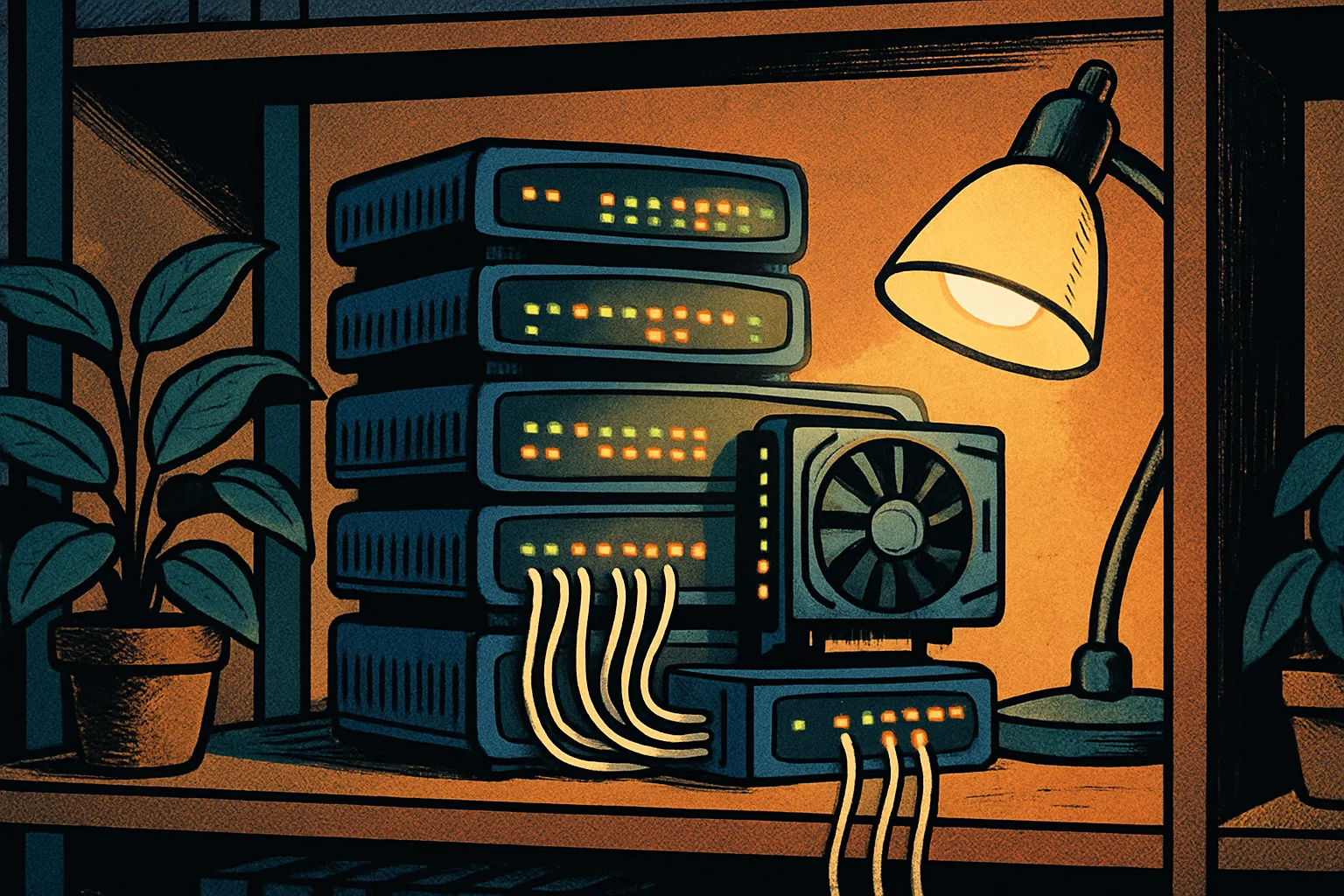
Some builds are about raw performance, and some are about pure joy. This one, happily, is both. On July 5, 2026, builder Justin Garrison showed off a Kubernetes homelab with a wonderful twist: every node is tucked inside a vintage early-2000s Linksys router case. It is modern compute wearing a beloved retro shell, and as someone who grew up around those little blue-and-black boxes, I adore it.
Serious Hardware Under the Retro Skin
Do not let the nostalgic enclosures fool you — this is a legitimately capable cluster. The build packs a genuinely eclectic mix of single-board computers and mini PCs: two Raspberry Pi 5s, two Raspberry Pi 4s, a GMKtec NucBox M6 Mini (paired with an ASUS RTX 2060 for real GPU muscle), a LattePanda IOTA, an NVIDIA DGX Spark, and an HP Z4 G4 workstation. Everything is stitched together with a TP-Link PoE switch, and the whole thing runs actual workloads on Talos and Kubernetes.
That is a proper heterogeneous homelab — a spread of ARM and x86 machines, low-power boards alongside a GPU node and an AI-focused DGX Spark. It is exactly the kind of mixed environment that teaches you how orchestration behaves across wildly different hardware, which is half the point of building a lab like this in the first place.
The Craft Is in the Retrofit
The engineering charm lives in the details of the conversion. Each node had to be modified to physically fit inside an old Linksys housing, which is no small feat when you are stuffing a modern board and its cooling into a case designed for a turn-of-the-millennium router. Garrison even re-routed the status LEDs and power buttons so they work through the vintage shells — the little front-panel lights blink for real, driven by the modern hardware inside.
That attention to detail is what separates a gag from a great build. Anyone can set a Pi next to a nostalgic prop; making the original indicators functional so the retro case genuinely *reads out* the modern machine's state is a labor of love.
Why Builds Like This Matter
Beyond the sheer delight, there is a quietly good message here about reuse and creativity. Those Linksys cases were destined to be e-waste; instead they became characterful enclosures for a working learning platform. Repurposing old hardware into something functional is a small act of sustainability wrapped in a big dose of fun.
And that is really the spirit of the homelab hobby at its best. It is where practical skills — Kubernetes, networking, systems administration — meet unbounded personal expression. You could rack your cluster in a boring commercial case, or you could give it a soul by housing it in the gear that got you into networking in the first place. Garrison chose soul, and the result is a homelab that is as much a story as it is a server. For anyone dreaming up their own DIY cluster, let this be the nudge: make it work, then make it *yours*.
Sources: Hackaday — "Homelab Gets Linksys-Themed Aesthetic" — July 5, 2026; Justin Garrison homelab project — July 2026.
More Mini Computers Stories

Raspberry Pi Desktop for PC and Mac: Revive an Old Laptop
Raspberry Pi Desktop returns for PCs and Intel Macs on 64-bit Debian Trixie, runs live from USB, and installs free on machines up to about 15 years old.

ESP32 SDR Firmware: Turn a Dev Board Into a Radio Scanner
A hidden ESP32 mode lets free ESP-SDR firmware capture raw radio from 2.2 to 2.7 GHz, and 4.8 to 6 GHz on the ESP32-C5, at up to 80 MSa/s. Here is how.

Framework Desktop 192GB: Price, Specs and Ship Date
The Framework Desktop now offers 192GB of memory with the Ryzen AI Max+ PRO 495, from $6,799 DIY, shipping in November. Here are the specs to know.